Q&A: Jasmine Holmes on ‘Our Sister’s Keeper’
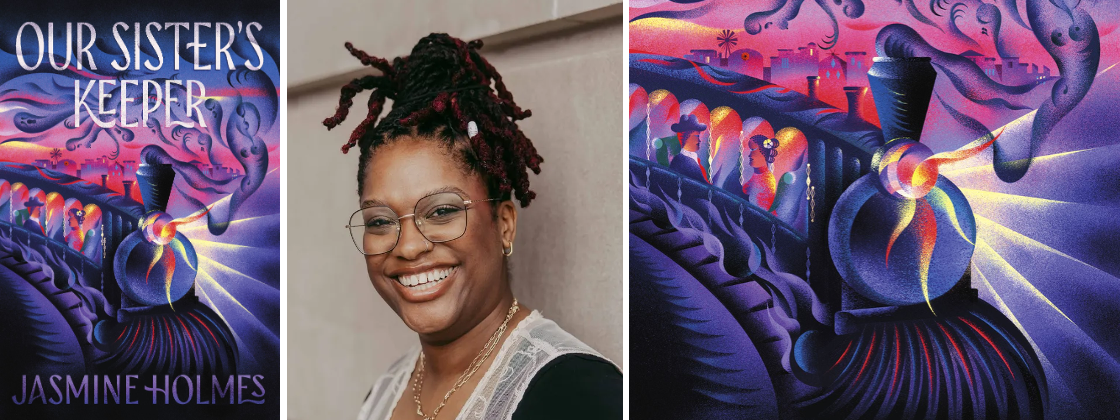
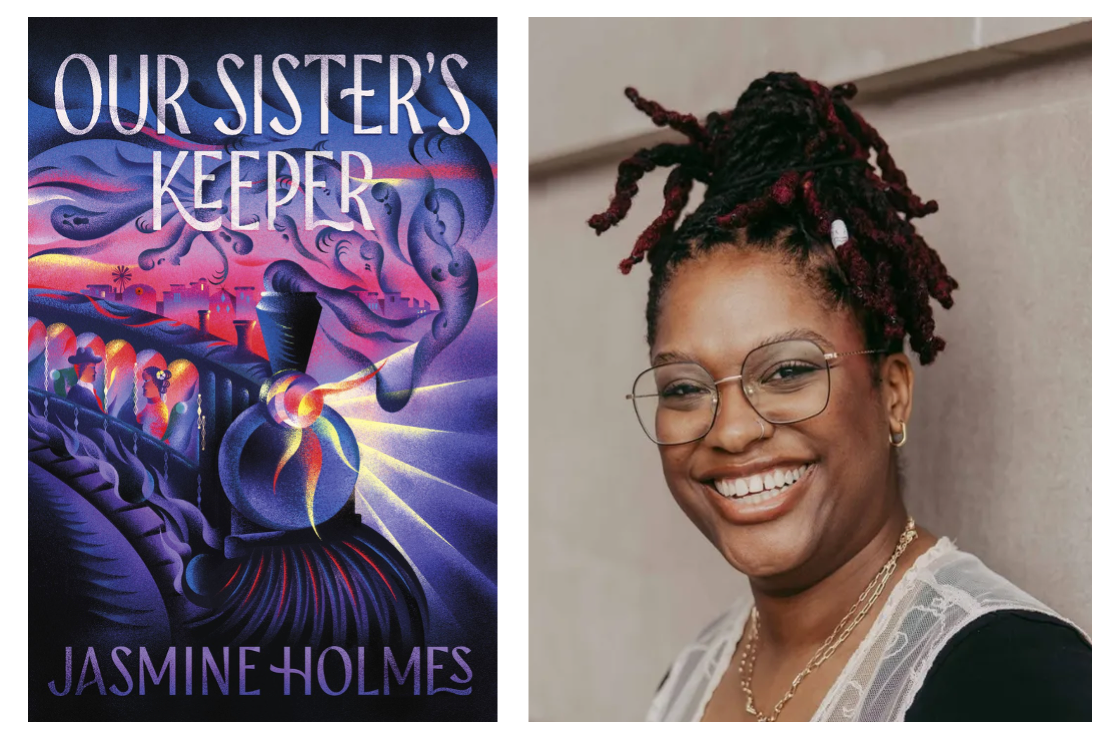
Blending historical fiction with Southern gothic psychological horror, Our Sister’s Keeper is a fierce exploration of Black sisterhood, rage, and resistance.
“There’s no way for a happy ending in a society that is still dominated by white supremacy. We survive and thrive in little pockets—but it’s always temporary when oppression is the rule of the day.”
Jasmine Holmes’ new horror novel Our Sister’s Keeper has been described as an “unsettling and striking” novel of Black Southern horror exploring systemic oppression and feminine power. Holmes is an acclaimed author, historian, and educator—and with Our Sister’s Keeper, she blends the supernatural horror and Depression-era Mississippi setting of Sinners with masterful storytelling evocative of authors like Tananarive Due, Rivers Solomon, and P. Djèlí Clark.
In her interview with Monster Complex, Holmes talks about how Our Sister’s Keeper hits on a bunch of points at the same time—including history, and social ideas, as well as different genres. She also shares with us her goals when writing this novel—and what surprised her the most about the results.
Monster Complex® sometimes uses affiliate links. (At no additional charge to you. Relax.)
ABOUT THE BOOK
Our Sister’s Keeper
Jasmine Holmes
Bookshop.org
(More retail links below)
Mississippi, 1927. The groanings are coming.
No town is perfect, but East Cobb comes close. It’s a wealthy all-Black Free Town—untouched by white oppression—where ambitious Thea Elliot and her husband plan to make good on their big dreams. Little do they know that the idyllic town teems with ghoulish, walking nightmares—that only the women can see…
Marah knows the groanings well. She is one of the carriers—women with the ability to pull traumatic memories from men. Populated by men entirely freed of their pain, East Cobb has flourished, even as the remnants of their memories haunt the town’s women.
When an unexpected death drives Marah to discover more about her own power, Thea’s and Marah’s worlds collide. The sisters must confront the rotten core at the heart of East Cobb’s prosperity and choose what—and who—will survive the reckoning…
ABOUT THE AUTHOR
Jasmine Holmes is a historian, museum professional, educator, and author interested in cultural memory, oral history, and how we interpret the past. She writes about how stories are shaped, remembered, and retold—and what it means to handle them with clarity and care.
She works with writers, educators, academics, and organizations to develop and refine complex projects, providing developmental editing and manuscript support for work grounded in history, culture, and lived experience. Holmes has been featured on Good Morning America and C-SPAN.
INTERVIEW: Jasmine Holmes about Our Sister’s Keeper
#1) Your horror novel Our Sister’s Keeper hits on a bunch of points at the same time—including history, and social ideas, as well as different genres. Which of these got you started on this project? (Or was it the actual mashup that got your interest?)
The very first kernel was The Ones Who Walk Away from Omelas by Ursula Le Guin. I was a middle school teacher for several years, and we always had that one in rotation.
It’s about a utopia that can only exist because of the pain of a neglected child. The far-right utopia being pushed right now often results in women being that neglected child we’re looking away from. I’m not saying that every trad wife feels this way, but I’ve definitely felt that way.
The pressure of being the woman who holds the ideal together is crippling. I’ve felt it. I know so many others have, too. I think that’s why Le Guin’s story always resonated with me.
#2) When you were writing this book, what surprised you the most about this project? (Was it any historical data, or was it some creative idea, or something else?) What about the book do you think will most likely challenge or surprise the readers?
Mildred surprised me the most. She’s the voice of this town, so I set out to write her as a villain. But she became my favorite character the more time I spent with her. I saw her fight and felt her grasping to survive and to get the best for her family. She’s wrong and she’s mean, but she’s dogged.
There’s no tidy bow for Mildred or any other woman in this town. I think that’s something that will challenge readers: there’s no way for a happy ending in a society that is still dominated by white supremacy; we survive and thrive in little pockets, but it’s always temporary when oppression is the rule of the day.
That doesn’t have to be the capital “E” ending in our society as a whole. But it’s the ending for East Cobb.
#3) You are a teacher. And a curriculum person. And a historical consultant. (And more.) How much is Our Sister’s Keeper about the emotional charge and how much is it about learning more about its historical context? What were your goals when writing this novel—and what do you feel was the result?
Before I was any of those things, I was an eight-year-old writing my very first “novel.” It was a handful of pages about WWII, where everyone (including the main character) dies. The melodrama has always been strong with this one. I’ve always wanted to tell stories that move and change. History was born out of my love as a storyteller, not the other way around. That’s one layer.
The one underneath that is my self-realization as a Black woman. The more I learned about my own history, the more I learned about myself and the way that I move through the world.
My consulting business is called “Finding Jane,” after my great-great-great-great-great grandmother, Jane Nelson, who was enslaved here in Mississippi. History and storytelling will always be about finding more of her and her sisters across the ages.
Find Our Sister’s Keeper online
Bookshop.org (which also supports your local bookstore!)
Libro.fm (audiobooks which also supports your local bookstore!)
Find Jasmine Holmes online
More from Monster Complex®

Also on Monster Complex®
Panel: Black Women Who Write Dark Fiction and Poetry [Video]
Shanora Williams: “Expect chaos, adventure, humor, and spicy chemistry.”
Remembering Charles R. Saunders—the father of “Sword & Soul”
Weird Tales Presents: Johnny Compton’s short story collection ‘Midnight Somewhere’
Revisiting ghost story Mapping the Interior by Stephen Graham Jones
Donyae Coles on MIDNIGHT ROOMS: “So many ideas come to you when you’re writing a book.”
Rebecca Roanhorse on wrapping up her fantasy trilogy Between Earth and Sky
Deborah Wilde on ‘Big Demon Energy’—An Enemies-to-Lovers Urban Fantasy
R.F. Kuang on ‘Babel’: “It’s right for an environment to form close but flawed relationships.”
13 Updates: Victor LaValle—author of Lone Women, The Changeling, and Destroyer
Complete RING series by Koji Suzuki: “I really dislike most horror writing.”
Music duo Boyce and Hart wrote all those songs for The Monkees. But they also hit the charts with their own hits, and appeared on TV shows like I Dream of Jeannie, Bewitched, and Flying Nun.