
Remembering Charles R. Saunders—the father of “Sword & Soul”
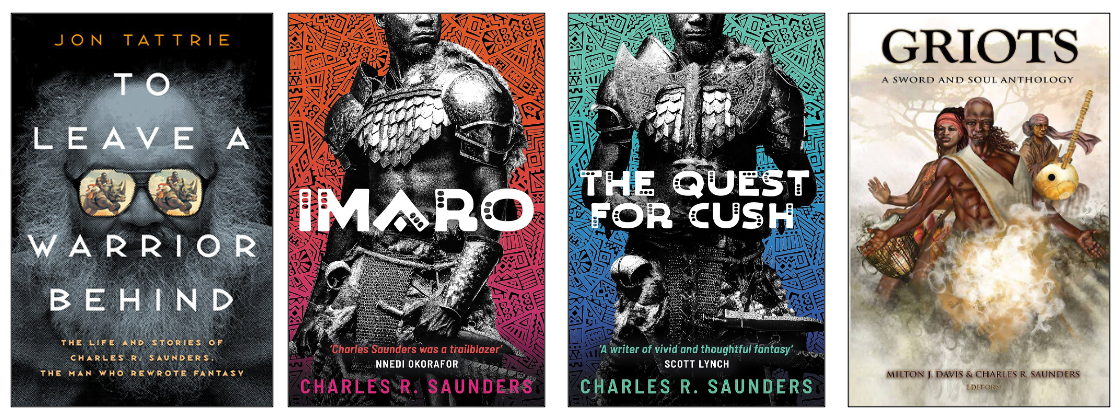
A new biography helps us better understand the impact the late author left behind—and his special take on Sword & Sorcery.
The book To Leave a Warrior Behind serves as both the biography of a man adamant to change the way we look at fantasy—as well as spotlights his influential works.
In the world of Sword & Sorcery fiction, author Charles R. Saunders (1946-2020) was the father of “Sword and Soul”—a sub-genre in fantasy built on Black heroes, steeped in African myth and history. He rewrote what fantasy could look like.
“In the mid- and late-1960s, I made two life-changing discoveries,” Saunders had told The Official Philip José Farmer Web Page. “The first was the full panoply of African history, culture, mythology and folklore. The other was sword-and-sorcery. My interest in Africa came first; sword-and-sorcery came hard on its heels. The eventual commingling of those two passions was inevitable.”
Saunders built up the “Sword & Soul” category with his Imaro books. The series showed the author matching up the action and adventure of traditional sword & sorcery with African myth, history and culture.
He had also expanded the genre to include more authors. Saunders and Milton J. Davis co-edited the anthologies Griots: A Sword and Soul Anthology and Griots: Sisters of the Spear. (We’ll be talking about these two books again in future articles.)
However, when Mr. Saunders passed away in Nova Scotia in 2020, his literary accomplishments had been largely forgotten.
Hopefully, a brand-new book can help amplify the memory of Saunders—and his legacy. Written by Jon Tattrie, To Leave a Warrior Behind: The Life and Stories of Charles R. Saunders, the Man Who Rewrote Fantasy blends biography with a tribute to Saunders’ influences.
For two years, Tattrie had worked alongside Saunders at the Halifax Daily News. He knew him as an imposing figure, a skillful editor, and an eccentric character…
But he didn’t know that Saunders had also served as a fiction trailblazer.
Following the death of his old colleague, Tattrie reached out to a number of people from Saunders’s life. And the biographer began piecing together two parallel worlds—one of Saunders’ tumultuous beginnings as a Black man in America who fled to Canada during the Vietnam War; and the fantasy world of Imaro, the Black hero forced to fend for himself in search of his own life’s purpose.
To Leave a Warrior Behind is a memorial of a larger-than-life figure, an intimate goodbye to a friend, and a remembrance of a writer who should not be forgotten.
Tattrie talks with Monster Complex® about this “secret world” of Saunders, how he researched the life of the late author, and how this new biography can help rebuild the memory of Saunders legacy.
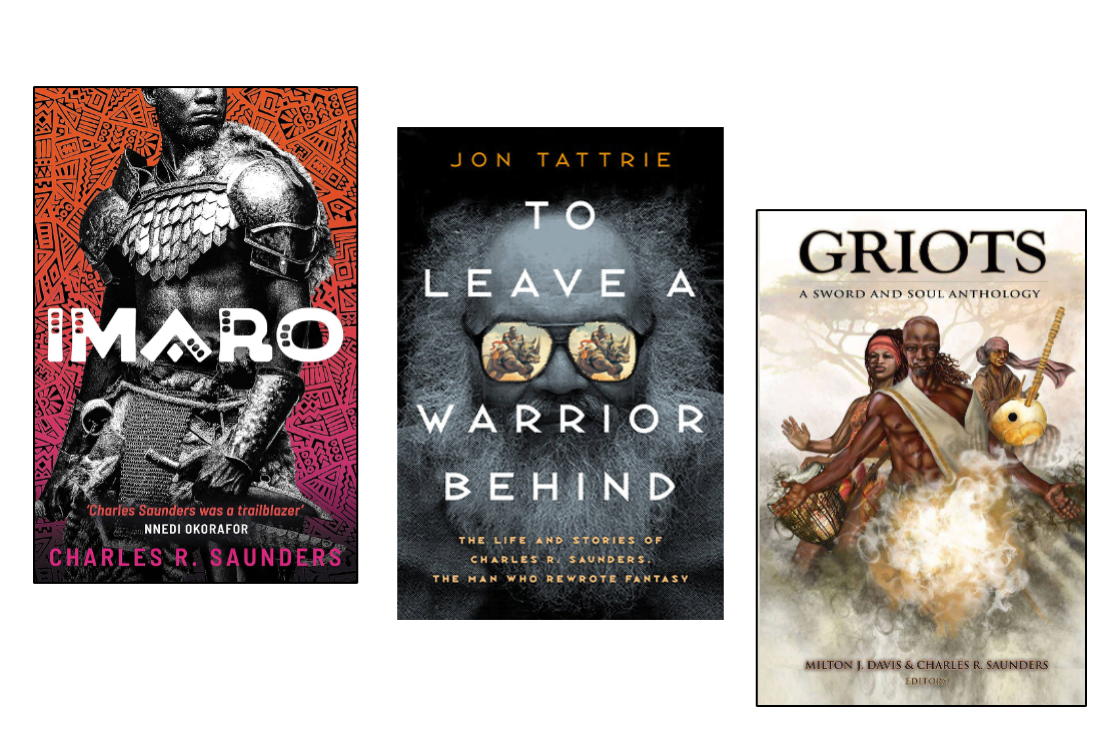
Interview with biographer Jon Tattrie, author of To Leave a Warrior Behind: The Life and Stories of Charles R. Saunders
As I understand it, you knew Mr. Saunders from a completely different media POV—and were surprised to even learn he’d also written sword & sorcery AKA sword & soul. How did you even learn that? What did that mean to you?
Yes! Growing up in Nova Scotia in the 1990s, Charles Saunders was a celebrated journalist and non-fiction author. I knew him for his brilliant columns on African Nova Scotian life, including the Africville protest, and for his true books about boxing and historical figures.
When I first met Charles in person, it was 2006 and I had a new job as a copy editor on the Halifax Daily News. Charles then wrote the paper’s op-ed and supervised my editing work. I learned he wrote fiction, too, when one day he greeted me at the start of our shift—and handed me a copy of Imaro!
I read it and loved it, but our newspaper shut down in 2008 and Charles and I did not stay in touch. I would learn not many people stayed in touch with him. I saw him again in 2010, in Africville, for the launch of my book, The Hermit of Africville.
But it wasn’t until a stranger wrote to me in the summer of 2020 and said Charles had gone missing that I really got involved in his life. That email led me to discover Charles had died alone in May 2020 and been buried in an unmarked grave—somewhere in Nova Scotia.
The search for his body took over my life. When I found him, we held a fundraiser to buy a gravestone. It really took off, and I started to hear from people telling me how much his writing had changed his life. They weren’t talking about the nonfiction I knew so well, but his fantasy fiction. I heard the call to adventure and answered!
In the next few years, I would read all eight of his novels many times, as well as his vast catalogue of short stories and essays about fantasy.
Are you even a fan of the genre? When you learned about this other side of his writing life, did you check out his fiction? What were your impressions?
I was a loose fan of fantasy before, in that I’d read the classics, but Charles taught me the true power of sword & sorcery—or sword & soul. I read a ton of other authors, too, to figure out how Charles fit into the genre.
I would say Charles’s work is both highly accessible, and almost completely inaccessible. That is to say, the hard part is getting his books, not reading them. Charles changed spec fic by creating the first authentically African adventure series in Imaro, and again in Dossouye.
As his characters travel Nyumbani, Charles’s other Africa, they meet people and see landscapes that match the real Africa. Even the languages Imaro doesn’t understand change, too, reflecting the actual linguistic divisions of Africa.
I think the deeper difference he made is to add that soul to sword and soul. Charles takes us deep inside real human beings with his psychological realism. Imaro, for example, is famous for his explosions of sword-wielding violence throughout his adventures.
And if you turn back a page or two before each battle, you will see the psychological root: Imaro bound, held, kicked down—made to feel like a helpless child. That sparks the rage he first felt at five, when his mother was forced to abandon him and he was mocked as the son-of-no-father.
Charles was a writing wizard with a human heart. He held a degree in psychology and put it to good use to add depth and dimensions to his worlds and people.
How accessible is his sword & sorcery fiction now?
His books are very hard to get presently. The first two Imaros are the easiest, in the Night Shade or Gollanz editions. The third and fourth are much harder in the second-hand market. His other work is maddeningly difficult to access, which is why I included as much of it as I could in my biography.
There is hope, though. The Gollanz editions came out in 2025 and I hope we will see more of his work coming into print. There are a lot of legal tangles for his estate to work through, though.
As you worked on this biography—and talked to a lot of people—how did you determine who to talk with? What kind of research did it take to know who to talk to (and how to track them down) to learn about this whole other side of his writing life?
It started with the fundraiser, when I heard from a few of his friends from his student days at Lincoln University (1964-1968). I interviewed them and they connected me to other people who knew Charles at that time. One of those friends had stayed in touch with Charles via letters. He began scanning them and sent me one a week for over a year.
That was how I learned Charles was a prolific letter writer. Over the years of digging, I found David C. Smith, an American fantasy author, and Charles de Lint, a Canadian fantasy legend. Both had been close friends of Charles for decades (though David never once met him in person) and had exchanged letters with him.
I kept digging and found more letters: about 250 in total, each around three pages long, and covering his life from 1976 to the very end in 2020.
His Halifax years were a little easier, as I knew many of the people he had worked with, and conducted a series of interviews to better understand this reclusive man. I also found many of his American fans—specifically young black men who love fantasy—and they started to teach me about the depth and importance of his work.
How did all this alter your impression(s) of who Mr. Saunders was? How has it impacted your own memories of knowing him?
You know that illusion where if you look at it one way, you see an old woman? And change your perspective and you see a young woman? That was what it was like to write about Charles.
At times, what I was writing was so familiar I barely needed to check any sources, and at other times to far from me that I worried I’d never understand it.
He was always a mysterious, captivating individual. When I worked with him from 2006-2008, I knew nothing about his impact on fantasy writing, particularly in the U.S. Yet we still revered him as a genius, and loved him as a kind-hearted man. In that way, learning about his fantasy life served to explain some of that mystery.
I would say it made me wish I’d asked him more questions in life, but that’s not really true. I knew him to be very private and reclusive, even when he was leaving home to work five days a week. He grew into a hermit after the paper closed.
I don’t think I would have found the same answers in a personal conversation that I did in years of reading his words. Charles lived at his fullest in paper and ink, not flesh and blood.
For someone looking at this from my side—thinking of this as a bio of a sword & sorcery author—how much is this book also going to show me the other side(s) of his life as a creator?
It will show you everything. It’s one of my favourite parts of the book. Because it took so many years to write, and I kept digging and find out more, I got to understand how he began as a creator.
I interviewed his college roommate, who told me in the 1960s Charles saw himself as an illustrator and the first writing he did was to add to his comics.
I met the members of his 1970s writing group, the Ottawa Fantasists, and learned how he first created Imaro in short stories for zines, then made the incredible leap into novel writing in the early 1980s.
I even talked to a woman who had gone on a few walking dates with Charles in the 1970s (they were both too broke to do anything but walk). He told her he was a writer and she asked how many words he wrote a day. He told her: zero. So she made a rule: if he wanted to talk to her or see her, he had to write 500 words first. He did that. Then 1,000 words. Then 2,000. The budding romance didn’t bloom, but the writing habit took root.
You will see Charles as a human creator, yearning to build a world bigger than our own. You will seem him climb the mountain word by word. You will see him suffer disasters when his publishers turn on him (“Fantasy is a white man’s realm,” they said). You will see him discover that he is a writer, and he will write. He will publish for his fans.
In his 60s, after the paper closed, and when he had fallen into poverty, he discovered the great wealth of the soul. He finished the Imaro series and got it into print. He published his first Dossouye novel and wrote a brand-new second one. He wrote a novel set in 1930s Harlem in Dambala.
And his last book published was Abengoni: First Calling. It was a brand-new series he started with the goal of writing of a world when white people and black people first encounter each other as friends, and build a world almost unimaginable in our own.
Almost. But Charles could see it, and spend his final days completing much of his life’s work as an author.
We owe it to ourselves to rediscover his work!
Find To Leave a Warrior Behind online
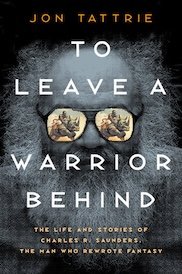
Bookshop.org (which also supports your local bookstore!)
Libro.fm (which also supports your local bookstore!)
Monster Complex® sometimes uses affiliate links. (At no additional charge to you. Relax.)
More Charles R. Saunders books
Imaro
Griots: A Sword and Soul Anthology
Find more about Charles R. Saunders online
More from Monster Complex®
30+ Black Authors for fans of Horror, Urban Fantasy, and Paranormal Fiction
Black Panther: Tales of Wakanda—a ground-breaking anthology with stories from amazing authors
Weird Tales Presents: Johnny Compton’s short story collection ‘Midnight Somewhere’
It’s Lit: Octavia E. Butler, The Grand Dame of Science Fiction
Jessica Cage Interview: Bringing Diversity to Diverse Genres
Black SciFi Authors including Nnedi Okorafor, Nalo Hopkinson, and Nisi Shawl

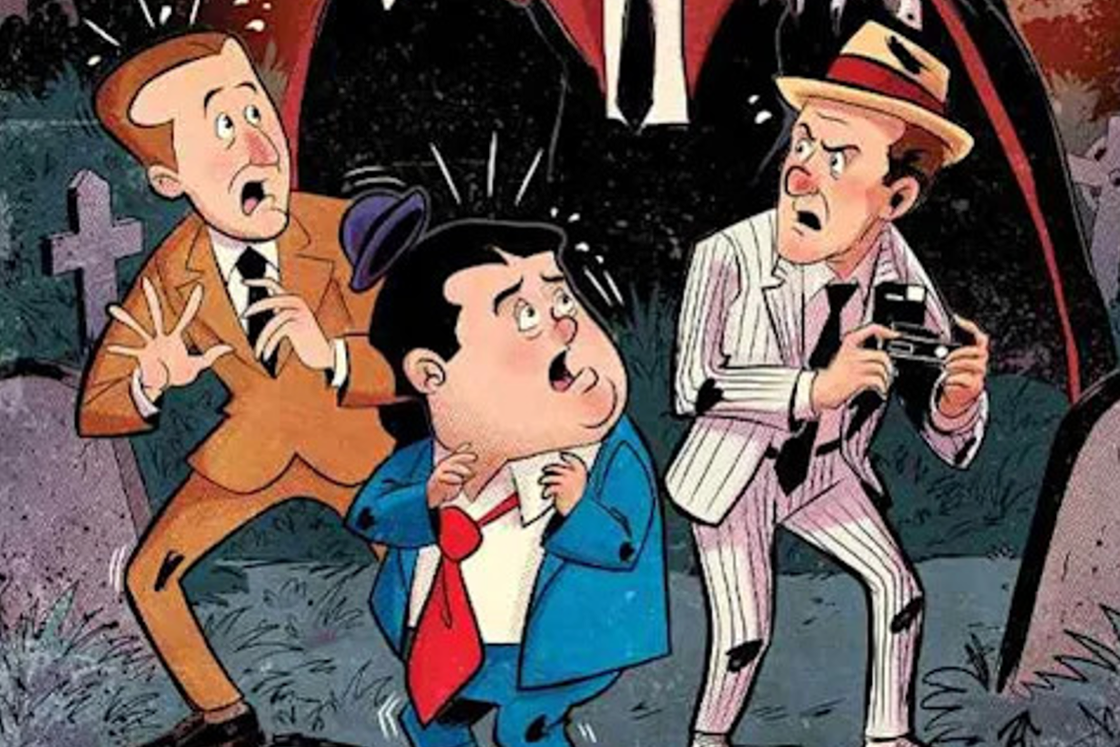

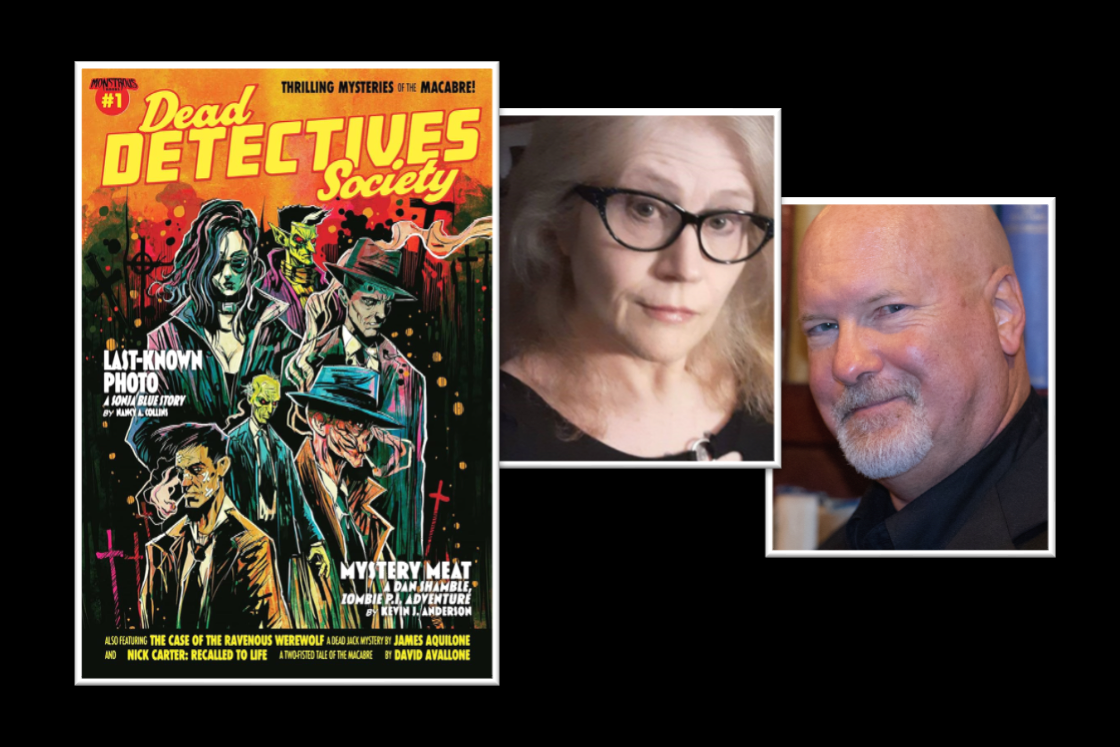




The zombie detective deals with organized crime (involving, of course, actual monsters)… Plus there’s a TV show in the works! “Series fans will be pleased to see Shamble still going strong.”