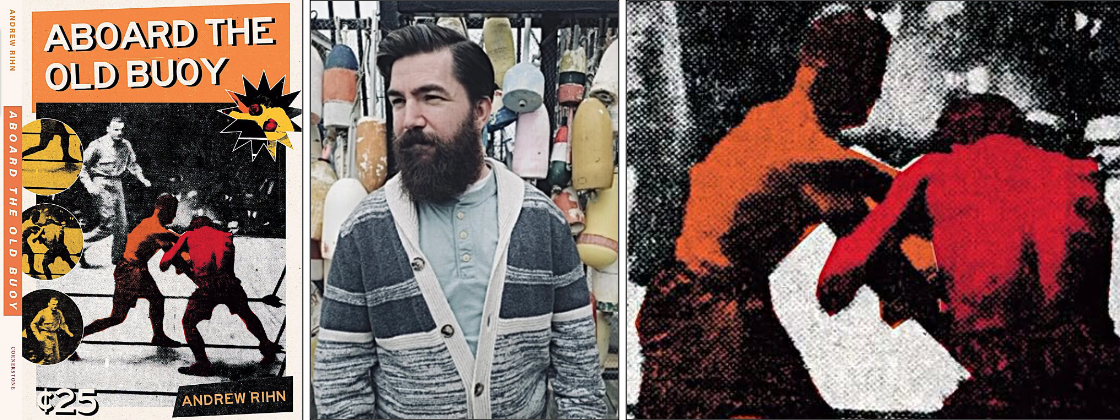
A new novel from boxing writer Andrew Rihn expands on the world of the Conan creator’s stories about Sailor Steve Costigan
“It was honestly so much fun brainstorming possible adventures—and mis-adventures—that Steve Costigan Jr. could get into. The book has a voodoo curse, mob violence, a blood cult, and a sparring session with a robot—all while Costigan is sailing around Central and South America.”
Talking about legendary author Robert E. Howard, most conversations revolve around his sword & sorcery fiction and other adventure tales. After all, this is the guy who created Conan the Barbarian.
But when we started our Monster Complex® series of articles exploring the fiction of REH, I quickly found myself obsessed with his funny stories starring merchant Sailor Steve Costigan.
As described by REH World, Costigan is a merchant sailor—and champion boxer—roaming the Asiatic seas with “fists of steel, a will of iron, and a head of wood.” Written in the 1920s and 1930s, these hilarious, “Texas tall-tale style” stories appeared in the pages of Fight Stories, Action Stories, and Jack Dempsey’s Fight Magazine.
My new obsession with Costigan led to Monster Complex talking about Howard’s boxing fiction. (Along with, of course, related stories from The Munsters and Hellboy and The Hulk and other monster fiction.)
For that article, one of the experts I reached out to was Andrew Rihn, who writes a lot about boxing. Among other things, he wrote the amazingly relevant article “The Fight Fiction Of Robert E. Howard” for The Fight City.
Which leads us now to Andrew Rihn’s brand-new novel Aboard the Old Buoy—where the author imagines the adventures of the son of REH’s boxing hero.
From the official description:
Steve Costigan Jr., a boxer from Texas, sails from New Orleans to San Francisco in 1955 aboard the Old Buoy. Steve gets cursed, fights a three-on-one battle royale in Havana, is stabbed by gangsters in Colombia, spars a robot in Ecuador, and stumbles into a blood sacrifice in Chile.
Costigan’s many scrapes and setbacks fuel Andrew Rihn’s campy yet sincere pulp stories, inspired by the work of Robert E. Howard. Best known for creating Conan the Barbarian, Howard also wrote numerous boxing stories about a character named Steve Costigan, a boxer who sailed and fought around Asia.
Aboard the Old Buoy picks up 20 years after Howard’s original stories, with the son following in his father's footsteps.
Monster Complex talked with Rihn about his new book Aboard the Old Buoy—including why he chose to add a new character to the REH world, the challenges writing such a project, and what led to his obsession with writing about boxing…
1. What inspired you to write Aboard the Old Buoy? (And what made you write about the son instead of his father?)
I’ve been writing for years, on different subjects and in different genres. First it was poetry. Then I switched to scholarly writing. I had a little success in both—some small press poetry chapbooks, a few academic articles.
Around 2018, I decided to try writing about boxing. My first attempt became a collection of prose poems, Revelation: An Apocalypse in Fifty-Eight Fights. I wrote one prose poem for each of Mike Tyson’s pro fights (this was before he fought Jake Paul), each poem exactly 100 words long. After that, I began writing nonfiction about the sport—articles on specific historic fights, then articles on some of the literature around the sport.
That’s how I fell into Robert E. Howard and his Sailor Steve Costigan stories. I’m always on the lookout for boxing stories, and I always have an eye for being able to connect the unexpected. Finding out one of the premier sword-and-sorcery pulp writers also had a recurring boxing character? I jumped all over that!
I read all the stories I could find online. There’s a devoted and wonderful community of REH fans out there, and they have done a great job at collecting his boxing stories and detailing REH's love of boxing. I ate up the work of Mark Finn and Chris Gruber in particular. I even wrote an article myself, with the goal of introducing REH’s work directly to boxing fans.
Expanding on the worlds REH created is nothing new. Lots of writers have re-imagined Conan in particular, and the idea of writing into the world of Sailor Steve Costigan became quite tempting. I decided early on, though, that I didn't really want to work on my own iteration of his canonical character, so I decided to expand the universe just a little. I decided I’d give Steve a son.
Honestly, I knew I’d never match the voice REH created in his Sailor Steve stories. They’re humorous and violent and he gives the character this little silver lining of naivete. Writing humor is maybe the most difficult thing, at least for me. I definitely wanted to capture the energy of those early pulp magazines of the 1920s and 1930s, though. I just didn’t want the pressure of trying to pattern the writing of REH too directly.
2. How much of this project is about your being a fan of boxing and how much as a fan of Robert E. Howard?
As I started to fall in love with writing about boxing, I knew I wanted to approach the sport from multiple perspectives and through multiple genres. My first book was poetry. I’ve been working on loads of nonfiction, including a nearly complete collection of essays on boxing and visual art (hopefully to be published next year).
So in that regard, fiction made a lot of sense. And writing pulp fiction made sense to me, because I think the sport has so much in common with the genre—the “low” culture, the tawdry, the burlesque. Boxing is sometimes referred to as “the red light district of sports,” and with good reason.
I am interested in the relationship between “high” literary boxing fiction—Jack London, Ernest Hemingway, Joyce Carol Oates, and F. X. Toole, among others)—and the “low” pulp stories that were once so prevalent. It’s all part of the same cloth to me. I love all the different parts.
3. What was the most exciting thing about writing Aboard the Old Buoy?
The most exciting thing was really trying to embrace the pulp ethos—adventure, action, violence, melodrama, sex. Pulp is a fascinating stylization of reality, a hyper-reality of sorts.
As a writer, especially one who’d been reading so much Raymond Carver and other more recent realist authors, it was honestly so much fun brainstorming possible adventures—and mis-adventures—that Steve Costigan Jr. could get into. The book has a voodoo curse, mob violence, a blood cult, and a sparring session with a robot—all while Costigan is sailing around Central and South America.
I got to draw on a lot of varied inspirations, some consciously, some unconsciously. There’s a sailor with a tattoo I’d first seen in the movie Master and Commander. My robot sparring session was inspired in part by an article about Jack Dempsey. I was energizing to be able to kind of collage all these disparate influences into this pulp story.
4. What was the most surprising challenge writing Aboard the Old Buoy?
The most challenging aspect wasn’t surprising. REH’s boxing stories were humorous, sometimes laugh-out-loud funny. I wanted to keep some of that, but humor writing does not come naturally to me. Not the least bit. That was definitely a challenge.
Maybe a more welcome challenge was writing the fight scenes. It is akin to the way writers who love science have to write science fiction.
On the one hand, you have the desire to keep it “real” and accurate, but on the other hand, you have the desire to push into a more fantastic, more wild space. Writing fight scenes that were realistic enough to satisfy my boxing brain, but maintained the frenetic pace and over-the-top violence to satisfy my pulp brain—that was a welcome challenge. I hope readers enjoy what I’ve put together for them.
One fight I re-watched while writing, and looked to for inspiration, was the 1965 match between former champion Floyd Patterson and the iron-jawed Canadian George Chuvalo. The Ring magazine named it Fight of the Year, and deservedly so.
Chuvalo passed away recently. Interestly, he had a small role in the 1986 movie The Fly. Chuvalo arm-wrestles Jeff Goldblum, whose transformation is giving him inhuman strength. Goldblum snaps the former boxer’s arm.
5. Given that REH is so much more known for his savage sword type fiction... how did you even hear about his boxing series? (How long have you known about those stories?)
I can’t recall exactly how I first ran across REH’s boxing stories. I read a lot, and I try to read a varied body of work, but as I said, I am always looking for that boxing connection.
One thing that is interesting about REH is that he wrote a lot of poetry. A lot. He wrote some poems about boxing, one of which he published in The Ring magazine in 1928. He’d also had a letter to the editor published there two years earlier, in which he detailed his view of the greatest heavyweights in history.
Find Aboard the Old Buoy
Bookshop.org (which also supports your local bookstore!)
BTW, our Amazon link is an affiliate link. (But it’s still the same price, so relax.)
Find Andrew Rihn online

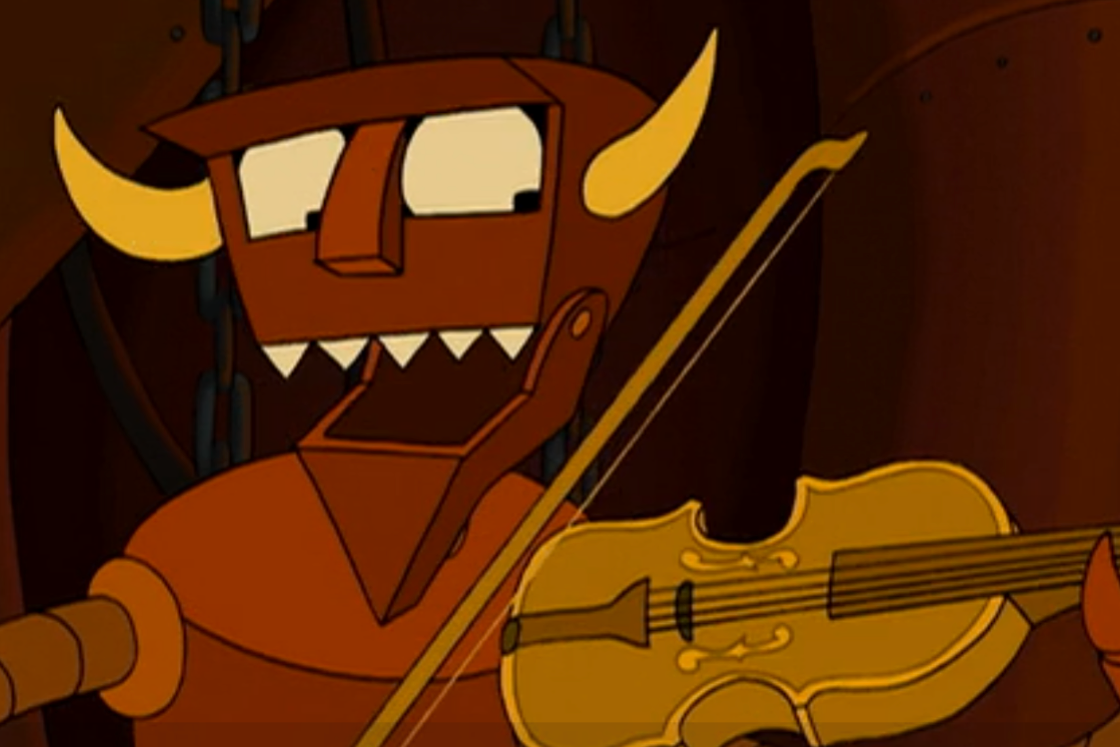
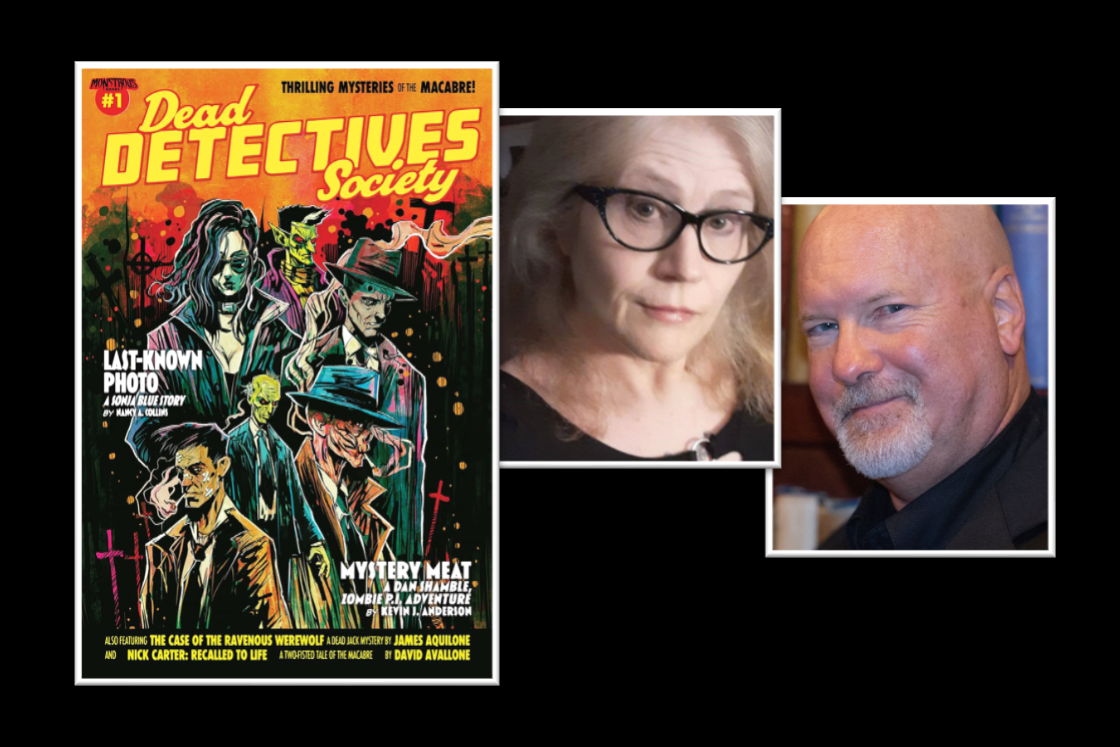
How boxing writer Andrew Rihn expands on the world of REH’s Sailor Steve Costigan. “It was so much fun brainstorming possible adventures—and mis-adventures—Steve Costigan Jr. gets into.”