Hold the Ring: Fighting Hellboy, The Hulk, The Munsters, more
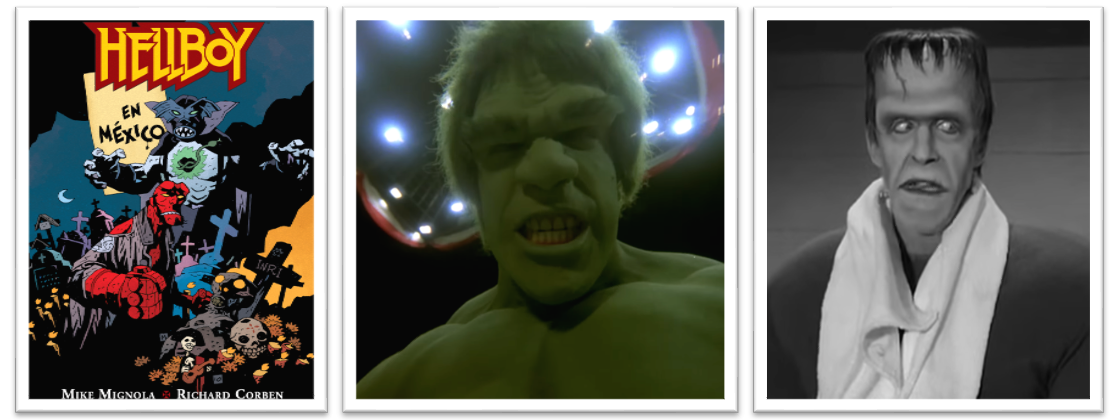
BOXERS and WRESTLERS who are MONSTERS! (And, well, more than that.)
“They should quit wrestling and get ready to fight monsters.”
Sports! Yay! As a man, I feel like I’m supposed to say that. (Of course, my wife will be the first to admit that I hardly follow any sports that aren’t just background for fiction.)
We’re here to talk about horror and SF&F characters that come out fighting: Examples of boxing and wrestling stories including Hellboy, Herman Munster, and The Incredible Hulk, plus pro-wrestler and monster-hunter El Santo, the boxing Invisible Man, and a couple of (related?) hilarious sailor-turned-boxers—Popeye the Sailor Man and Conan creator Robert E. Howard’s Sailor Steve Costigan.
We also talk with a couple of authors who are experts:
Andrew Rihn writes a lot about boxing. Among other things, he wrote Revelation: An Apocalypse in Fifty-Eight Fights, a poetry collection about, well, Mike Tyson. Rihn also wrote the amazingly relevant article “The Fight Fiction Of Robert E. Howard” for The Fight City.
Mark Finn is an author, an editor, and a pop culture critic—and nationally recognized authority on Robert E. Howard. He writes comics and fiction, performs community theater, and runs a small-town movie theater in North Texas. His books include co-editing the anthology Swords & Larceny, and writing the biography Blood and Thunder: The Life and Art of Robert E. Howard.
Monster Complex® sometimes uses affiliate links. (At no additional charge to you. Relax.)
My confession: Why I actually did this article…
To be clear, I’m actually here because of author Robert E. Howard. He’s remembered most for creating the category of Sword & Sorcery—and the character of Conan the Barbarian.
But when we started our Monster Complex® series of articles exploring the fiction of REH, I quickly found myself obsessed with his funny stories starring merchant Sailor Steve Costigan. Right now, I’m only just a few stories in, but am excited about continuing to read these hilarious first-person adventures.
Somewhat coincidentally, my current reading list also includes classic comic strips starring Popeye the Sailor Man.
Then I noticed some similarities between the two series. Like how Popeye and Steve Costigan—both “sailors who are boxers”—made their debuts within just a few months of each other.
Then I started to notice other related characters and series…
In this article:
(Conan creator) Robert E. Howard’s sailor Steve Costigan
When Hellboy hung out with masked wrestlers
That story Steel about boxing with robots
When Herman Munster was a wrestler
The Incredible Hulk and that boxer
El Santo the pro wrestler and monster hunter
When the Invisible Man was a boxer
Popeye The Sailor Man
More REH boxing in the FISTS OF IRON books!
Wait—what’s the deal between Robert E. Howard and Popeye?
But what about boxing AND wrestling in this article?
While the whole inspiration for this article was REH’s boxing stories, an article for Monster Complex® also needed to include some, well, monsters. Hence the need to widen the field to include wrestling stories with the likes of Hellboy and The Munsters.
But would me talking about both boxing and wrestling in the same article make me look stupid? (Would that be like mixing together football with rodeo?)
Multi-genre boxing writer Andrew Rihn helped me calm down. He says the two sports have always been held in relationship to one another—sometimes friendly, sometimes tense.
“I think the big distinction, apart from the aesthetic tastes of fans,” he told me, “is that pro wrestling is scripted, while boxing is improvised.”
Or at least, he says, boxing is not supposed to be scripted.
“When the two sports are put in conversation with one another, there is some chafing experienced by the boxing side because the comparison inevitably dredges up the seedier bits of the sport’s past—fixed fights, mob control, and controversies.”
Now, ladies and gentlemen—let’s get ready to rumble!
(Conan creator) Robert E. Howard’s Sailor Steve Costigan
I’m starting here because Robert E. Howard is why the idea for this article even came to me…
Pulp author legend Robert E. Howard is, of course, most famous for creating the Sword & Sorcery icon Conan the Barbarian AKA Conan the Cimmerian.
But REH actually wrote lots of stories about several characters—including philosophical warrior Kull the Conqueror AKA King Kull AKA Kull of Atlantis, plus short-tempered sword woman Dark Agnes, somber Puritan Solomon Kane, police detective Steve Harrison, Pict king Bran Mak Morn, Texas gunfighter El Borak, and hillbilly Breckinridge Elkins.
As I started my Monster Complex® series of articles about Howard, I was soon overwhelmed by REH’s hilarious stories about sailor-and-boxer Steve Costigan. The character, a merchant sailor on the sailing ship Sea Girl, is also the ship’s champion boxer.
TO BE CLEAR: These Steve Costigan stories do NOT include any swords or sorcery. They are about normal human beings dealing with normal human being stuff. (Well, in the genre sense.)
But they are hilarious and they are action packed. I was SO struck by these stories during my Robert E. Howard research that I had no choice but to start talking about them.
(Even though, granted, Monster Complex® is supposed to be talking about, well, monsters. Ahem.)
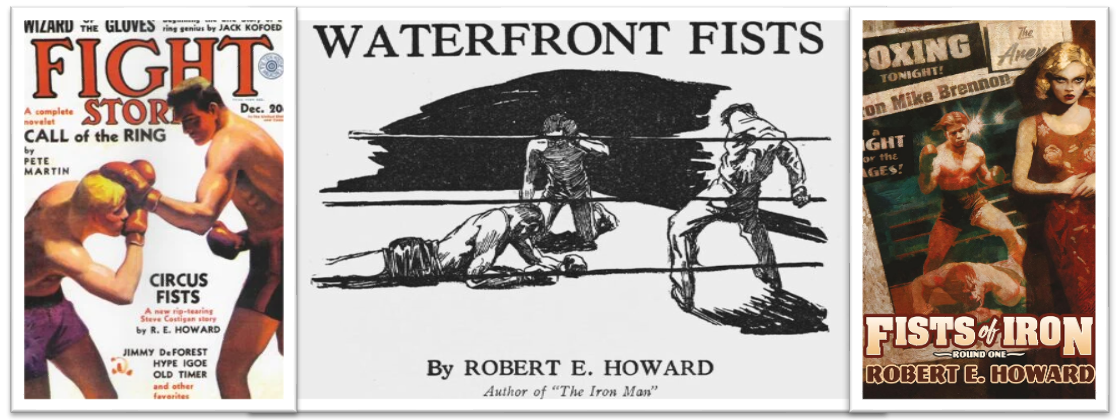
Costigan’s action-comedy stories, told in an unreliable first-person by the sailor himself, were published in the 1920s and 1930s in pulp fiction magazines Fight Stories, Action Stories, and Jack Dempsey’s Fight Magazine.
And if I’m counting right, there are actually more REH stories about boxer Steve Costigan than about any of his other characters—including Conan.
“I couldn’t believe that Howard had a sense of humor,” agrees Mark Finn—who just happened to have written a biography about author Robert E. Howard. “And moreover, was funny! It hooked me and really, it’s never let me go.”
(We’ll be talking with Finn again in a bit.)
As for sailor-turned-boxer Steve Costigan, this is how he’s described by the World of Robert E. Howard:
Howard used understatement and misdirection to create humor. He established Costigan as a most unreliable narrator, a sailor who can’t admit when he’s had a lot to drink, doesn’t realize he is a terrible judge of character and acts before he thinks.
These character flaws are the heart of the boxing series and make Costigan as sympathetic as he is hilarious. Told in a jaunty first-person style and in the past tense, the Costigan stories are presented in a slang-riddled, colloquial fashion.
Howard grew up in the storytelling tradition of the Southwest and the narrative structure of the Costigan stories mirrors this, especially in the endings, with their humorous stings, inappropriate life lessons, and outright punch lines.
Interesting side note: REH also wrote several stories about sailor and boxer “Dennis Dorgan.” Long story, but these are essentially also Steve Costigan stories, but with a different name. (Only one of them was actually published during the author’s life—all the rest weren’t published until decades later.)
Rihn explains why Howard’s boxing stories fit into the larger picture of, well, stories about boxing:
“By the time Robert E. Howard began writing his Sailor Steve Costigan stories in 1929, there was definitely a growing body of work in the U.S. that we might collectively define as ‘boxing literature.’”
Finn agrees:
“Within the architecture of the pulps, yeah, there were a lot of people writing fight fiction that ran that gamut from ‘Pretty good’ to ‘What the hell?’ If you read any single issue of Fight Stories [magazine] that REH has a Costigan story in, you’ll notice that the Howard story shines like a diamond in a coal bin.”
According to Rihn, by that time, the growing category “boxing literature” was already pointing in two directions:
The first thread was journalism. “Newspapers, mostly, that wrote coverage of fights and gossip about the fighters,” Rihn says. “This was before television, remember, and mostly before radio began broadcasting live sporting events in the early 1920s.”
The other thread was boxing fiction. Specific examples include fiction from authors Bernard Shaw, Arthur Conan Doyle, Jack London, O. Henry, Ring Lardner, and Ernest Hemingway. While those are primarily literary authors, Robert E. Howard was among the authors who were writing stories about boxing for pulp magazines.
Notes Rihn:
“The novels are great, but if anyone is looking for something quicker, you can’t go wrong with the short stories.”
He’s also quick to recommend a couple specific REH’s boxing stories:
The first Steve Costigan story, “The Pit and the Serpent” is a good place to start.
Or Howard’s longer story “The Iron Man”—which isn’t officially a Sailor Steve Costigan story, but there is some overlap.
As Finn points out:
“What’s really interesting is the number of places Howard successfully published boxing stories—not just in the sports pulps. REH wrote more boxing and/or humorous stories than any of the fantasy and sword & sorcery titles for which he is so well known.”
And yet, Finn continues:
“If you write anything about how funny and popular (in their time) the boxing stories were, or the funny hillbilly stuff, it flies in the face of trying to make the point that Howard was ‘the guy who wrote Conan.’”
Find Steve Costigan stories
Robert E. Howard’s Sailor Steve Costigan: The Complete Collection of Published Stories
Bookshop.org (which also supports your local bookstore!)
Waterfront Fists and Others: The Collected Fight Stories of Robert E. Howard
Bookshop.org (which also supports your local bookstore!)
Related link: The Fight Fiction Of Robert E. Howard (The Fight City)
Watch for REH’s FISTS OF IRON books!
There’s a whole set of books coming that will celebrate Robert E. Howard’s boxing writing—four volumes! (New editions of the out-of-print collector’s editions.) The first book is available now, with three more volumes coming. We’ll share more details about these REH books (and more) below…
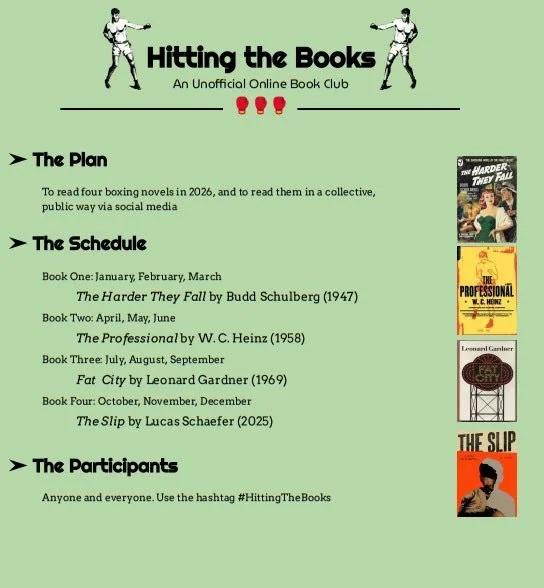
The Boxing Book Club
As of our interview, Rihn is running a year-long, fully-online boxing book club. People post on social media using the hashtag #HittingTheBooks. He says that anyone who wants can participate or follow along.
But WAIT—what’s the deal with REH and POPEYE?
Of course, the REAL thing that got me started on this whole article was my question about Robert E. Howard’s Sailor Steve Costigan and the comic strip character Popeye the Sailor Man—both of whom were sailors and boxers and debuted in 1929. So, what IS the connection between REH’s sailor-and-boxer Steve Costigan and the comic strip character sailor-and-boxer Popeye? We’ll talk about THAT in a bit.
But first, let’s talk about the other boxers and wrestlers in this article—like Hellboy, that robot Steel, sitcom star Herman Munster, the TV version of The Incredible Hulk, pro-wrestler (and monster-hunter) El Santo, and the Invisible Man…
When Hellboy was wrestling
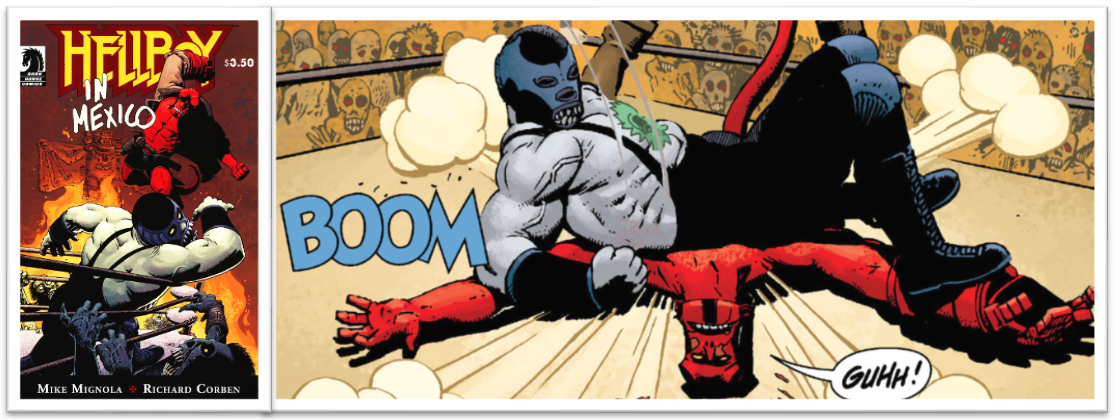
“They said they’d had a vision—the Virgin Mary told them that trouble was coming, and that they should quit wrestling and get ready to fight monsters.”
Created by writer and artist Mike Mignola, Hellboy is a well-meaning half-demon summoned from Hell as a baby by Nazi occultists. (But he got better.)
Working on supernatural cases—sometimes as a loner, other times with monster-hunter agency BPRD—Hellboy fights the darkness in stories inspired by folk tales, pulp fiction, and Lovecraftian horror. First appearing in the comics in 1993, Hellboy has since appeared in lots more comic books, plus books, movies, and more.
The Hellboy story “Hellboy in Mexico” shows how in the 1950s, Hellboy lost a few months in Mexico drinking and wrestling. He was hanging out with brothers who weren’t just masked wrestlers—they also hunted monsters. When one brother is taken by vampires, Hellboy has to search for his lost friend. (And, well, the story takes a strange turn once they find him.)
Find the trade collection Hellboy in Mexico
The story is also in Hellboy: The Complete Short Stories Vol. 1
Bookshop.org (which also supports your local bookstore!)
That robot boxer in Steel AKA Real Steel
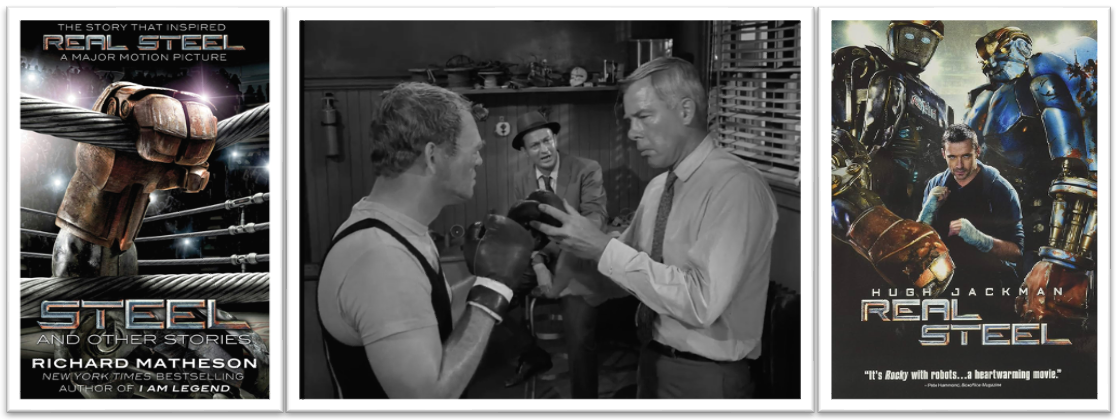
Want some metal-fisted boxing involving robots? In 1956, Richard Matheson’s short story “Steel” was published in an issue of The Magazine of Fantasy & Science Fiction:
In the future, human boxers have been replaced by androids. Now barred from entering the boxing ring, a former human boxer struggles to cope with how his career has been taken over by machines.
In 1963, the story was adapted for the sci-fi anthology TV show The Twilight Zone. Also titled “Steel,” the episode (5.2) starred Lee Marvin. In 2004, the story was then adapted for The Simpsons with “I, (Annoyed Grunt)-Bot” (episode 15.9). In 2011, the story was adapted again for the movie Real Steel, starring Hugh Jackman and directed by Shawn Levy.
Short story collection Steel And Other Stories by Richard Matheson
Bookshop.org (which also supports your local bookstore!)
Libro.fm (which also supports your local bookstore!)
Find The Twilight Zone Season 5
Find The Simpsons Season 15
Find the movie Real Steel
Why The Munsters is part of this article
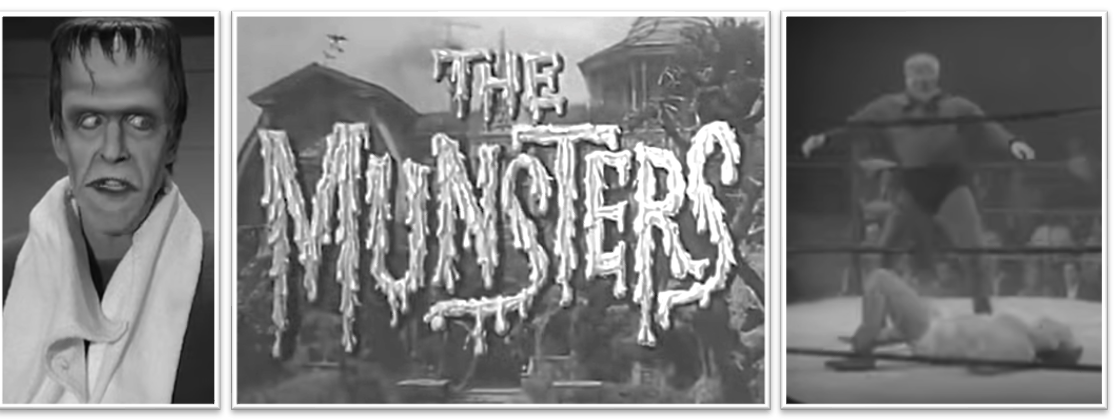
The family sitcom The Munsters (1964-1966) followed a “normal” family that looked a whole lot like the Universal Monsters. Especially Herman Munster (who had been assembled by Dr. Frankenstein), and Grandpa (a retired Dracula who now spent a lot of time experimenting in the family’s dungeon).
For the episode “Herman the Great” (1.8), Herman Munster hopes to raise some extra money he can set aside for his son’s college fund. So, he takes on a second job as a professional wrestler. (It didn’t last.)
The guest cast for this episode included real-deal wrestlers Billy Varga, Tiger Joe Marsh, Matt Murphy, Gene LeBell, and Jay S. York. Even pro ring announcer Jimmy Lennon played himself.
Also in the episode was Johnny Silver, a busy character actor who later would appear on an episode of Kolchak: The Night Stalker. But is probably more remembered for his part in the 1955 movie musical Guys and Dolls.
(BTW, a case can also be made how The Munsters borrowed elements from Marvel Comics. I talked about that here and again here. Just saying.)
In case you’ve missed it, over the years The Munsters have been revisited a number of times. This includes a few movies and even a couple of reboot TV shows.
We talk a lot about The Munsters on Monster Complex®. Seriously, these are just a few examples:
Celebrating the classic TV show ‘The Munsters’ (with lots of links)
14 Monster Families from The Munsters, Hotel Transylvania, more
Find The Munsters 1960s TV show online
That boxing story on The Incredible Hulk (1977-1982)
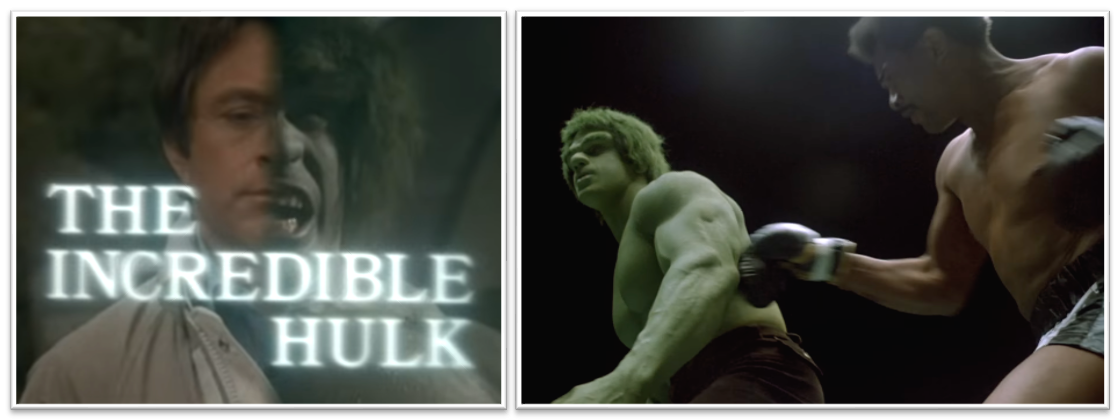
This TV show, based on the Marvel Comics characters, starred Bill Bixby as human Dr. David Banner (renamed from the comic book) and body-builder Lou Ferrigno as Banner’s alternate identity, the gamma-radiated beast The Hulk.
For this adaptation, Banner was a fugitive presumed dead. Following a lab accident, whenever Banner loses his temper, he transforms into the enormous, green-skinned humanoid The Hulk. His monster side wrongly believed to be guilty of murder, Banner travels the country in secret, searching for a cure. Along the way, he takes on odd jobs.
Following a couple of TV movies, the beginning the of the show itself—episode 1.1 of the actual series—was the boxing story “Final Round.”
In Philadelphia, a down-and-out boxer who goes by the name Henry “Rocky” Welsh rescues Banner from muggers. When Banner gets pulled into the boxer’s world, they’re all driven to a deadly fight when the promoter, to avoid prison, arranges a deadly fight for Henry…
Find The Incredible Hulk Season One
Fandango at Home (or watch for Fandango’s sale on the whole series)
Pro-wrestler (and monster-hunter) El Santo
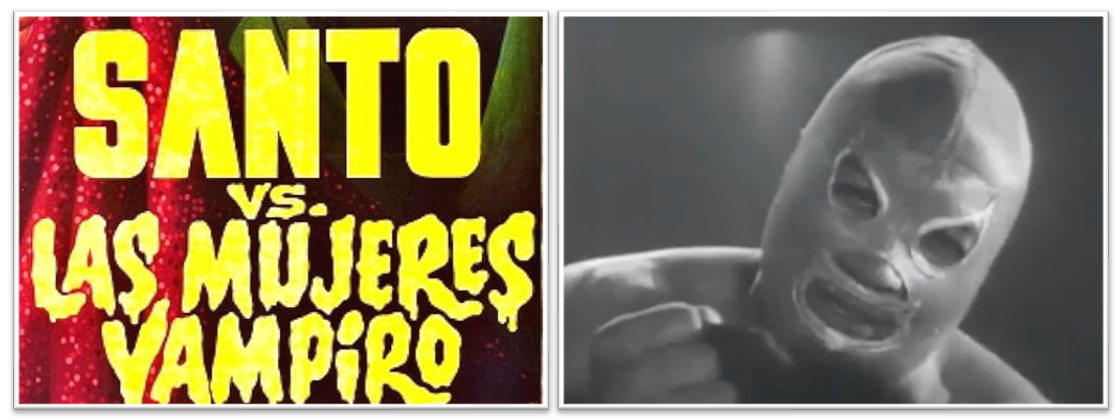
Masked wrestler El Santo (translated as “The Saint”)—his real name Rodolfo Guzmán Huerta (1917-1984)—played himself as a monster hunter in a bunch of monster movies from the 1960s-1980s.
This included a bunch of titles, just some of which included:
Santo vs. the Vampire Women (1962)
Santo vs. the Zombies (1962)
Santo in the Vengeance of the Mummy (1971)
Santo and Blue Demon vs. Dracula and the Wolf Man (1973)
Santo and Blue Demon vs. Dr. Frankenstein (1974)
Considered a folk hero—and often called one of “the greatest legends in Mexican sports”—El Santo’s wrestling career spanned nearly five decades. He starred or co-starred in more than 50 movies. Altogether, Santo (well, the character of Santo) was fighting monsters, evil scientists, criminals, secret agents, and the like.
His best-known movie outside Mexico—1962’s Santo vs. The Vampire Women—was featured on Mystery Science Theater 3000. Apparently, the movie also had higher production values than many of his other movies, and the story did more to develop the character’s overall story.
As of press time, only four of his movies have been dubbed into English. (Side note: Some of the English-dubbed movies changed his name from “Santo” to “Samson.” Just saying.)
Did you even see that boxer in Abbott and Costello Meet the Invisible Man (1951)?
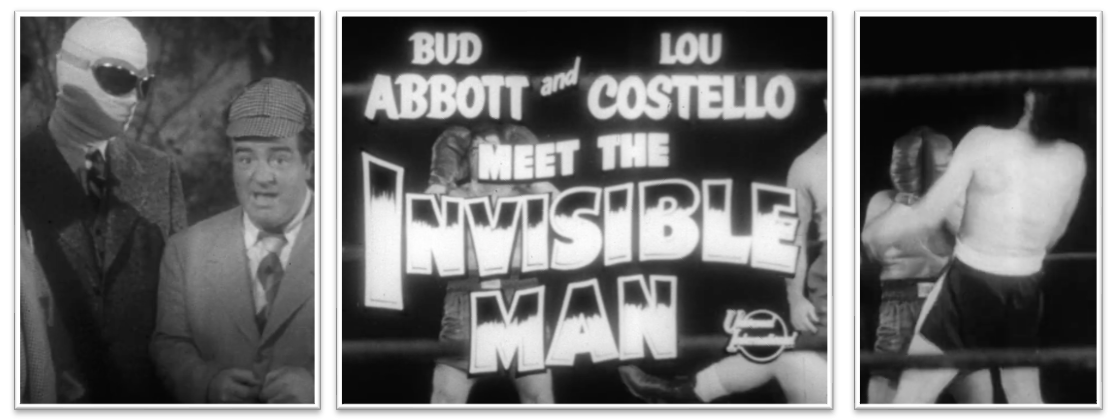
As part of the Universal Monsters library, Abbott and Costello Meet the Invisible Man was one of the crossover movies where the comedy team got to meet up with official monsters.
By this point, they had already been in the amazing crossover Abbott and Costello Meet Frankenstein—which included the Frankenstein Monster, Dracula, and the Wolf Man. Even more cool was how that cast included actors who’d played those monsters in their own movies!
For the follow-up, Abbott and Costello Meet the Invisible Man, the comedy duo now played private detectives investigating the murder of a boxing promoter. To avoid the police long enough to prove his innocence, the suspect injects himself with the experimental invisibility serum—and convinces A&C to go undercover as a boxer and trainer to help him find the real killer.
Now, what about Popeye the Sailor Man?
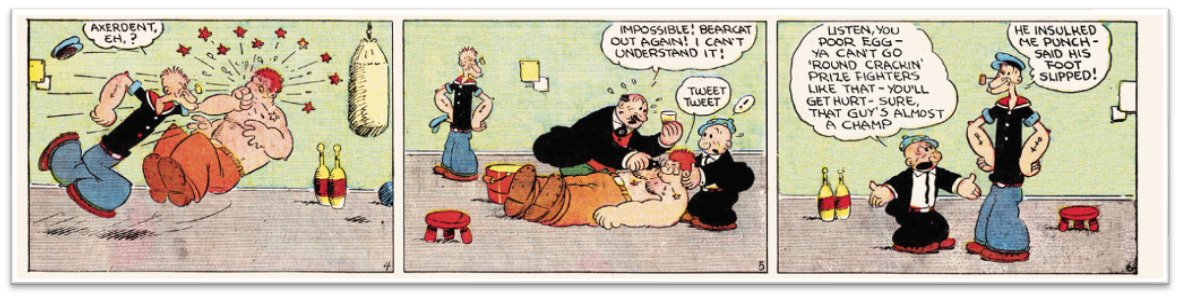
Cartoon character Popeye the Sailor Man was a major star on screen for decades. In 2002, TV Guide ranked Popeye at #20 on its list of the “50 Greatest Cartoon Characters of All Time.”
But he started out as just a guest star.
Twice.
(We’ll get to that.)
Cartoonist E.C. Segar launched the comic strip Thimble Theatre in 1919. For years, the series cast included slacker Ham Gravy, his girlfriend Olive Oyl, and her brother Castor Oyl.
During the first 10 years or so, the strip reportedly went through some format changes. (It’s been difficult for me to find and read the early archives.) But the strip eventually settled into being a kind of sitcom about the Oyl family.
Then, in 1929, there was this guest star.
In a very minor role.
When Castor, Ham, and Olive need to sail to an island, they hire a sailor to steer the boat. That sailor—Popeye—made his first appearance January 17, 1929. (I’ve started reading those early comic strips on Comics Kingdom.)
For a while, Popeye was still just a side character. But Segar soon promoted Popeye to being a regular part of the series—and, eventually, Olive’s new boyfriend. Soon, other characters from the Popeye saga were also introduced, like Wimpy, Bluto, and Swee’Pea.
In 1933, Max Fleischer started adapting Popeye for animated cartoons shown in movie theaters. Now, Popeye’s big screen debut was officially as a “guest” in a Betty Boop cartoon—however, that cartoon’s actual title was Popeye the Sailor. Reportedly, Betty herself only appears in a cameo. The actual cartoon was all about Popeye.
The sailor quickly starred in his own series of cartoons. They proved so popular that those cartoons continued to be made for more than 20 years.
Since his simple debut, Popeye has gone on to show up on TV, in comic books, games, and even that 1980 live-action movie that starred Robin Williams.
Related link: From Comics to Cartoons: The Evolution of Popeye the Sailor Man (Spinnaker)
Getting back to Robert E. Howard: More REH boxing in the FISTS OF IRON books!
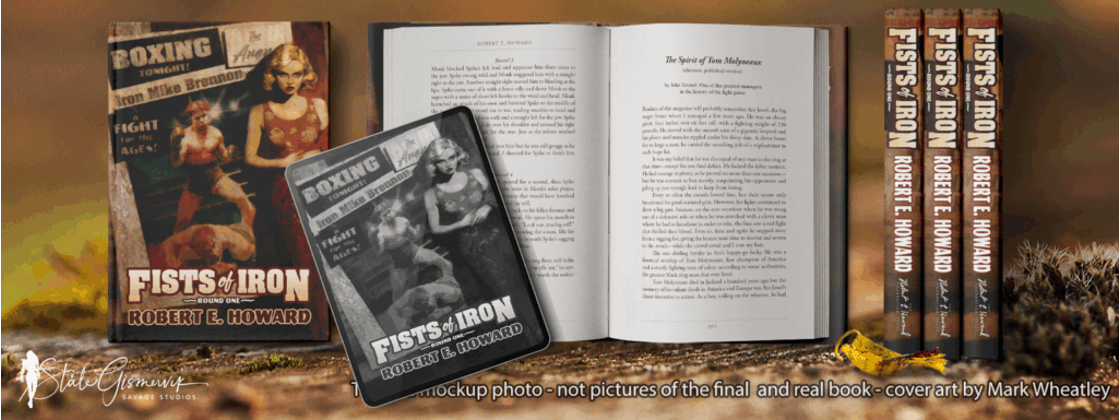
Remember when we were talking earlier about Robert E. Howard? And how he’s actually the reason this whole page even exists? Want even more boxing writing from Robert E. Howard?
There’s a set of books on the way that offer a huge collection: Previously released as collectible hardcovers, the Fists of Iron four-volume set is now being released in multiple formats. The first book is available right now, with the second one coming out this summer. (The other two books are scheduled to come out in the future.)
Finn says the four-volume Fists of Iron set from REHF Press represents the first ever complete collection of all of Howard’s boxing fiction plus poems. In fact, this has been a dream project for like twenty years—a set put together for first-time readers as well as scholars!
“Those four books represent our ‘thesis statement’ about the boxing stories,” Finn says. “You have to include them in any kind of balance assessment of REH’s career. And—as a humorist—he deserves credit for that.”
This Fists of Iron collection is just one of the sets that highlights the wide variety of Howard’s writing. For decades, he’s only been known for his sword & sorcery fiction—but he wrote so much more.
“The goal behind the REHF collections was to get ALL of Howard’s fiction and poetry—not just Conan—back in print,” Finn says. “That’s a thing that has never happened before, until very recently. We want as many people who want to read REH’s work to have as many chances as possible to do that.”
Fists of Iron represents the first ever complete collection of all of Howard’s boxing fiction (and a few poems). The first volume is all of Howard’s early efforts, attempts, and drafts. Volume 2 and 3 is all of the Steve Costigan stories, in order of creation. Volume 4 is all of the Kid Allison stories and the later boxing stories at the end of his life.
Also included in all four volumes are essays and overviews from the editorial team to provide context for all of Howard’s writing about boxing.
Find Fists of Iron online
Bookshop.org (which also supports your local bookstore!)
Of course, these REH boxing books are part of the bigger project…
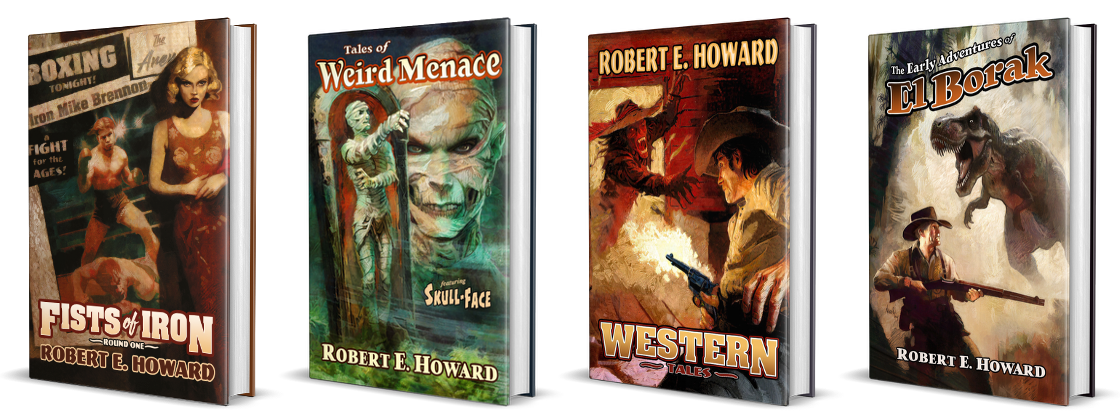
As mentioned, these sets pull Howard’s writings from a number of categories. Just a few examples include books like Tales of Weird Menace, Western Tales, and Adventures in Science Fantasy, plus collected poetry, and even collected letters.
“Now that it’s all been cataloged and re-ordered into chronological order,” Finn says, “the next step is to create the ‘evergreen’ books and offer them in paperback, hardback, and even eBook. We want as many people who want to read REH’s work to have as many chances as possible to do that.”
He also points out how—as a wider variety of Howard’s writing becomes easier to see—it also shows more of who he was.
“That has changed a lot in the last 20 years,” Finn says. “Now, when Howard’s characters and career are mentioned—sure, Conan leads off the list—but it’s quickly followed by whatever three or four characters the person writing the piece likes the best. And more and more, we are seeing Breckinridge Elkins and Sailor Steve Costigan listed alongside Solomon Kane and Bran Mak Morn.”
And that’s how Finn thinks it should be.
“Particularly when you consider that REH wrote more boxing and/or humorous stories than any of the fantasy and sword & sorcery titles for which he is so well known,” he says. “It’s not uncommon in fan circles to focus on the stuff they like the best. Louis L’Amour wrote a lot of stuff, but we know mostly about the westerns because that’s all we saw for the longest time.”
But, Finn points out, this narrow focus does the author a huge disservice.
“You can’t look at a single instance of an author’s work, especially one who wrote in different genres, and extrapolate a biography from that.”
OK, so what’s the deal with (sailor-turned-boxer) Popeye and (sailor-turned-boxer) Steve Costigan?
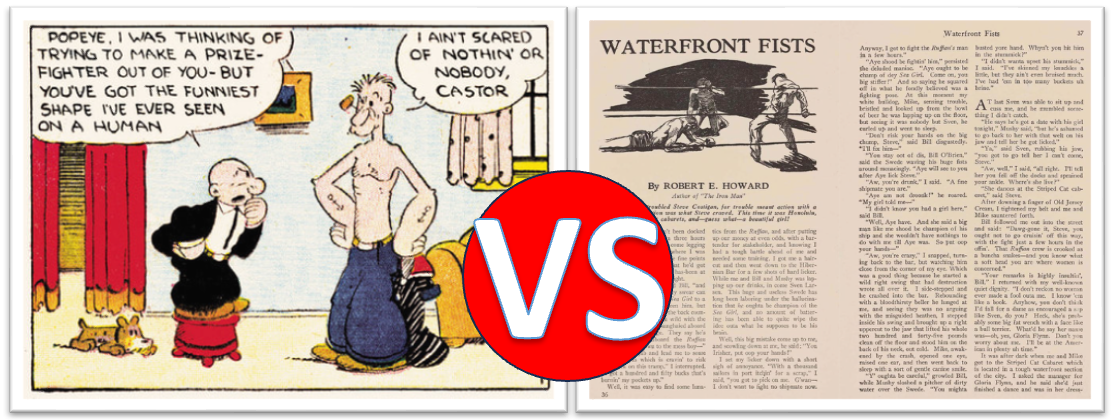
Like I said, what inspired me to start this whole article was how I was following old stories about sailors-as-boxers. From two different series. By complete coincidence. Digging through archives for these two different characters, I was shocked to suddenly see a possible connection:
As we said before, cartoonist E.C. Segar was continuing his long-running comic strip Thimble Theater—a soap opera comic that had been going on for 10 years—when he introduced the guest star Popeye the Sailor. That debut happened January 1929.
As we also mentioned, pulp fiction generator Robert E. Howard was writing lots of stories about lots of characters for different adventure genres. He was about to invent the category of Sword & Sorcery. He would soon start writing stories about a sword-wielding adventurer named Conan the Barbarian. But during all this, REH also introduced Steve Costigan the Sailor. In July 1929.
The similarities immediately made me wonder. Were there any possible connections? Or were these similarities just common stuff everyone was writing about back in the 1920s?
“While I don’t claim to know anything about Segar’s creation of Popeye,” Rihn tells me, “that both sailor/boxer characters emerged almost simultaneously is fascinating. However, there was a widely established connection between the armed forces and boxing.”
Rihn says that during World War I and beyond, military ranks often featured boxing programs.
“They provided amateur tournaments for their ranks,” he says, “and plenty of professional boxers got their start in those ranks. In a case of life imitating art, Jack Sharkey held the world heavyweight title from 1932-1933. He had learned to box while in the Navy and carried the nickname ‘The Boston Gob’ throughout his career.”
According to Rihn, the word “gob” was slang for “sailor.”
I also asked Finn about all this. What did he think about how these two “sailors who are boxers” debuted within just a few months of each other?
“Heh, that comes up a lot,” Finn told me. “It’s more useful to look at the overall timeline rather than publication for this.”
Fight Stories debuted in 1928. REH started working on something to submit to them within the first or second issue hitting the newsstand.
“The notion of sailors loving to fight was an accepted stereotype at the time,” Finn says. “There were also a few boxers who were sailors before stepping into the ring. So, the ‘fighting sailor’ cliche is more of a thing that was in the zeitgeist at the time.”
BTW, we’ll hear from these experts again in future articles.
Between my obsession with REH’s hilarious Steve Costigan stories and the long email interviews on this topic with both Mr. Rihn and Mr. Finn, you’ll be hearing from them on Monster Complex® again in coming months.
(Including the fact that Rihn has a book of his own on the way! I’m dying to tell you about it. So, watch for that!)

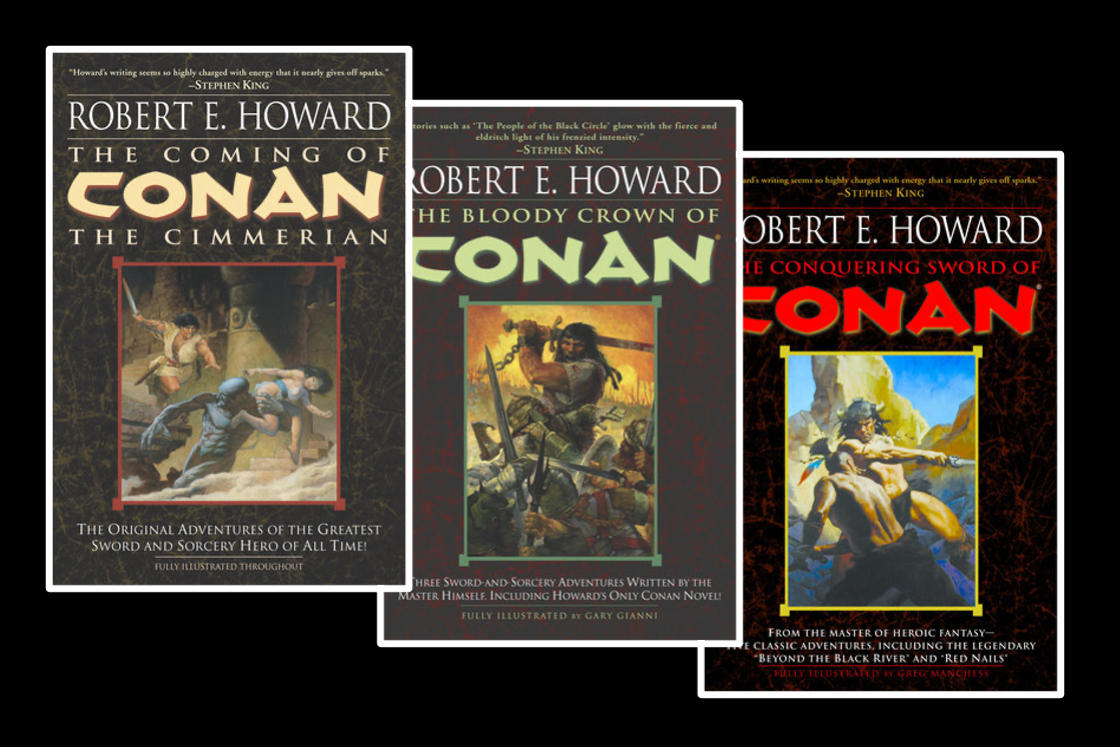
So much more than Conan: How the Robert E. Howard Foundation celebrates his work
Remembering Robert E. Howard: Creator of Sword & Sorcery and Conan the Barbarian
Expanding Weird Tales with spin-off novels and collections
Mignola on Hellboy in Love: “I loved the idea of Hellboy just trying to have a relationship.”
Making ABBOTT AND COSTELLO MEET FRANKENSTEIN: Behind the scenes of the classic movie
Here’s a big list of classic monster movies. Watch for examples from all the Universal Monster series—including some Frankenstein movies, as well as those with the Wolf Man, Dracula, and more!