Godzilla: Happy Birthday to the Director Who Launched Kaiju Movies
Japanese film director Ishirō Honda is one of the key figures who brought the world Godzilla—and the launch of kaijus as a whole movie category.
With his birthday coming May 7, we celebrate the movie making of filmmaker Ishiro Honda (1911-1993). He was one of the primary creators behind Godzilla—and kaiju movies in general.
Over five decades working in movies, Honda directed 46 films. He worked in a number of capacities on films in a number of categories—but is most remembered for all those giant monster movies with special effects director Eiji Tsuburaya. This includes Honda directing most of the original Godzilla movies from 1954-1975.
The whole series began with 1954’s Gojira. Honda co-wrote and directed the movie, which introduced the creature we now know as Godzilla—and launched a whole kind of movie.
Now, to be clear, this was not the invention of the “giant monster.” Earlier examples included the dinosaurs-are-still-alive movie The Lost World (1925), the giant ape movies King Kong (1933), Son of Kong (also 1933), and Mighty Joe Young (1949), and the Superman theatrical cartoon The Arctic Giant (1942).
There was also the giant monster movie The Beast from 20,000 Fathoms (1953). Which has been credited as a direct inspiration for Godzilla in Gojira.
The kaiju category—and Godzilla in particular—has led to dozens of movies, plus TV shows, books, comics, games, toys, and everything else. In fact, Guinness World Records hails the Godzilla movies as the longest-running movie franchise of all time.
Some comments regarding Honda’s work…
About Gojira, which introduced Godzilla:
“It all started with Honda’s sober-minded approach to the original Godzilla. Other directors had begged off the project, believing it was ridiculous, and that it would likely end up a laughingstock. But to Honda, this was no joke. Working with the special-effects genius Eiji Tsuburaya, who devised the genre’s signature combination of “suitmation” (a man-in-suit monster) and precisely constructed miniature sets, Honda created a monochrome masterpiece of sci-fi horror punctuated by extensive destruction sequences that elicited real-life fears of nuclear terror. Images of Tokyo smoldering in the wake of the monster, of irradiated civilians setting off Geiger counters, and of the Japanese military overmatched by the seemingly indestructible foe helped turn Honda’s entertainment spectacle into a cautionary tale about the atomic power that had not long ago been unleashed at Hiroshima and Nagasaki.” (“Godzilla’s Conscience: The Monstrous Humanism of Ishiro Honda”)
About the crime / monster movie Dagora:
“I like that there’s a whole other plot going on in the film which frankly could be a movie in and of itself, but it’s addition to this film just puts a whole new spin on things. This is a diamond heist thriller with the worldwide threat of a monster in the foreground. On paper it doesn’t sound like it will work but I have to give absolute credit to the filmmakers for blending all aspects of the movie together without it turning into a disaster, because it easily could have been.” (“Ishirō Honda Movies”)
About Honda’s history as a filmmaker:
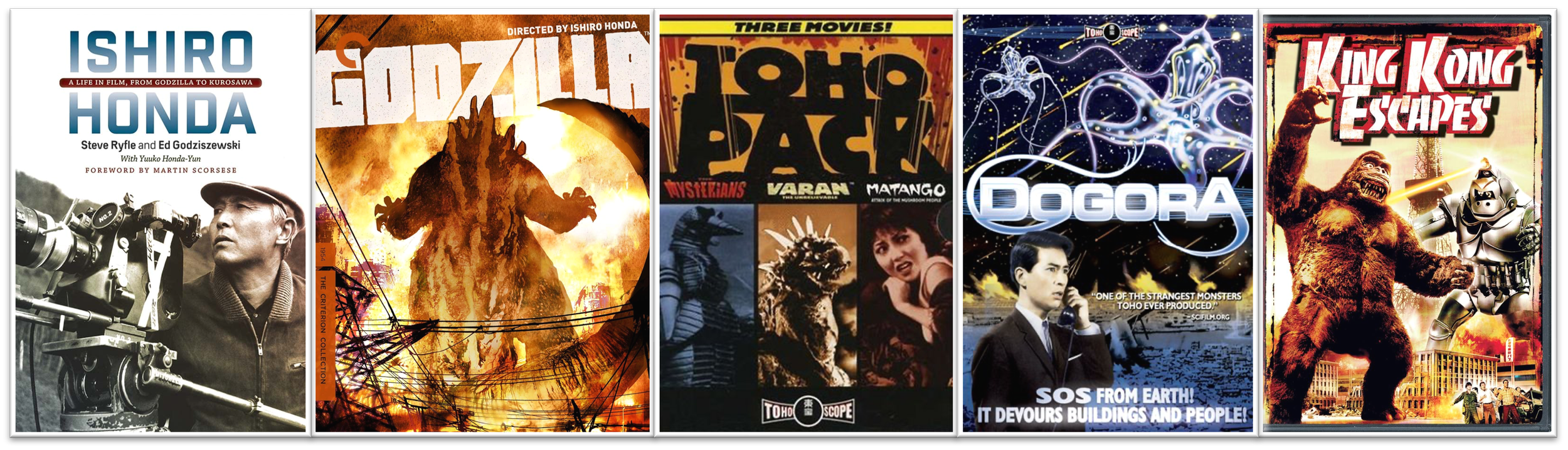
“So, I know Honda as a genre filmmaker who knew how to make the most of his studio’s resources. Which, it turns out, is actually just one facet of his career. I’ve just finished reading Steve Ryfle and Ed Godziszewski’s Ishiro Honda: A Life in Film, From Godzilla to Kurosawa (Wesleyan University Press, 2017), the first serious book about Honda in English. The portrait they paint is fascinating – admirable, yet tinged with a degree of sadness.” (“Ishiro Honda: Father of Godzilla … and more” | Cagey Films)
About the significance of world history as the movies were made:
“Beyond commentary on the burgeoning Cold War, many of Eiji Tsuburaya’s and Ishiro Honda’s production decisions are meant to reflect the Japanese experience of World War II.” (“Godzilla and World War II: Long Live the King of Monsters”)
Creatures, Crime, and Chaos: Sci-Fi and Monster Movies from Film Pioneer Ishirō Honda
Although Honda’s career hit on a number of kinds of stories, here’s a list of the movies we appreciate the most. They include most of his science fiction, fantasy, and monster movies:
1954 Gojira (first Godzilla movie)
1955 Half Human
1956 Rodan
1957 The Mysterians
1958 The H-Man
1960 The Human Vapor
1961 Mothra
1962 Gorath
1963 Atragon
1964 Mothra vs. Godzilla
1964 Dogora
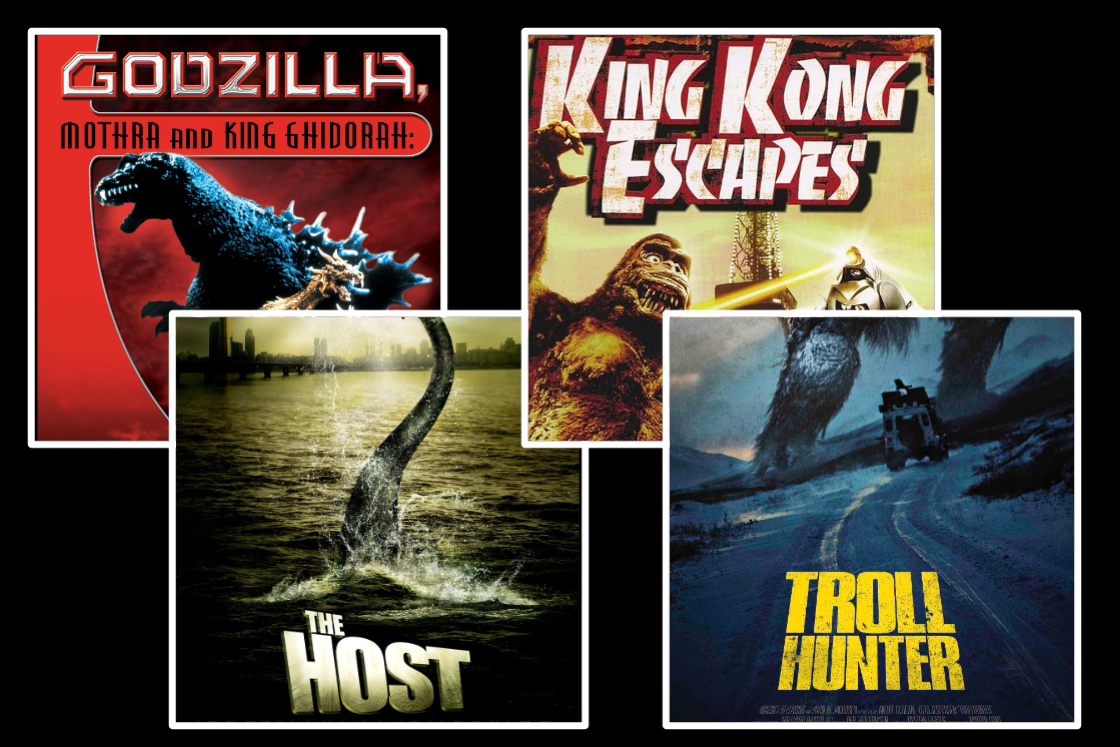
1967 King Kong Escapes
1968 Destroy All Monsters
1969 Latitude Zero
1969 All Monsters Attack
1970 Space Amoeba
Monster Complex® sometimes uses affiliate links. (At no additional charge to you. Relax.)
Related links:
More from Monster Complex®
Godzilla: Surprising facts—like when the Japanese studio said “That’s not Godzilla”
Johnny Sokko and Giant Robo—Theme Song, The History, and The Giant Monsters
How All 3 Cloverfield Films Are Connected (And wait—what about the 4th movie?)
Mothra Q&A: Translator Jeffrey Angles talks making the original kaiju fiction available in English!
Toho vs. Marvel for ‘Godzilla Destroys the Marvel Universe’ comic book event
Godzilla vs Lit (again): Dracula, Romeo & Juliet, Greek myths, more
25 Monsters Who Are Marvel Superheroes (including, well, Godzilla)



Here’s a big list of classic monster movies. Watch for examples from all the Universal Monster series—including some Frankenstein movies, as well as those with the Wolf Man, Dracula, and more!