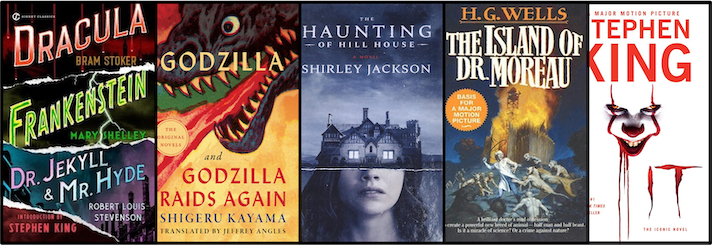
Whether they’re no longer “scary” for modern readers, these stories are still essential reading for monster fans.
Inspiring classic Universal Monster movies to newer works from John Carpenter and Diablo Cody, these books have been a big deal across the media.
In Monster Lit, there are several historic works of fiction that are must-read horror classics. Several of these have been adapted dozens of times. (Well, for some of them, HUNDREDS of times.)
But it can be thrilling to go back to the source material: Check out these classics that have inspired generations of our favorite movies and comic books and TV shows and games and more!
Below, we’ll discuss a whole range of monster books, starting with the classics that introduced us to Frankenstein’s Monster, Count Dracula, Mr. Hyde, and the Invisible Man. There are also classic books that pointed to giant monsters like Kong and Godzilla. Plus monster books that include aliens (like in John Carpenter’s The Thing), zombies and vampires (both of whom were inspired by Richard Matheson’s I Am Legend), and killer clowns (like in Stephen King’s horror novel It). There are even books about monster investigators like Kolchak: The Night Stalker and the Ghostbusters.
Find out more about these monster stories below! Free to click on any of the TOC titles to jump right to a specific section. Included in this article:
Frankenstein, Dracula, Dr. Jekyll and Mr. Hyde (in one book!)
Strange Case of Dr Jekyll and Mr. Hyde (1886) by Robert Louis Stevenson
The Invisible Man: A Grotesque Romance (1897) by H. G. Wells
King Kong (1932) by Edgar Wallace, Merian C. Cooper, Delos Lovelace
Godzilla and Godzilla Raids Again (1955) by Shigeru Kayama and translator Jeffrey Angles
Ghostbusters: The Supernatural Spectacular (1985) by Richard Mueller
Horror Fiction That Inspired Classic Monster Movies
Frankenstein, Dracula, Dr. Jekyll and Mr. Hyde (in one book!)
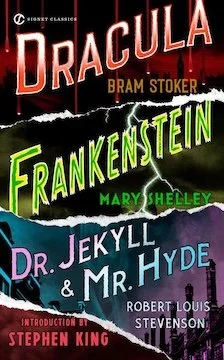
Frankenstein, Dracula, Dr. Jekyll and Mr. Hyde
by Mary Shelley, Bram Stoker, Robert Louis Stevenson
Introduction by Stephen King
“Within the pages of this volume you will come upon three of the darkest creations of English nineteenth-century literature.”
Three of the most important monster stories in the history of fiction? Of course, we’ll be talking about each of these three classics separately. But for there to be a book with all three of these at the same time? That deserves a whole entry unto itself!
In this one-volume edition, featuring an introduction by blockbuster horror author Stephen King, these three classic horror icons have held readers spellbound more than a century…
A scientist oversteps the bounds of conscience and brings to life a tortured creation…
A bloodthirsty Count draws an unsuspecting young man into a world of terrors…
A man of medicine explores his darker side only to fall prey to it…
“Within the pages of this volume you will come upon three of the darkest creations of English nineteenth-century literature,” King writes in the book’s introduction. “These three creatures…all have a great deal in common beyond their power to go on frightening generation after generation of readers.”
The three titles alone—Dracula, Frankenstein, and Dr. Jekyll and Mr. Hyde—have become synonymous with horror, serving to put a monster’s face on the good-and-evil duality of our very human nature. Inventive and subversive, these classic tales of terror can shake even the modern reader with something far more profound than fear.
Frankenstein, Dracula, Dr. Jekyll and Mr. Hyde
by Mary Shelley, Bram Stoker, Robert Louis Stevenson
Introduction by Stephen King
Find the one-volume edition online:
Bookshop.org (affiliate link) (which also supports your local bookseller)
Libro.fm (audiobooks) (which also supports your local bookseller)
Monster Complex articles:
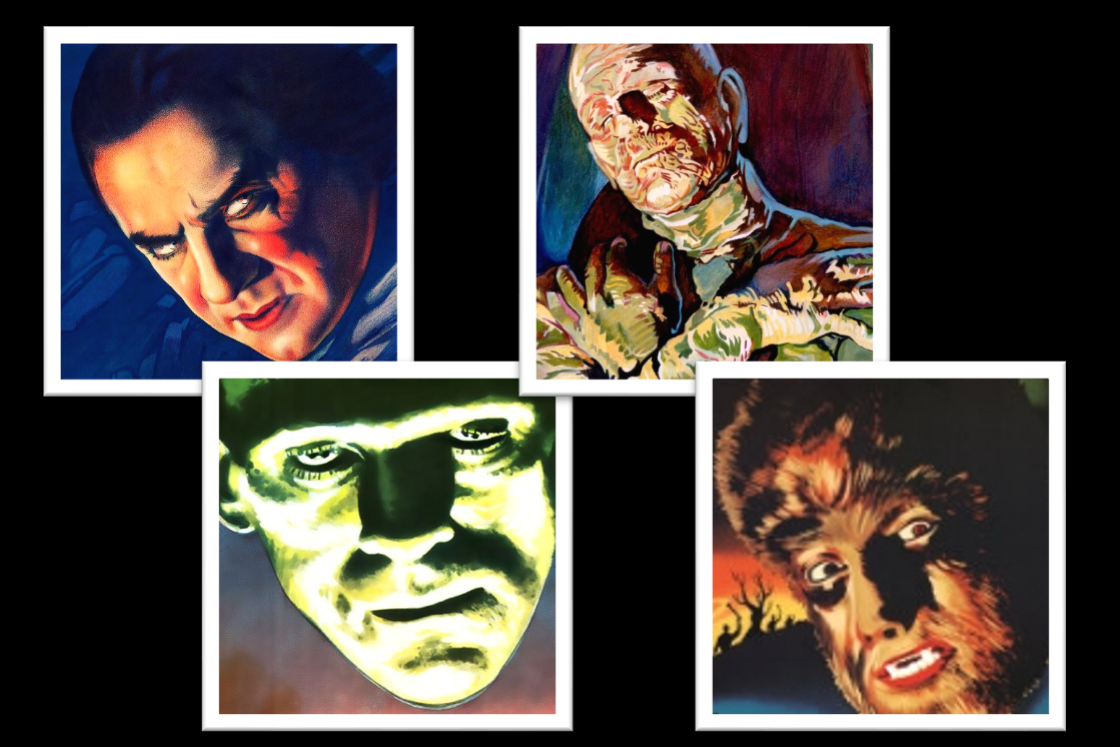
Universal Classic Monsters: Debuts of Frankenstein, Dracula, The Mummy, and more
Monster Mash: 13 Movies Where Frankenstein Meets Dracula Meets The Wolf Man
Storied: The Golden Age of Movie Monsters—celebrating classic monster movies
Abbott and Costello vs. 13 Monsters—including Frankenstein, Dracula, Mr. Hyde, Creature From the Black Lagoon, and more
Frankenstein (1818)
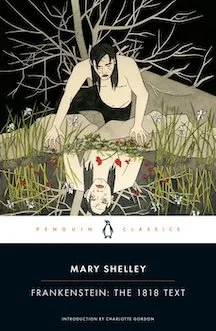
Frankenstein: The 1818 Text by Mary Shelley
“I could not understand why men who knew all about good and evil could hate and kill each other.”
One of the most influential works of literature in history was written by Mary Shelley when she was STILL A TEENAGER. (Yes, that makes me feel old, too.) The Gothic novel Frankenstein; or, The Modern Prometheus—first published anonymously in 1818—was the result of a simple party where everyone decided to write a ghost story.
The book shares the tale of young scientist Victor Frankenstein, whose crazy experiment leads to the activation of an artifical lifeform. As the story continues to unfold, it explores such themes as loss, guilt, the complications of losing guidance, as well as the hazards of exploring science without ethics or morality.
Shelley actually started writing Frankenstein when she was 18 (sigh). The first edition was published on January 1, 1818. Although that edition did not include her author name, her name did appear on the second edition, which was published in 1821.
Also of note is that there are two official versions of Shelley’s Frankenstein novel: There was this 1818 edition, and then a revised version in 1831. (There are enough differences between the two editions that we are actually listing both editions in this article.)
The original 1818 text of Frankenstein offers the “hard-hitting and politically-charged” drive of Shelley’s original narrative intentions. There’s also an emphasis on the ideals of the author’s radical feminist mother, Mary Wollstonecraft.
It has been said that the 1831 revised edition was tempered by public demand. (We’ll talk more about that edition in a bit.)
Of course, the novel Frankenstein has had an enormous impact on culture—with multiple editions and adaptations in all sorts of media. Plus the hundreds of times the ideas and the characters have been visited, borrowed, or copied in so many books, movies, TV shows, plays, musicals, toys, and all other forms of storytelling.
These various interpretations on screen range from the Universal Monsters movie series in the 1930s and 1940s that started with Boris Karloff, to the British movies made by Hammer in the 1950s and 1960s (which actually focused less on the monster and more on the monster maker played by Peter Cushing), to more “modern” takes like 1987’s Monster Squad, the Hotel Transylvania movies series, 2024’s Lisa Frankenstein, and so many more.
More Frankenstein (1818) info online
Bookshop.org (affiliate link) (which also supports your local bookseller)
Libro.fm (audiobooks) (which also supports your local bookseller)
Monster Complex articles:
Rare first edition of ‘Frankenstein’ novel breaks world auction record
Mary Shelley’s Frankenstein: 13 Facts About One Of the Most Influential Books in Literature
Horror to Humor: The Two Faces of Dick Briefer’s 1940-1954 comic book Frankenstein Monster
Monster Mash Parody: Frankenstein’s Monster vs Psychotic Killers
Sidenote #1
That 1816 party game actually led to two influential monster novels. (I know—What were they drinking?) We’ll talk about that other book in a bit.
Frankenstein (1831)
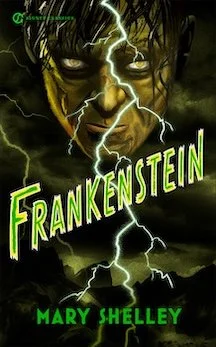
Frankenstein (1831) by Mary Shelley
“I ought to be thy Adam, but I am rather the fallen angel... ”
Since its publication more than 200 years ago, Mary Shelley’s impactful novel Frankenstein has influenced whole generations of thinkers and storytellers. Her story of a scientist and his undead creation has impacted science writers, fantasy writers, supernatural writers—and, to be honest, nearly all other kinds of storytelling as well.
Although it’s not the first edition of the work, most people who have read Mary Shelley’s Frankenstein have actually read the revised edition published in 1831. In fact, whole generations of readers might not have even known there were two editions of the book.
As I understand it, the 1831 edition was changed—in a number of ways—as a result of public demand. Keep in mind, this was during the Victorian era. Which means the book was a bit radical for the audience of the day.
Of course, the later edition may also have been affected by Shelley being 13 years older—as a woman and also as an author. As such, there are a number of literary changes that some consider to be an improvement on the work as a whole.
On the other hand—especially in regards to changes in some of the characters and some of the ideas—a number of scholars have assumed that the first edition of Frankenstein was actually way closer to what Shelley wanted.
Some of the changes in the book may have come as a result of the author’s own change of perspective. Between the two versions of the novel, Shelley had lived through the deaths of her husband and two of her children.
In the introduction to the revised edition, Shelley’s introduction claimed that she hadn’t really changed the story. Instead, she had merely fixed the narrative, but left the center of the book the same.
Even so, some of the character motivations in the book were changed. In fact, the author seemed to be distancing herself from her book—much like the characters were now doing.
All the same, even the revised Frankenstein has been a huge influence on storytellers all these years. We already mentioned the classic Universal movies and the Hammer movies, but there has also been 1994’s Mary Shelley’s Frankenstein (starring Kenneth Branagh and Robert De Niro), 2014’s I, Frankenstein (an action movie that—hey, I liked this one), 2015’s Victor Frankenstein (starring Professor X and Harry Potter), and still a whole lot more.
More Frankenstein (1831) info online
Bookshop.org (affiliate link) (which also supports your local bookseller)
Libro.fm (audiobooks) (which also supports your local bookseller)
Monster Complex articles:
Sidenote #2
Remember how I mentioned that the game that led to Frankenstein also led to another influential monster book? Surprise, surprise—we’ll be talking about that pretty soon…
Dracula
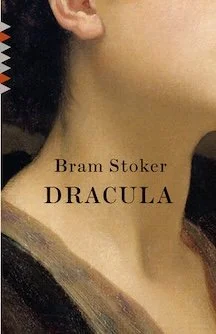
Dracula (1897) by Bram Stoker
The 1897 Gothic horror novel Dracula, written by author Bram Stoker, spins a tale through diary entries, letters, and newspaper articles. While not the first vampire novel, it proved to be one of the most popular—in many ways serving as the foundation for an entire genre of storytelling through various media.
The book opens with solicitor Jonathan Harker in Transylvania to stay at the castle of Count Dracula. When he learns that Dracula is a vampire, Harker runs away.
Then we follow the Count to England, where he threatens a seaside town. The town is protected by a team led by Abraham Van Helsing, and they hunt down and (SPOILER!) kill Dracula.
Looking at fiction that was previously published, critics have noticed similarities between Dracula and some earlier works. This includes…
John Polidori’s 1819 story “The Vampyre,” considered the first example showing readers an aristocratic, romantic vampire—and trust me, we’re going to talk more about this book in a bit;
Sheridan Le Fanu’s 1872 novella Carmilla, famous with modern readers for its eroticism and female vampires;
Wilkie Collins’ 1859 book The Woman in White, which has a similar narrative structure to the later book from Stoker;
Ann Radcliffe’s Gothic fiction—she was a pioneer of the genre, raising the level of respect for fiction with supernatural details.
As a book published during the Victorian era, critics have also pointed out the Dracula novel’s point of view in regards to such themes as sexuality, religion, and race.
With Dracula being one of the most famous books ever, the title character has made lots and lots (and lots) of appearances across the media. (Of course, lots of those appearances reference 1931’s Bela Lugosi version way more than the one in the book. Just sayin’.)
By the way, Dracula and Sherlock Holmes are the two most portrayed literary characters in history—with both having been adapted, borrowed, or copied hundreds of times more than 200 or so times each. (It depends on whom you ask which of the two got borrowed more.)
Of the so-many-appearances of Dracula, that includes Universal’s Dracula Legacy Collection, plus 1958’s Horror of Dracula starring Christopher Lee, Marvel’s 1972 comic book series The Tomb of Dracula, 1973’s movie Dracula starring Jack Palance, 1978’s comedy Love At First Bite starring George Hamilton, 1979’s movie Dracula starring Frank Langella, 1992’s Bram Stoker’s Dracula starring Gary Oldman, 1995’s Mel Brooks comedy Dracula: Dead and Loving It, the 2020 mini-series Dracula starring Claes Bang (and made by the Doctor Who guys), and so many more.
And as for other stories that borrowed or guest-starred Dracula, just some of the examples include Nosferatu (1922, 1979, and 2024), The Munsters (1964), The Monster Squad (the 1976 television show) and The Monster Squad (the 1987 movie), Van Helsing (2004), the Hotel Transylvania movies, the TV show Penny Dreadful (2014), and Ricardo Delgado’s illustrated book Dracula of Transylvania (2021).
More Dracula info online
Bookshop.org (affiliate link) (which also supports your local bookseller)
Libro.fm (audiobooks) (which also supports your local bookseller)
Monster Complex articles:
Side note #3
If you’ve been paying attention, we keep talking about that party back in 1816. You know, when everyone got stuck inside and they said, Hey, everybody, let’s write some ghost stories. And we mentioned how that party inspired Mary Shelley to write what became her novel Frankenstein.
Also at that party? John Polidori. Who took a story told by fellow partygoer Lord Byron and wrote “The Vampyre.” Which tied together all these elements from vampire legends into a format we now take for granted.
Even though 1819’s “The Vampyre” was published decades before Dracula, we don’t seem to hear that much about it. But it clearly had a huge impact on what we think today when you say the name “Dracula” out loud.
Looking at the timeline for Dracula—especially the 1931 movie starring Bela Lugosi—“The Vampyre” has been a huge influence on the genre. In fact, that story can be considered the actual origin of the “romantic vampire” in fantasy fiction.
Now, if you’re going to say, Stop talking about all these other books, Chris—I want to know about this Polidori story! Well, lucky for you, I wrote about that one in these stories here:
Strange Case of Dr Jekyll and Mr. Hyde (1886) by Robert Louis Stevenson
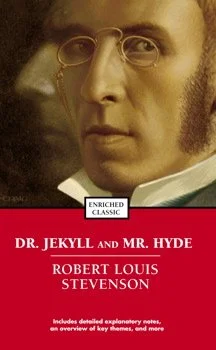
Strange Case of Dr Jekyll and Mr. Hyde (1886) by Robert Louis Stevenson
The 1886 Gothic horror novella Strange Case of Dr Jekyll and Mr Hyde introduced ideas into the world that everyone can talk about—whether they read the book or not. The author, Robert Louis Stevenson, was an essayist, poet and travel writer who also brought us classics like Treasure Island and Kidnapped.
In Jekyll and Hyde, a legal practitioner in London investigates a series of strange events between his friend, respected doctor Henry Jekyll, and a criminal named Edward Hyde. But as the story unfolds, it is revealed that Jekyll and Hyde are actually two identities for the same person. The reason they look like different people is because of a serum—which allows the “good” man to seek out his evil urges without being recognized.
Brent Gordon, SJ notes on The Jesuit Post:
“It is Jekyll’s view that each human being is really a combination of two (or more) different personalities which leads him to create his potion. This view is a desperate one for him because he is tormented with conflicting desires: he wishes to do whatever he wants, without concern for others, yet he wants others to think well of him.”
However, when the secret is revealed, it’s clear that Jekyll’s assumptions were wrong.
“The body may change, but Jekyll and Hyde are in reality the same man. The clash of desires within him is not resolved by the creation of Hyde. The same conflicted Jekyll who first concocted the potion is present after Hyde has committed his acts. Giving in to temptation does not make it go away.”
National Library of Medicine points out how the novel’s ideals were driven by its being set in Victorian London. (Maybe you see a pattern here?)
“Stevenson seems to make a comment not only about the dualism present in every individual but also in society as a whole, where the aristocracy that superficially was genteel and refined, had dark secrets to hide behind the high walls of the mansions in which they lived. Most of the action takes place in the night time and much of it in the poorer districts of London, considered the abode of evil-doers. Most significantly, Mr. Hyde enters and leaves Dr. Jekyll's house through the back door which seems a metaphor for the evil that lies behind the façade of civilization and refinement.”
The author, Stevenson, had long been intrigued by the idea of how human personalities can reflect the interplay of good and evil. He might also have been inspired by how one of his friends was convicted—and executed—for poisoning his wife in 1878. Before killing his wife, Eugene Chantrelle appeared to everyone as leading a regular life in the city.
In the years since Jekyll and Hyde was published, the ideas in the book have appeared dozens and dozens of times in stories over the decades—including stage productions, movies, TV, cartoons, comic books, and everything else—ranging from straight adaptations and re-tellings to riffs and parodies.
Straight ahead examples include the 1931 movie starring Fredric March (who won an Oscar), the 1941 movie starring Spencer Tracy, the 1968 TV production starring Jack Palance, and the 1990 British TV production starring Michael Caine. and the 2023 movie starring Eddie Izzard.
Parodies include the 1953 movie Abbott & Costello Meet Dr. Jekyll and Mr. Hyde (with guest star Boris Karlof). There is also the 1963 movie The Nutty Professor with Jerry Lewis and remade in 1996 by Eddie Murphy.
And, also, got to mention those Looney Tunes. These include 1942’s “The Impatient Patient” with Daffy Duck, 1954’s “Dr. Jerkyl’s Hide” with Sylvester the Cat, 1955’s “Hyde and Hare” with Bugs Bunny, and 1960’s “Hyde and Go Tweet” with Sylvester and Tweety.
There are also examples that tell the Jekyll and Hyde story from a different point of view. For example, the 1990 novel Mary Reilly by Valerie Martin stars a young lady who works at the home of Dr. Jekyll (and falls in love with her boss). That book was adapted into the 1996 movie starring Julia Roberts and John Malkovich.
Comic book characters have also borrowed the idea of Jekyll and Hyde. This includes the Marvel Comics monster The Hulk and the Batman super-villain Two-Face.
More Mr. Hyde info online
Bookshop.org (affiliate link) (which also supports your local bookseller)
Libro.fm (audiobooks) (which also supports your local bookseller)
Monster Complex articles:
Edgar Allan Poe
Actually, lots of horror stories by Edgar Allan Poe
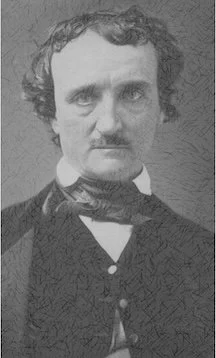
During his short but complicated life, Edgar Allan Poe (1809-1849) had a huge impact on mystery fiction, science fiction, and stories about the macabre. For that matter, as an author, poet, editor, and literary critic, Poe had an impact on pretty much all kinds of literature.
In fact, you can say that Poe more or less invented detective fiction. In fact, every year, the Mystery Writers of America honors mystery fiction with their annual Edgar Award.
Since his death, Poe and his work have been honored through literature, art, music, movies, TV, and more.
More Edgar Allan Poe info online
PoeStories.com: Edgar Allan Poe, short stories, tales, and poems
Bookshop.org (which supports your local independent bookseller)
Monster Complex articles:
Moreau
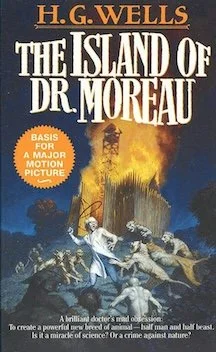
The Island of Doctor Moreau (1896) by H. G. Wells
A classic work of early science fiction, H.G. Well’s 1896 novel The Island of Doctor Moreau continues to be one of the author’s most loved books. Focusing on a man who finds himself on an island populated by strange hybrid creatures, he finds himself challenged by conflicting ideas of humanity, genetic science, and ethics. (It is said that, when the book first came out, it led to loud protests from reviewers.)
The novel The Island of Doctor Moreau has inspired lots of retellings in all kinds of other media. This ranges from straight adaptations to influences on more original stories. Just some examples include:
literature (including Maurice Renard’s 1908 French novel Le Docteur Lerne, sous-dieu, Brian Aldiss’ 1980 novel Moreau’s Other Island, Ben Aaronovitch’s 2011 Moon Over Soho, Guy Adams’ 2012 Sherlock Holmes: The Army of Dr. Moreau, and Silvia Moreno-Garcia’s 2022 The Daughter of Doctor Moreau, among others);
comic books (including 2002’s JLA: Island of Dr. Moreau, starring an animal version of Justice League, and 2002’s literary all-star team-up The League of Extraordinary Gentlemen, Volume II);
music (including the music video for Diana Ross’ 1985 song “Eaten Alive,” the 1983 song “No Spill Blood” by Oingo Boingo, and the actual name of hip-hop group House of Pain, among others);
on TV—including live action (like Orphan Black, Sliders, and Star Trek: Deep Space Nine) and animated (including references on One Piece, Teenage Mutant Ninja Turtles, Batman: The Animated Series, Pinky and the Brain, at least one of The Simpsons annual Halloween specials), and lots more;
and movies (starting in 1913 with the French silent horror movie Ile d'Epouvante, 1932’s Island of Lost Souls, 1959’s Terror Is a Man, 1972’s The Twilight People, 1977’s The Island of Dr. Moreau, 2002’s Spy Kids 2: The Island of Lost Dreams, and 2013’s Cloudy with a Chance of Meatballs 2, among others).
More Doctor Moreau info online
Revisiting the Island of Doctor Moreau - PMC (National Library of Medicine)
The War Inside H. G. Wells (New Yorker)
H.G. Wells | Biography, Books, & Facts (Britannica)
The Island of Doctor Moreau by H. G. Wells (Project Gutenberg)
Monster Complex articles:
Invisible
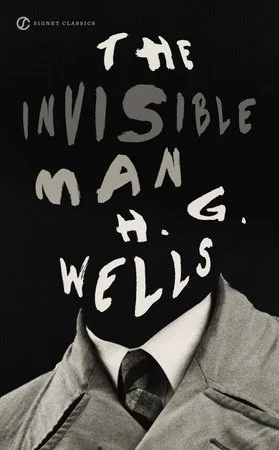
The Invisible Man: A Grotesque Romance (1897) by H. G. Wells
One of the most famous classics of science fiction, H.G. Wells’ 1897 novel The Invisible Man introduces readers to a scientist who has discovered how to make himself, well, completely unseen. But when his experimental breakthrough drives him crazy, Griffin uses his new power for criminal actions—including murder.
Of course, as the “father of science fiction,” this was just one of H.G. Wells’ impactful novels for the genre. In addition to The Invisible Man and The Island of Doctor Moreau (which we just talked about), other groundbreaking books from Wells include The Time Machine, The War of the Worlds, The First Men in the Moon, and The Shape of Things to Come, plus lots of works in other categories.
Talking about science fiction stories in the media, The Invisible Man has influenced lots of movies, TV shows, audio dramas, cartoons, music, and comic books. The results include a bunch of adaptations, sequels, and follow-ups, as well as new stories that explore the themes from different angles. More about those HERE.
More Invisible Man info online
The Invisible Man by H. G. Wells: 9780451531674 (Penguin Random House)
The Invisible Man | Science Fiction, Horror, Classic (Brittanica)
H.G. Wells Sparked Modernism and the Literary Imagination (Columbia University)
The Invisible Man: A Fantastic Sensation (Central Rappahannock Regional Library)
Scientific discovery that turns mouse skin transparent echoes plot of H.G. Wells’ ‘The Invisible Man’ (Mercury News)
Monster Complex articles:
Phantom
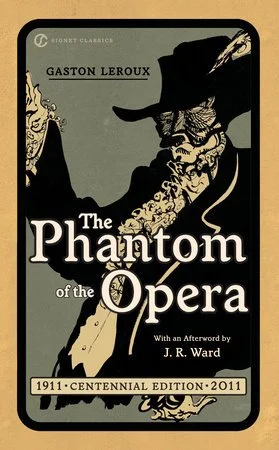
The Phantom of the Opera (1910) by Gaston LeRoux
Partly inspired by historical events(!), the 1910 novel The Phantom of the Opera was written by French author Gaston Leroux. Set at the Paris Opera during the nineteenth century, the story was stirred by an apocryphal tale about a ballet pupil’s skeleton used for an 1841 production of German opera Der Freischütz.
Leroux’s version of the event revolves around how a Paris opera house is feared to be haunted. (And, in case you don’t already know the story, there is someone behind those fears.)
Of course, Phantom of the Opera has inspired lots of riffs and adaptations. Just some examples include:
the historic 1925 silent Universal Monsters movie starring Lon Chaney as the Phantom;
the 1943 movie with Claude Rains;
the 1962 Hammer horror movie starring Herbert Lom;
the 1974 rock musical Phantom of the Paradise;
the 1980 song from heavy metal band Iron Maiden;
the 1986 musical written by Andrew Lloyd Webber;
1994’s Sherlock Holmes: Adventure of the Opera Ghost, from Caliber Press;
the 1997 comic book crossover of Phantom of the Opera with Tarzan, from Dark Horse Comics (OK, I have got to see that now);
plus references on several episodes on The Simpsons.
More Phantom of the Opera info online
The Phantom of the Opera by Gaston Leroux (Project Gutenberg)
Gaston Leroux | Mystery novelist, Detective fiction ... (Brittanica)
Gaston Leroux (Wikipedia)
The Phantom of the Opera (official site for Webber’s stage musical)
Monster Complex articles:
Kong
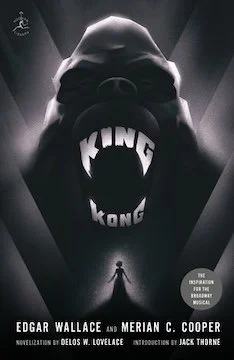
King Kong (1932) by Edgar Wallace, Merian C. Cooper, Delos Lovelace
Although Kong was created for the 1933 movie King Kong, his first appearance was actually in a 1932 book—which was, in fact, a novelization of the movie script. (But the book predated the film’s release in theaters). The story of an epic-sized gorilla that became an iconic figure in pop culture, King Kong is both an off-center update of the fairy tale “Beauty and the Beast” as well as an intriguing discussion of man versus nature.
The book King Kong was written by novelist Delos W. Lovelace, based on the screenplay by Edgar Wallace and Merian C. Cooper. The plan for the book was to promote the upcoming movie. Much of the story was inspired by Cooper’s experiences as a filmmaker shooting documentary footage in the wilderness.
A second novelization was published in 2005—Merian C. Cooper’s King Kong updates and expands on the original book, serving as both a prequel and sequel to the original story. Written for the Merian C. Cooper Estate by Joe DeVito and Brad Strickland, this book offers a major revamp to the original story. It also builds a bridge into the larger Kong Universe.
In the years since the epic debut of King Kong, the enormous ape has made lots of appearances (plus riffs and parodies). These include movies, TV shows, comic books, theme park rides, and video games. There has even been at least one stage production—a musical!
Just some examples of Kong’s appearances include:
The 1976 remake by Dino De Laurentiis
The 2005 remake by Peter Jackson
Cartoons including The King Kong Show (1966), Kong: The Animated Series (2001), and Skull Island (2023)
The Toho movies King Kong vs. Godzilla (1962) and King Kong Escapes (1967)
Some crossovers have seen Kong meet with the Justice League, Tarzan, Doc Savage, and Planet of the Apes
Then there are Kong’s appearances in the Monsterverse, which so far has included:
Kong: Skull Island (2017)
Godzilla vs. Kong (2021)
Godzilla x Kong: The New Empire (2024)
Godzilla x Kong: Supernova (scheduled for 2027)
More King Kong info online
King Kong - 1932 novelization (Wikizilla)
King Kong (Wikipedia)
Merian C. Cooper: King Kong (Wikipedia)
‘King Kong’ Universe To Expand Through Books As World Builder Entertainment Launches Publishing Arm (Deadline)
How to Watch Every King Kong Movie in Order (MovieWeb)
Monster Complex articles:
The Thing
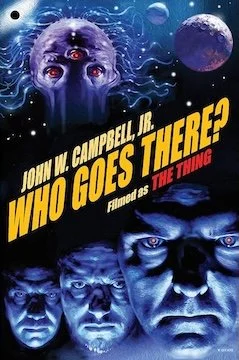
Who Goes There? (1938) by John W. Campbell
John Carpenter’s monster movie The Thing was based on the fiction of famous (and somewhat infamous) science fiction writer and editor John W. Campbell (1910-1971). He spent decades as editor of Astounding Stories / Astounding Science Fiction / Analog Science Fiction and Fact from the 1930s until his death in 1971.
Campbell’s fiction included the 1938 novella Who Goes There? That was first adapted to the screen as The Thing from Another World, (1951), then by John Carpenter as The Thing (1982), plus there was the prequel also titled The Thing (2011). And, of course, elements of the original story have been borrowed and copied many more times.
Now, of course, many classic horror stories find a group of people cut off from the world—in a specific location—and waiting for the monster to pick them off one-by-one. So, it’s a matter of course that Who Goes There? finds the potential victims stuck in a scientific outpost in Antarctica. Which, you know, also has metamorph monsters able to absorb and duplicate any living thing. Like, well, humans.
Who Goes There? first appeared in a 1938 issue of the magazine Astounding Science Fiction. A few years ago, the author’s novel-length version of the story was discovered—and had the title Frozen Hell. A third book, also recently published, is the anthology Short Things: Tales Inspired by "Who Goes There?" by a number of authors revisiting Campbell’s ideas.
All three of those books are now available from Wildside Press:
Who Goes There?: Filmed as The Thing
Frozen Hell: The Book That Inspired The Thing
Short Things: Tales Inspired by “Who Goes There?” by John W. Campbell, Jr.
In 1973, the Science Fiction Writers of America called Who Goes There? one of the “most influential, important, and memorable science fiction that has ever been written.”
Also worth noting is that author John Gregory Betancourt has launched a new trilogy based on Campbell’s story. Promising to explore the backstory of the Things—and the future of humanity—the first book in the set is The Things from Another World, which expands and reimagines the original story. (Side note: Betancourt is one of the founders of Wildside Press. So he clearly )
Of course, over the decades since it was first published, Who Goes There? has led to a number of adaptations as well as inspiring even more works. (For example, the 1972 movie Horror Express starring Christopher Lee and Peter Cushing. While not a direct adaptation of Cambell’s novella, the movie clearly borrowed from it.)
And, as mentioned, there have been a number of movies based on Campbell’s original novella. My favorite by far is John Carpenter’s 1982 movie The Thing. Starring Kurt Russell, it is a gripping movie full of engaging drama and special effects. There was also a great cast—also including Keith David, Wilford Brimley, Richard Dysart, Donald Moffat, and several more notables.
And it turns out that the 1982 version of The Thing might also have a sequel on the way. Involving John Carpenter. The announcement says that the planned movie—a sequel to Carpenter’s 1982 monster movie The Thing—is to be produced by Blumhouse Productions. It is planned to be based on the novel-length version Frozen Hell.
Carpenter told Fandom:
“I just think there’s another bit of a story to tell there, which I’m not going to tell you about. But there have been some discussions about The Thing and what we could do because, as far as we know, both those two main characters — Childs [Keith David] and MacReady [Kurt Russell] — are still alive. They were alive at the end of The Thing, so maybe they’re still alive.” (Source: Fandom)
Just some of the related things available:
1 Who Goes There?: Filmed as The Thing
2 Frozen Hell: The Book That Inspired The Thing
3 Short Things: Tales Inspired by "Who Goes There?" by John W. Campbell, Jr.
4 The Thing from Another World (1951)
5 The Thing (1982)
Before we move on:
I want to point you to Alec Worley’s amazing online article that involves lots of pieces to this puzzle. Like John W. Campbell’s troubling beliefs. And traumatic parts of his own life. Plus his history as an editor and as an author. And how these elements feel they are all parts of what infested the story with what grabs us and makes people want to retell it.
And also a big biography that I totally have to read—because it involves Campbell and Isaac Asimov and Robert A. Heinlein and L. Ron Hubbard and the Golden Age of Science Fiction.
In fact, Worley’s post moved several The Thing-related items up on my to-read and to-watch (and to-re-watch) list.
Click through to bookmark it:
Science Fiction Double Feature: Who Goes There? (1938), The Thing (1982)
John W. Campbell’s classic novella of Golden Age science fiction and John Carpenter’s modern horror masterpiece—both absorb new meanings in the age of Covid, identity politics and generative AI
More from Monster Complex:
Legend
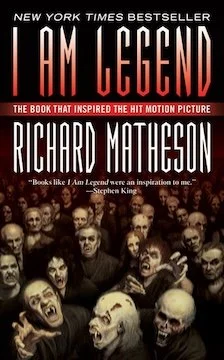
I Am Legend (1954) by Richard Matheson
The foundation for three different monster movies—starring three movie legends—post-apocalyptic horror novel I Am Legend had a major impact on three completely different kinds of disaster stories: zombies and vampires and disease. Published in 1954, I Am Legend by Richard Matheson inspired three movies: 1964’s The Last Man on Earth (starring Vincent Price), 1971’s The Omega Man (starring Charlton Heston), and 2007’s I Am Legend (starring Will Smith).
I Am Legend was also a major influence on George A. Romero’s 1968 movie Night of the Living Dead). (Which, you know, had a major impact on any zombie stories that came after that.)
As for Richard Matheson (1926-2013), he was an author and screenwriter who actually wrote a number of stories that influenced or were adapted into movies. His also wrote a number of movie scripts that adapted Edgar Allan Poe stories, as well as writing several episodes of the classic TV show Twilight Zone.
Other examples of Matheson’s fiction being adapted to the screen include his 1956 short story “Steel” (which was adapted into a 1963 Twilight Zone episode, then eventually led to the 2011 movie Real Steel); his 1956 novel The Incredible Shrinking Man (which inspired the 1957 movie); the 1958 novel Stir of Echoes (which became the 1999 horror movie); his 1971 novel Hell House (adapted into the 1973 movie Legend of Hell House); his 1970 short story “Button, Button” (which became an episode of the Twilight Zone 1980s revival series, then adapted by the 2009 movie The Box); his 1971 short story “Duel” (which became the TV movie Duel, one of Steven Spielberg’s earliest directing jobs); his 1975 novel originally titled Bid Time Return but now retitled Somewhere in Time (because it was adapted as the 1980 time travel romance movie); and his 1978 novel What Dreams May Come (which led to the 1998 movie).
More Richard Matheson info online
Richard Matheson obituary | Science fiction books (Guardian)
The Writer Speaks: Richard Matheson (Writers Guild Foundation)
The Acclaimed Twilight Zone Episode Sci-fi Legend Richard Matheson Hated (SYFY)
Publication: The Best of Richard Matheson (Internet Speculative Fiction Database)
14 Books About Surviving Dystopias (BookBub)
Monster Complex articles:
Snatchers
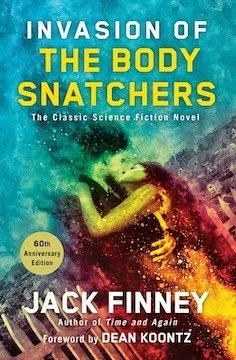
The Invasion of the Body Snatchers (1954) by Jack Finney
Originally serialized in 1954, science fiction horror novel The Body Snatchers by Jack Finney was published the following year. The Body Snatchers details the effects when seeds from outer space land on a California town. Soon, residents are replaced by duplicates who are essentially perfect copies—with plans to take over the world before moving to another planet to start the process all over.
The novel has inspired a number of movies. This includes official adaptations in 1956, 1978, 1993, and 2007. (Holy crap—that’s like every 20 years.)
Over time, there have also been other similar works of fiction touching on some of the same ideas. These include:
The novel The Puppet Masters (1951) by Robert A. Heinlein
The novel The Day of the Triffids (1951) by John Wyndham (adapted by the 1962 movie)
The movie It Came from Outer Space (1953), based on a Ray Bradbury pitch
The short story “The Father-thing” (1954) by Philip K. Dick
The British TV serial Quatermass II (1955) by writer Nigel Kneale
The short story “The Dark Brotherhood” (published in 1966) by H.P. Lovecraft and August Derleth
The movie Contamination (1980)
The movie The Faculty (1998)
The movie Assimilate (2019)
The mockbuster riff Invasion of the Pod People (2007)
The novel The Host (2008) by Stephenie Meyer
More Jack Finney info online
Godzilla
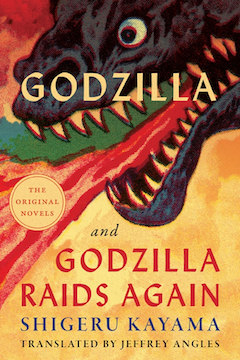
Godzilla and Godzilla Raids Again (1955) by Shigeru Kayama
The book Godzilla and Godzilla Raids Again is a 1950s Japanese volume featuring novelizations of the first two original Godzilla movies—from the author who outlined both movies. Only translated into English a couple years ago, the book serves as a historical document.
The author, Shigeru Kayama, is said to have used these two stories to share anti-nuclear concepts. In fact, Kayama introduced the book with the claim that readers need to see these as anti-nuclear literature.
“Godzilla has been used over and over again to talk about the legacies of these different social problems,” said translator Jeffrey Angles, professor of Japanese literature and translation. “This book gives us an opportunity to think about those in a way that is relevant to modern society.”
Of course, the movies Gojira AKA Godzilla (1954) and Godzilla Raids Again (1955) launched one of the biggest brands in movie history. (Ha, “biggest.”)
Depending on how you were pulled into the world of Godzilla—which includes like 40 movies, some TV shows, comic books, games, and lots more—you may not realize how dramatic the original movie Gojira is. In fact, for a very long time, the only version you could even watch in America was a chopped up version where they inserted a whole new Hollywood actor.
An anti-nuclear warning—which also included a heart-clutching love triangle—the original movie, Gojira, was directed by and co-written by Ishirō Honda. A 1954 movie released in Japan by Toho Studios, Gojira is a hugely influential classic of the genre. It was also the first in the series to share political and social ideas of the day.
The movie went on to become just the first of what Guinness World Records calls the “longest continuously running film series.” (This includes the recent Monsterverse movies we talked about in our Kong section.)
More Godzilla info online
Godzilla and Godzilla Raids Again at Bookshop.org (affiliate link)
Godzilla and Godzilla Raids Again at Libro.fm (audiobooks that help your local bookstore)
All Godzilla Movies - Eras, Order, Facts, Series, & More (Godzilla official website)
Monster Complex articles:
Haunting
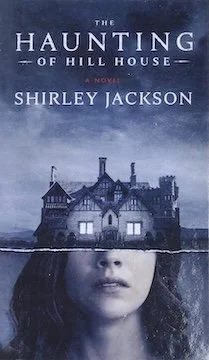
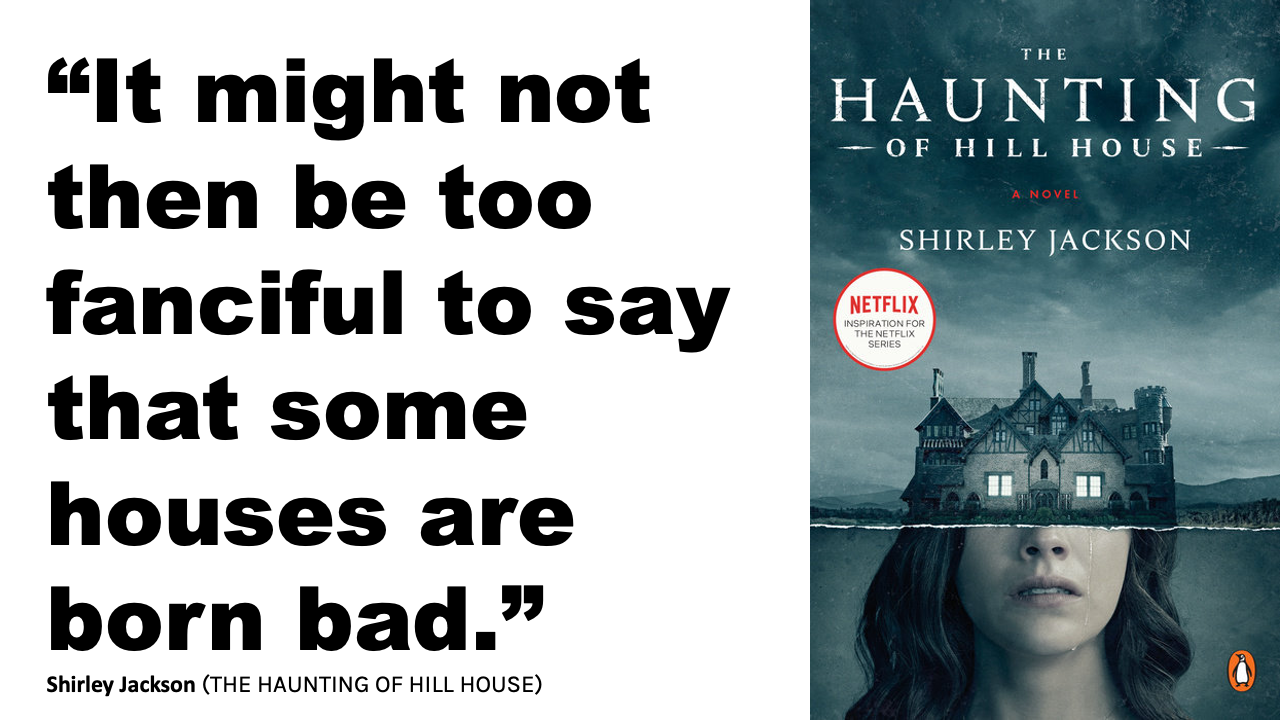
The Haunting of Hill House (1959) by Shirley Jackson
The 1959 gothic horror novel The Haunting of Hill House is often praised as one of the scariest books ever. In fact, the National Book Foundation claims that Shirley Jackson’s spine-chilling classic “helped define the genre.”
Adaptations include the faithful 1963 movie The Haunting (which has been praised); the loose adaptation in the 1999 remake The Haunting (which has gotten complaints); and the 2001 parody Scary Movie 2 (which has been called “sloppy”). There has also been a stage play and a TV show.
That said, the original book The Haunting of Hill House has led to critical praise. Just a few examples include:
Stephen King (who named it one of the best horror novels of the late 20th century);
The Magazine of Fantasy & Science Fiction (which called it one of the 10 best genre books of 1959);
The New York Times (which said Shirley Jackson was a master “practicing in the genre of the cryptic, haunted tale”);
The Guardian (which called the book “the definitive haunted house story”);
And author Carmen Maria Machado (“It scared the shit out of me”).
“Hill House is much more than a ghost story,” Ruth Franklin wrote on A Public Space. “It’s a story about dysfunctional families and all the damage they can wreak; about the madness that can arise from too much rejection and too many dreams deferred; about feeling isolated even—or especially—when surrounded by people; about longing to go home, wherever home may be. More than anything else, it’s a story about fear, and what the things we’re afraid of can tell us about who we are.”
According to the Wikipedia article, Jackson was inspired to write the book when reading about how some psychic researchers studied a house that was claimed to be haunted. Apparently, she felt like their reports weren’t actually the story of a haunted house. She referred to it as “the story of several earnest, I believe misguided, certainly determined people, with their differing motivations and background.”
More Shirley Jackson info online
Shirley Jackson | Gothic Fiction, Horror Writing & Short-Story Writer (Britannica)
Where to Start With Shirley Jackson (New York Public Library)
Shirley Jackson: An Author in Hiding (Diggit Magazine)
Monster Complex articles:
Kolchak
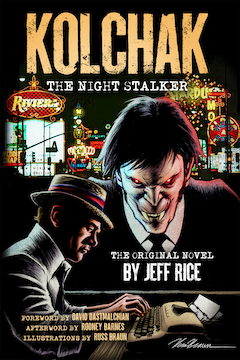
Kolchak: The Night Stalker (1972) by Jeff Rice
Generally, when a book gets adapted, it’s because the book came out first. However, Jeff Rice’s novel The Kolchak Papers still hadn’t been published when the TV network ABC found out about it—and wanted to adapted it into a TV movie. Which led to the 1972 blockbuster hit The Night Stalker.
When ABC committed to making the TV movie, the novel was adapted into a script by Richard Matheson. That script won Matheson the Edgar Award from the Mystery Writers of America for Best TV Feature or Miniseries Teleplay. (Earlier, we talked about Matheson’s hit monster novel I Am Legend.)
Starring actor Darren McGavin as newspaper reporter Carl Kolchak, The Night Stalker aired in 1972 as an ABC Movie of the Week. In the story, there’s a serial killer in Vegas—and only Kolchak understands that the killer is a vampire.
The Night Stalker broke the record for most-watched made-for-TV movie.
With the movie such a hit, ABC quickly asked McGavin to return as Kolchak. That led to the TV movie sequel The Night Strangler, about an superhuman murderer that is immortal. This story was written by Richard Matheson as an original script—and author Jeff Rice wrote the novelization of the sequel to the movie based on his original novel. (How often do you see that happen?)
The success of that TV movie led to the TV show Kolchak: The Night Stalker.
Although the show only lasted a year, Kolchak found himself investigating lots of things that go bump in the night. This included an immortal Jack the Ripper, a zombie, an invisible extraterrestrial, a vampire, a werewolf, a ghost, a swamp thing, and even the Devil. (And more.)
The show also developed a cult following over the years. In fact, X-Files creator Chris Carter said his own monster investigator show was inspired by Kolchak, calling it a “tremendous influence.”
Recently, a new edition of Jeff Rice’s original novel Kolchak: The Night Stalker has been published by Monstrous Books. The publisher, James Aquilone, loves the book.
“It’s a great read and an interesting look into the ins and out of being a reporter in the 1970s,” Aquilone told Comic Book Club. “In the novel, Kolchak is a little different—he’s a heavier drinker and not as solitary as the TV version. But he’s still very recognizable as the Kolchak we all know and love.”
This new edition of the original novel also includes brand-new audiobook version read by actor William Katt. Aquilone talked to Fangoria about his excitement working with Katt:
“I always thought William Katt would make a great Carl Kolchak. When I had the opportunity to choose a narrator for Monstrous Books’ reprint of the original Kolchak: The Night Stalker novel, I knew I had to reach out to the star of one of my favorite shows as a kid, The Greatest American Hero.”
Katt himself told Fangoria how working on the project was a humbling experience:
“Working in the shadow of Jeff Rice and Darren McGavin! […] The cult classic Kolchak: The Night Stalker laid the groundwork for so many shows that followed—including The Greatest American Hero and so many others that borrowed generously and paid homage to the amazing world of Carl Kolchak!”
Over the years, Kolchak: The Night Stalker has also inspired a number of tie-in Night Stalker original novels and comic books.
One of the most recent examples is the upcoming graphic novel from Monstrous Books, Kolchak Meets the Classic Monsters. (Which I bought during the Kickstarter campaign, and am SO eager to receive my copy!) This comic book project includes Kolchak meeting Dracula, Frankenstein, the Werewolf, and the giant ape Konga. The reporter also meets up with David Dastmalchian’s comic book character Count Crowley.
More The Night Stalker info online
Kolchak: The Night Stalker': Still a Cult Favorite After 50 Years (Remind Magazine)
“Kolchak” was a pulpy mix of Columbo and Scooby-Doo (Middle-Aged Geek)
Kolchak: The Night Stalker - The Genealogy of a Classic Horror TV Series (Den of Geek)
How Comic Books Kept Kolchak Alive (Monstrous Books)
Bram Stoker Award win for horror comic ‘Kolchak: The Night Stalker: 50th Anniversary’
Interview: Paul Terry on fiction collection Kolchak: The Night Stalker HAUNTED & HUNTED
Find the original Kolchak: The Night Stalker book at
Streaming info about Kolchak movies and show
Kolchak: The Night Stalker - streaming online (JustWatch.com)
Watch Kolchak: The Night Stalker (Peacock TV)
Kolchak tie-in books and comic books
Bookshop.org (which supports your local bookseller)
Libro.fm (audiobooks which supports your local bookstore)
Kolchak Meets the Classic Monsters (Kickstarter)
Vampire
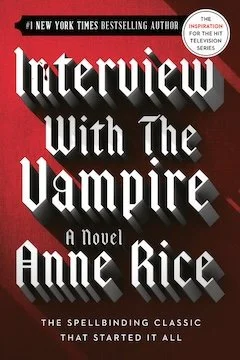
Interview with the Vampire (1976) by Anne Rice
“The vampires have always been metaphors for me. They’ve always been vehicles through which I can express things I have felt very, very deeply.”
The author of nearly 40 books, Anne Rice (1941-2021) wrote Gothic fiction, erotic literature, and Bible fiction. For Monster Complex readers, her key work included the Vampire Chronicles, the Lives of the Mayfair Witches, the Wolf Gift books, and the mummified Ramses the Damned Series.
Rice’s first novel, 1976’s Interview with the Vampire, is one of the best-selling novels of all time. It also kicked off the Vampire Chronicles, following the saga of the vampire Lestat.
In 2008, Rice told Time magazine that her vampires were a “metaphor for lost souls.” She also said that writing about them had been “a sort of search for God and a kind of grief for a lost faith.”
Adaptations of her Vampire Chronicles fiction include the 1994 movie Interview with the Vampire. Directed by Neil Jordan, the film starred Brad Pitt, Tom Cruise, Kirsten Dunst, and Antonio Banderas. The third book from that series, 1988’s The Queen of the Damned, became the 2002 movie starring Stuart Townsend and Aaliyah.
In 2022, cable network AMC launched the TV series The Vampire Chronicles, starring Jacob Anderson and Sam Reid. (The show was followed the next year with AMC’s TV show adapting Rice’s Mayfair Witches.)
More Anne Rice info online
Monster Complex articles:
Ghostbusters
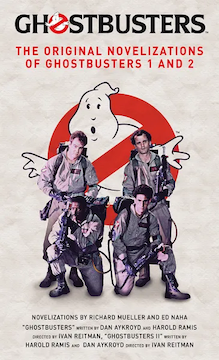
Ghostbusters (1985) by Richard Mueller
OK, this whole page of Horror Fiction That Inspired Classic Monster Movies is dedicated to books that inspired monster stories on screen. Which means this entry on the page looks like it is kind of a cheat—because this novelization of Ghostbusters wasn’t even published until after the movie came out.
However, there are some very interesting details that make me want to talk about it here! Including—surprisingly—some characteristics that make this novelization fit the page after all…
A couple of examples:
There are reasons that the book’s dialogue doesn’t always match up with the movie.
Also, there are some details found in the novelization—that aren’t in the movie—that were expanded on in the TV show!
(More on all that in a bit.)
The 1984 movie Ghostbusters is, of course, the legendary workplace supernatural comedy. The original script was written by comedy movie veterans Dan Aykroyd and Harold Ramis. (Frankly, there’s a whole story about the writing of that script, too. But we’ll discuss that at another time.)
The Ghostbusters movie was directed by Ivan Reitman. It starred Bill Murray, Ernie Hudson, Aykroyd, and Ramis as the title exterminators. Other actors worth noting were Annie Potts, Sigourney Weaver, Rick Moranis, and William Atherton.
And the original movie has inspired several media follow-ups, including a few more movies, more than one comic book series, toys, apparel, games, and other merch, and even some charity work.
There was also the amazing cartoon spin-off The Real Ghostbusters. This is one of my favorite TV shows of all time—and it’s currently FREE to watch on the Roku Channel!
(If, like me, you want to own some episodes, they’re also available for sale from sites like Fandango at Home. You can also buy the DVD box set from Barnes & Noble.)
In the years since its release, the Ghostbusters brand has built an active fanbase. This includes an annual Ghostbusters Day event in NYC (where the original movie takes place). There’s a huge Ghostbusters news page. And there are LOTS of Ghostbusters fan cosplay groups around the world that collect money for charity. (And I’ll be honest, I was shocked to have just learned about this entire paragraph just a couple of days ago.)
Which brings us back to talking about the BOOK—the 1985 novelization Ghostbusters: The Supernatural Spectacular written by Richard Mueller. When the author was given a copy of the script so he could adapt it into a novel, there were a couple of problems:
1) None of the lines spoken by Peter Venkman were in the script.
2) Adapting a movie script straight page-to-page is too short for a novel.
In an interview with Ghostbusters Deutschland, Mueller noted how the original actor who was intended to play Venkman had been John Belushi—but he had died before they started making the movie. Their next pick for the role was Bill Murray.
Mueller said:
“Bill Murray was coming back from doing a film in India. And he said he was too tired to learn lines, so he’d ad lib his. The studio was going to send me a VCR [tape] of the movie but they never did. Luckily, Ghostbusters was a great date movie and I had seen it several times. I put it together in four weeks. The only disappointment was that Tor Books made me PG-rate the dialogue.”
As for why he added some of his own material to the book, Mueller told the site:
“To write it, I used my memories of New York, and greatly expanded the story by bringing in the boys’ relatives, most of whom showed up later in the series [Real Ghostbusters]. I had to make up a lot of detail, because screenplays are actually very short. If you compressed a 120-page screenplay into a prose novel you’d be lucky to have 40 pages. So I took character clues from the dialogue and made up relatives and friends.”
When the studio later started up the animated TV show Real Ghostbusters, Mueller was brought on as one of the writers. In his scripts for the series, he was able to expand on details he’d put in the novelization. For example, he had invented some of their relatives—so he was able to now bring back some of them on the cartoon.
“I’m proud of my work on the show... And I love connecting with Real Ghostbusters groups around the world. RGB turned out to be a strong backbone of my work.”
So, some details in the book inspired some things they put in the show! (I told you this novelization would fit this page!)
Altogether, Mueller is listed as writing or co-writing almost a couple-dozen episodes of Real Ghostbusters. (You can find info about all those episodes here.) Mueller also wrote two episodes of the spin-off show Extreme Ghostbusters.
More Ghostbusters info online
Ghostbusters – The Original Movie Novelizations Omnibus
Ghostbusters Fans and News
Sony Pictures Launch Fundraising Campaign ‘Ghostbusters Give Back’ (Ghostbusters News)
Real Ghostbusters: 100 Episodes of Series Streaming FREE (Ghostbusters News)
Real Ghostbusters Has a New Streaming Home, and It’s Free! (Collider)
Ghostbusters Day Returns With Fundraising & New Merch (Screen Rant)
This Year’s Ghostbusters Day Fan Film Marathon Now Streaming (Ghostbusters News)
It
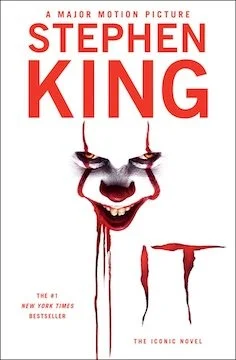
It (1986) by Stephen King
The 1986 horror novel It is the twenty-second book from acclaimed horror author Stephen King. The story details how seven children are terrorized by an evil being. Called Pennywise, the evil force actually exploits its victims by taking the form of their worst fears.
In the years since the novel first hitting bookshelves, it has since been adapted a number of times. This includes some movies, and an upcoming prequel TV show.
Background with Stephen King
An author often known as “The King of Horror,” Stephen King is best-known for his horror fiction (and the many adaptations to other media). In addition to the novel It, just a few more examples of his storytelling include:
Carrie (1976)
The Stand (1978)
The Dead Zone (1979)
Firestarter (1980)
Pet Sematary (1983)
The Tommyknockers (1987)
Needful Things (1991)
Bag of Bones (1998)
Duma Key (2008)
The Institute (2019)
The Shining (1977) and its sequel Doctor Sleep (2013)
King has also written some successful works in other categories, including mysteries, suspense, crime, fantasy, and science-fiction.
Of course, we’re here to talk about his novel It. The description on his author website says this:
“A promise made twenty-eight years ago calls seven adults to reunite in Derry, Maine, where as teenagers they battled an evil creature that preyed on the city’s children. Unsure that their Losers Club had vanquished the creature all those years ago, the seven had vowed to return to Derry if IT should ever reappear. Now, children are being murdered again and their repressed memories of that summer return as they prepare to do battle with the monster lurking in Derry’s sewers once more.”
The making of the original 1986 novel It
The inspiration for the book started one night when King was walking to a repair shop to pick up his car. When he crossed an old wooden bridge, he found himself thinking of the story of “Three Billy Goats Gruff.” Which got King wondering what that story would look like if retold in the real world.
Then another inspiration came from a line of poetry by Marianne Moore, about imaginary gardens with real toads in them. Except he found himself rethinking the line as “real trolls in imaginary gardens.”
After a couple years with those ideas floating around in the back of his head, he found himself drawing on them as he started writing a book that became It. He had become especially intrigued with the prospect of mashing up children’s tales with how characters would rethink those stories as adults. As King continued writing what became that book, he also drew upon ideas from mythology, and even the history behind the making of the sewer system in Bangor, Maine.
Adapting It to other media
Stephen King’s IT television mini-series (1990)
The two-part TV adaption of It—also known as Stephen King’s IT—was a 1990 ABC network “psychological horror drama” miniseries. The project was directed by Tommy Lee Wallace. The cast included Richard Thomas, John Ritter, Harry Anderson, Jonathan Brandis, and Tim Reid. The monsterous Pennywise was played by Tim Curry.
Produced with twice the normal TV budget, the mini-series was a big success. The miniseries was watched by 30 million viewers.
It (2017)
The first movie in a two-part adaptation, this It was directed by Andy Muschietti. Instead of telling the story in a back-and-forth fashion between the characters as children and as adults—this movie focused on the half of the book about the children. The movie stars Bill Skarsgård as Pennywise. Also in the cast is Jaeden Lieberher, Sophia Lillis, Jack Dylan Grazer, Finn Wolfhard, Wyatt Oleff, Chosen Jacobs, and Jeremy Ray Taylor.
The director, Muschietti, says his influences for the project included Steven Spielberg, plus movies like The Howling (1981), The Thing (1982), The Goonies (1985), Stand by Me (1986), and Near Dark (1987).
Called one of the best Stephen King adaptations, this movie It made more than $704 million worldwide—making it the highest-grossing horror movie of all time.
It Chapter Two (2019)
The second half of this two-movie adaption, It Chapter Two shared the rest of the book. The movie adapted the parts of the book about the characters as adults. This half of the It movies starred James McAvoy, Bill Hader, Jessica Chastain, James Ransone, Andy Bean, Isaiah Mustafa, and Jay Ryan. Returning from the first movie were Bill Skarsgård again as Pennywise, plus the younger actors from the first movie were seen again also.
Also directed by Andy Muschietti, It Chapter Two was set 27 years after the first movie.
It: Welcome to Derry (2025)
This prequel TV show is being developed by Andy Muschietti (who directed the two-part movie), plus his sister Barbara Muschietti, and Jason Fuchs. The plan is for the show to take place years before the movies, in the 1960s—and revealing the origins of Pennywise the Clown. (Bill Skarsgård is coming back to play Pennywise the Clown again.) Muschietti is set to direct the first episode.
The series is scheduled to be released in late 2025 on HBO with nine episodes.
More Stephen King info online
Monster Complex® articles:
More from Monster Complex®

More links from Monster Complex®
Discover the 70+ Most Chilling Horror Authors and Their Best Works
Good Omens: Why Terry Pratchett wrote about the (somewhat funny) end of the world
Zombie Q&A—Jonathan Maberry: “Zombie Stories Are Not About Zombies”
28 Striking Vampire Books—including horror, romance, fantasy, and comedy titles
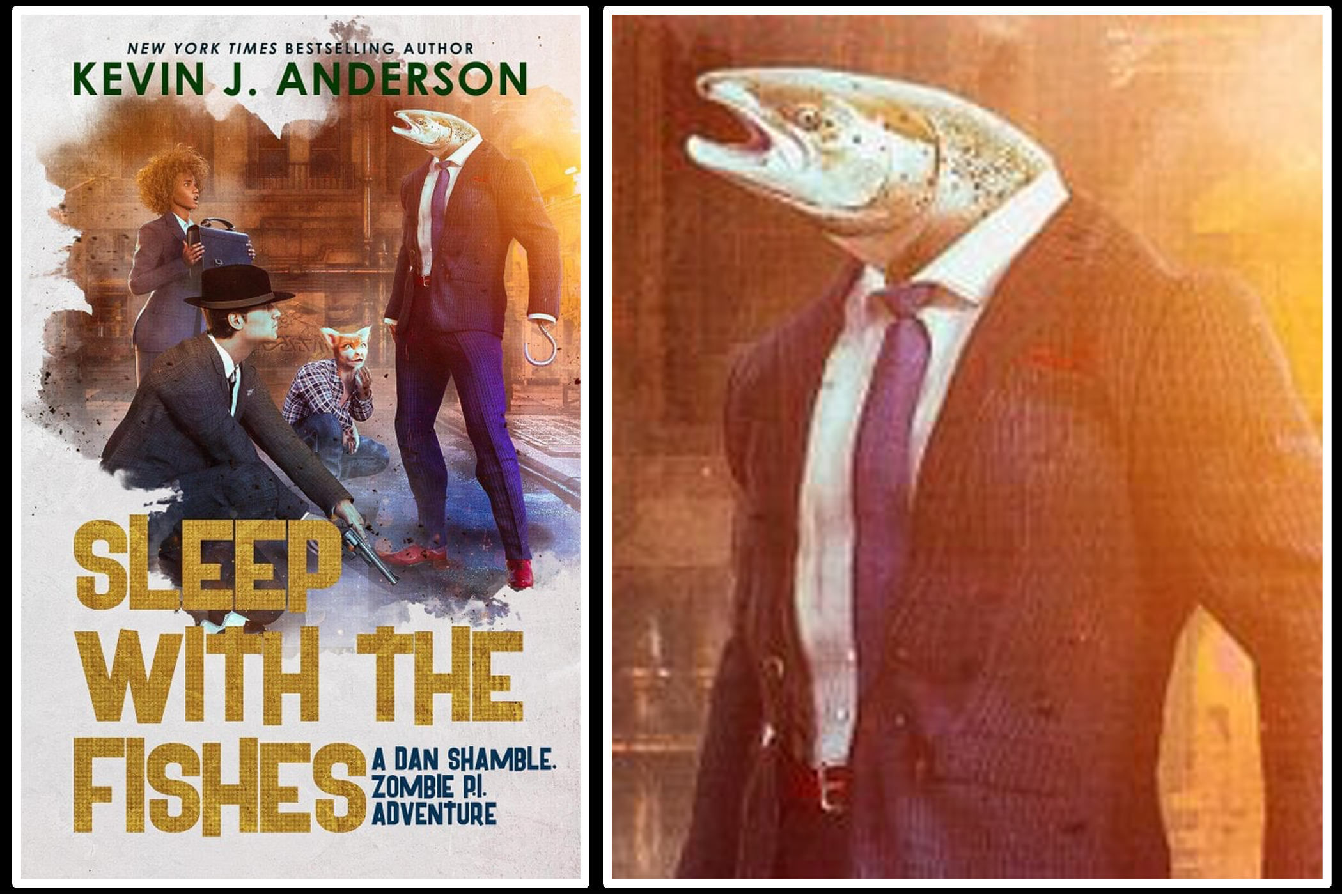
Complete Dan Shamble, Zombie P.I. Book Series by Kevin J. Anderson In Order
Zombies or vampires? Richard Matheson’s legendary novel I AM LEGEND is about both.
‘Classic Monsters Unleashed’ by Jonathan Maberry, Seanan McGuire, Owl Goingback, and more
Terry Pratchett: When Death Came to Discworld—and Never Left
Discover Urban Fantasy: 101 Must-Know Authors and Their Best Works
Cyberpunk? Best books, movies, more exploring a dystopian future with “high tech and low life”
Where to Find Movies and TV for Streaming, Rental, or Purchase (That’s Not Amazon)
Bookshop: How buying eBooks can now support your local bookstore
Libro.fm: Love Audiobooks? How to Support Your Local Bookstore Online
Horror fiction related links online:
Horror Films and Literature (Bowling Green State University)
Horror Classics You Need To Read (Penguin Random House)
Top 10 Horror Novels Made Into Great Horror Movies (Hudson Booksellers)
The 25 Most Influential Horror Novels of All Time (Book Riot)
40 Horror Movies You Didn't Realize Are Based on Novels (Men’s Health)
Horror Movies Based on Books (Texas State Library and Archives Commission)
The 50 Best Horror Books of All Time Will Scare You Sh*tless (Esquire)
10 Best Horror Movies Based on Books, Ranked (Collider)
A History of Horror Novels in America: from the 1800s to the 2020s (Brandon Cornett)
10 Great Horror Movies Based On Books That Aren’t Written By Stephen King (Game Rant)
The Top 10 Scariest Books According to A Horror Lover (Grimdark Magazine)
Five cult classic horror movies inspired by books (Westword)
Homework: It Came From The Pulp! Stories about monsters with a retro feel (Raconteur Press)
Exploring the fiction origins of Frankenstein’s Monster, Count Dracula, Mr. Hyde, the Invisible Man, plus Kong and Godzilla, aliens, zombies, killer clowns, and even some monster investigators.