Expanding ‘Weird Tales’ with spin-off novels and collections
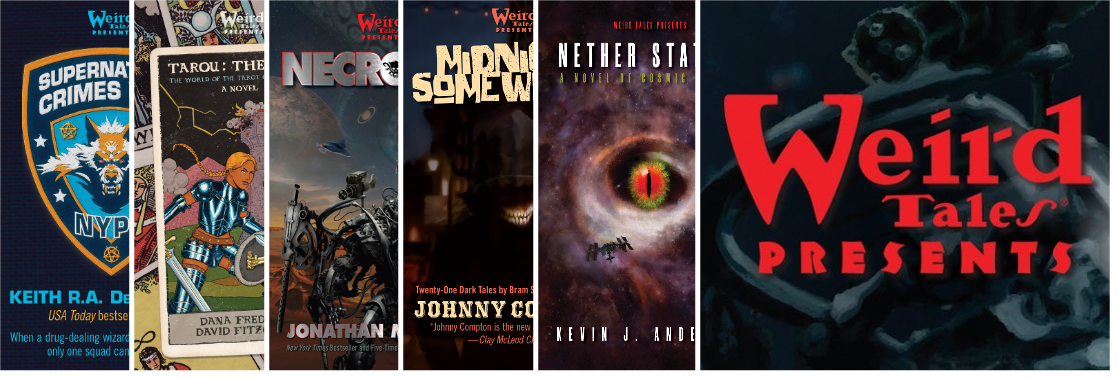
The celebrated magazine promises 50 new books from “Weird Tales Presents.”
Will include original novels, anthologies, and compilations—with horror, sci-fi, and fantasy.
Despite its long history, the famed Weird Tales magazine has only recently started releasing books that carry its unique vision. These new titles—including original novels, anthologies, and compilations—carry the Weird Tales Presents brand.
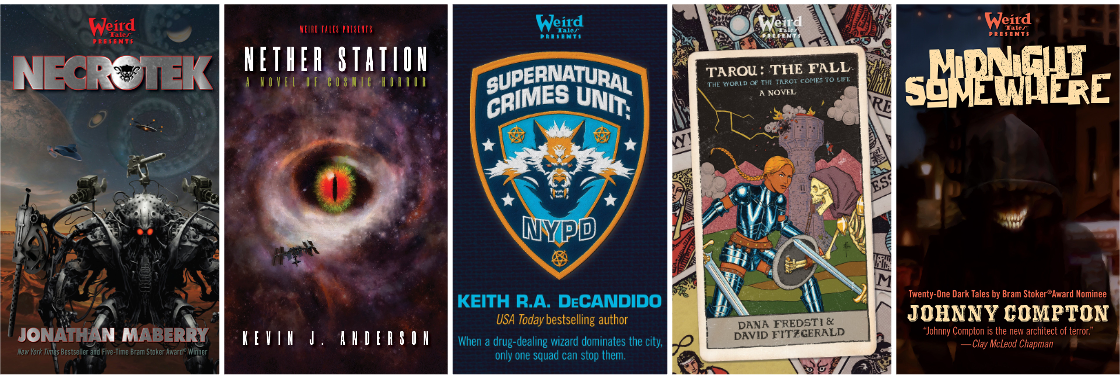
The first titles for the book series include novels from Jonathan Maberry, Kevin J. Anderson, Dana Fredsti and David Fitzgerald, and Keith R. A. DeCandido.
Johnny Compton’s short story collection Midnight Somewhere is also part of the project. “Weird Tales is a legendary name,” Compton told Monster Complex®. “The horror genre has an incredible, rich history and I relish this opportunity to be part of that.” (We talk to him about his new book here.)
In this article:
1
The big picture for the new Weird Tales adventures
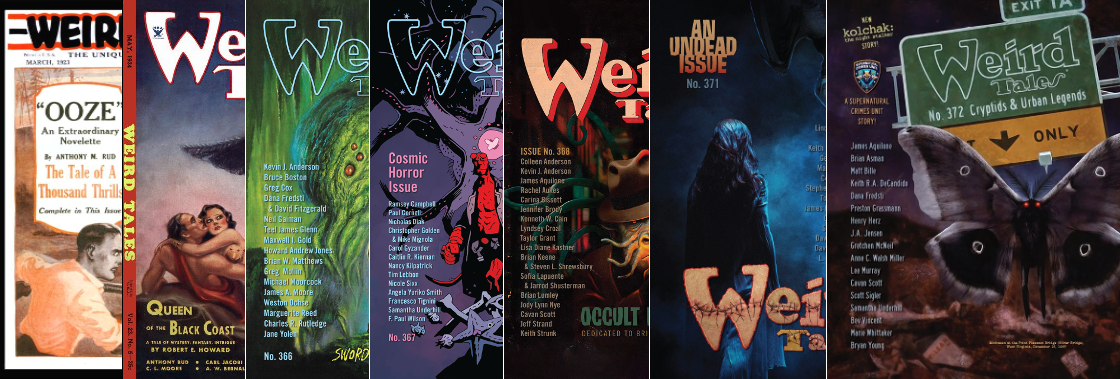
For those catching up: The original Weird Tales fiction magazine, launched all the way back in the 1920s, was dedicated to stories that touched on horror, sci-fi, and fantasy. Featuring the work of such authors as Robert E. Howard, C.L. Moore, H.P. Lovecraft, Robert Bloch, and Ray Bradbury, the magazine introduced readers to the likes of Conan the Barbarian and the Cthulhu mythos.
After years of here and there, Weird Tales magazine recently returned from the dead with partner Blackstone Publishing. (We talk about the new vision of the magazine here.)
Now the next step is Weird Tales Presents—with plans to publish at least 50 books that expand the unique Weird Tales vision. These titles will include print, eBook, and audio editions.
According to John Harlacher, Weird Tales publisher and president, in the history of the legendary magazine, there had never been a novel imprint. But as the current team has been building this modern version of the magazine, it became clear that both their audience and the writers wanted longer works in the Weird Tales style.
“We brought the idea for a Weird Tales Presents imprint to Blackstone Publishing, and they jumped on board.”
Weird Tales editor Jonathan Maberry says that—from a thematic perspective—the imprint needed to exist.
“And that’s based on the vast number of writers in our pages who went on to have massive careers as novelists. Or, who had the freedom to venture outside of their normal genres because Weird Tales not only allows that, but encourages it. Weirdness is a feature, not a bug.”
Sharing just some of the authors who—over the magazine’s history—have been welcomed by Weird Tales, Maberry included: H.P. Lovecraft, Robert E. Howard, Clark Ashton Smith, Ray Bradbury, Robert Bloch, Isaac Asimov, Manley Wade Wellman, Theodore Sturgeon, Algernon Blackwood, Henry Kuttner, and many, many others.
“And even into modern times, many emerging or well-established authors turned to Weird Tales for stories that were really too outré to fit anywhere else.”
Additionally, Weird Tales encouraged women writers to go big and get strange in their pages…
“Including the first female sword-and-sorcery writer, C.L. Moore; and other enormously talented women like Greye La Spina, Mary Elizabeth Counselman, Everil Worrell, and Eli Colter. Had there been a Weird Tales Presents in earlier eras, we likely would have published some of genre fiction’s most notable novels.”
2
The goals—artistically—for the “Weird Tales Presents” brand extension
Maberry says that the goals for the magazine’s brand extension are not that different from the magazine’s goal is general: Create a home for works that are of excellent quality but too far off the safe genre definitions to be published elsewhere. He shared:
“The Conan stories of Robert E. Howard were too odd, too infused with the supernatural and with complex magic systems to fit into a publishing world," especially before the rise of Tolkien and the subsequent birth of epic and high fantasy. So, with Weird Tales Presents, the goal is to publish top quality novels that are uniquely ‘weird’, because there are a hell of a lot of readers who embrace the weird and are tired of ‘normal’.”
Adds Harlacher:
“I agree with Jonathan. Readers and writers are tired of formulas, and dumbed down crap and want work that is unique.”
However, the publisher points out, what is considered “weird” is a moving target.
“When the magazine started in the 1920’s, horror, early SF and dark fantasy were all mashed up into ‘weird fiction.’ Now, these genres are well defined, and blended all the time.
“So, how do we stay weird? Everything we publish is always quirky and difficult to classify. (Which frustrates our sales people sometimes, but we figure it out.) We find things that live and breed within the cracks, and are actively seeking stories that defy all expectations.”
What’s the coolest part of continuing the Weird Tales brand in the 21st Century?
Maberry says that it takes some of the key genre moments—some of which were born in the pages of Weird Tales—and allows them new life as modern novels.
“Swords-and-sorcery fiction—the forerunner of epic and high fantasy,—was born in Weird Tales with the tales of Howard’s Conan, Moore’s Jirel of Joiry, Smith’s Elak of Atlantis, among others.
“Cosmic horror—though arguably conceived with Robert W. Chamber’s 1895 masterpiece, ‘The King in Yellow’—was truly born with Lovecraft’s tales of Cthulhu and other otherworldly beings.
“And the occult detective, born in Victorian and Penny Dreadful fiction, flourished wildly with Seabury Quinn’s many Jules de Grandin mysteries, and those of dozens of Weird Tales writers. A reasonable case can be made that we wouldn’t have had The X-Files, Supernatural, Grimm, Kolchak the Night Stalker, and any of a thousand other shows and movies had Weird Tales not showcased that genre.”
As such, the editor points out, they want to continue building careers and supporting genres/sub-genres that embrace “weirdness” as a core element.
Publisher Harlacher points out that, looking at the history of Weird Tales, the earliest stories ever told were, well, weird stories.
“We told stories of monsters, of insane galactic creatures vomiting the universe into existence, of evil and magic, and of vulnerable humans in the face of all this, winning and losing.
“We need these stories, and Weird Tales was the first publication devoted to them, and because of this it has stayed alive for over 100 years. We think now it is time for Weird Tales to thrive, and our odd crew of writers, editors, artists, and long time readers are thrilled to serve up the real weird to those who are ready for it.”
Monster Complex® sometimes uses affiliate links. (At no additional charge to you. Relax.)
Weird Tales Presents authors so far:
3
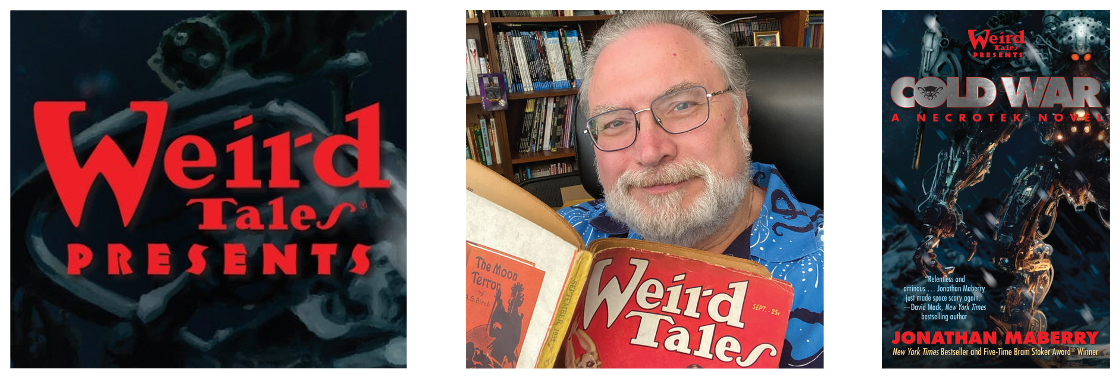
Q&A with author JONATHAN MABERRY
Named one of the Today’s Top Ten Horror Writers, best-selling and award-winning author Jonathan Maberry has written lots of books and short stories for several genres. The editor of Weird Tales Magazine, he’s also an anthology editor, comic book writer, writing teacher, and more. His books for Weird Tales Presents include the NecroTek Series books Necrotek (#1) and Cold War (#2).
How does the “Weird Tales Presents” brand affect your fiction? (Did being part of “Weird Tales” impact how you wrote your fiction for them?)
Jonathan Maberry: “Like many writers there are topics, themes, sub-genres, and creative directions that we see as off-brand for most mainstream publishers. As the author of over fifty novels and two-hundred short stories, I’ve encountered pushback at times when an editor or publisher feels something I’ve pitched is a bit ‘out there’ or too far from mainstream.
“Weird Tales Presents takes an opposite and very enthusiastic stance of inviting its writers to go be weird. To push the envelope creatively, to weave together disparate genres, and to genuinely have fun.
“My NecroTek novels are –in terms of genre—deep space cosmic horror with supernatural elements, hard science, Lovecraftian monsters, military science fiction, action, and giant mechs. Who else would have the guts or vision to want to publish that? That’s Weird Tales Presents in a nutshell.”
What do you consider the best thing about being part of “Weird Tales” now? (Do you feel the “Weird Tales” legacy with your book for them?)
Jonathan Maberry: “I’ve had a very long and odd connection to Weird Tales. When I was eight years old, the first novel I ever bought was Conan the Wanderer, which was part of a series of short story collections of Robert E. Howard’s fierce Cimmerian warrior…and all of those original stories were publishes in Weird Tales.
“Short after, when I was twevle I had the incredible good fortune to meet and be mentored by Ray Bradbury, Richard Matheson, Robert Bloch and some others. This went no for about three years.
“A little later I befriended (and also mentored by) L. Sprague de Camp. What’s the connective tissue? They all either published in Weird Tales or, in de Camp’s case, edited works by Weird Tales writers (he was responsible for bringing Robert E. Howard’s Conan back from obscurity) and was later an editor of the magazine.
“It was de Camp and Harlan Ellison who, at a writers event, introduced me to the writings of H.P. Lovecraft, and de Camp even let me borrow his original copies of Weird Tales to read.
“Jump forward to when I met the woman who became my wife, Sara Jo West. Her grandfather was Oscar J. Friend, a pulp fiction writer, editor, and literary agent (partner in the Otis Kline Agency). As an agent, his firm represented a huge number of writers who sold short works to Weird Tales.
“And it was Oscar Friend who found the unfinished Robert E. Howard manuscripts and gave them to his best friend, Sprague de Camp and said, basically, ‘See what you can do with them.’ Those manuscripts included all of the Conan stories (finished or in fragments).
“Some years later, when Sara Jo’s father (the jazz musician and orchestra leader, Alvy West) passed, she and her siblings found boxes of files from the Kline agency, which are now in my possession. Among them are typescript manuscripts of Howard’s People of the Black Circle and Lovecraft’s Cool Air, which –though first rejected—was reprinted in Weird Tales in 1934.
“Then, out of the blue, a friend of mine who had become associated with the Weird Tales brand and was vice president of the company, Tony Eldridge, called me to ask if I would be interested in writing a story for weird tales. I agreed, of course, and since my association with that magazine began with swords-and-sorcery, I wrote a piece in that genre, “The Shadows Beneath the Stone,” which was accepted.
“Shortly after that, the current editor, Marvin Kaye, became ill and Tony and the magazine’s publisher, John Harlacher, asked if I’d like to step up to become the magazine’s editor. It felt a little weird to edit a magazine and have my own short story in that initial issue, but as it had already been bought, that’s what happened.
So, yeah…a big chunk of my life and much of my professional career as both writer and editor are interwoven with the Weird Tales brand. It’s a legacy thing for me when viewed from any angle.”
How much is your own fiction similar or different?
Jonathan Maberry: “I am all over the genre landscape. I write science fiction, urban fantasy, horror, thrillers, action, epic fantasy, occult detective, and more. I write short stories in an even broader collection of genres and sub-genres; and I’ve been writing comics for Marvel, Dark Horse, IDW, and others. I think all of that subgenre and cross-genre experimentation set the stage for me to write something as weird as NecroTek.
“Although no one wants to say which of their children is their favorite (and novelists are no different with their literary children), there are books that anchor me into different genres and therefore make good starting points:
* “If you like small-town horror, the grab Ghost Road Blues, first of the Pine Deep Trilogy;
* “If you like straight science fiction, then either Mars One or Sleepers War: Alpha Wave, first in a new series;
* “If you like high-octane weird science thrillers, then try the Joe Ledger novels (now in development for TV with Chad Stahelski, director of the John Wick movies);
* “If epic fantasy is your go-to, then Kagen the Damned might work;
* “If you dig post-apocalyptic zombie adventure, then try Rot & Ruin, first of a 7-book series (in advanced film development at Alcon Entertainment);
* “If you dig novels based on movies, The Wolfman was my first bestseller, based on the 2010 adaptation.
“Also, if you’re into comics, I’ve worked on Captain America, Punisher, Wolverine, Avengers, Marvel Zombies, and more; and the blockbuster film Black Panther: Wakanda Forever drew heavily on my 2009-10 run on Marvel’s Black Panther comic.
“And so on. I write a lot, and I jump genres whenever I can. All of these are works I’m proud of, and each has been the entry point for readers who have since read across genre lines, following where I go.
“That said…nothing else I’ve written is as unique as NecroTek, and that’s in keeping with how Weird Tales was labeled as “The Unique Magazine”.
What are your favorite ways for readers to find you online and keep track of your own fiction?
“As for finding me…I’m all over social media, though a good place to start is my website, JonathanMaberry.com.”
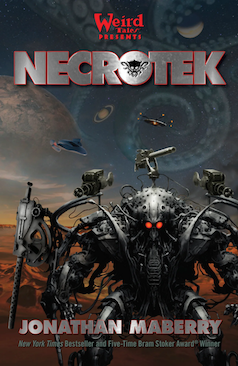
Necrotek by Jonathan Maberry (NecroTek Series #1)
A gripping sci-fi thriller full of ghosts, gods, and a battle for the soul of humanity…
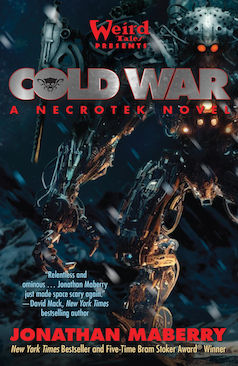
Cold War by Jonathan Maberry (NecroTek Series #2)
An action-packed sci-fi thriller full of weird science, kick-ass heroes, humor, passion, heroism, and sacrifice!
4
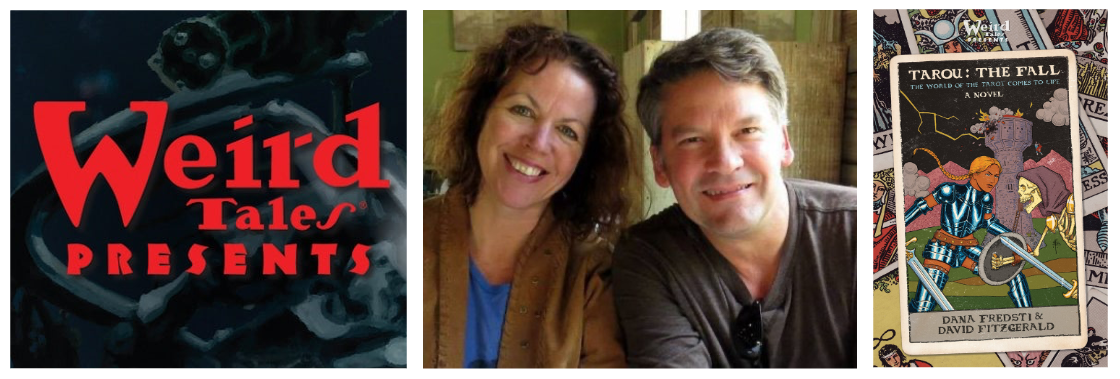
Q&A with authors DANA FREDSTI & DAVID FITZGERALD
Dana Fredsti is a producer, director, writer, actor, and former Hollywood stunt performer. Her books include the Lilith series and the zombie fighter series Ashley Parker. (She has also served as one of the Weird Tales editors.) David Fitzgerald is an author and editor. Together they wrote the Time Shards trilogy. Their Weird Tales Presents book is Tarou: The Fall.
How does the “Weird Tales Presents” brand affect your fiction? (Did being part of “Weird Tales” impact how you wrote your fiction for them?)
Dana Fredsti: “Maid of Steel,” the first piece Dave and I wrote for Weird Tales Magazine, was originally written for a Sword & Sorcery anthology that ended up falling through when the publisher went defunct. So when Dave and I got the opportunity to submit a story to the Sword & Sorcery issue of Weird Tales, “Maid of Steel” was already a decent fit, albeit with not quite enough ‘weird’ in it for the editor’s satisfaction.
“Both Dave and I had grown up reading so many of the authors that had made Weird Tales the epic magazine that it was back in the day—it’s safe to say that both of us were heavily influenced by a lot of these authors—so we revisited a few of them, reread some old favorites, and tweaked the weird factor of “Maid of Steel” to the editor’s—and our—satisfaction.
“I’ve since written two more original short stories for Weird Tales—one for 100 Years of Weird and the other for the upcoming Cryptid & Urban Legend issue—and co-written another with Dave for the Mad Science issue, and all three were accepted with minimal edits.”
Dave Fitzgerald: “What Dana said!”
What do you consider the best thing about being part of “Weird Tales” now? (Do you feel the “Weird Tales” legacy with your book for them?)
Dave Fitzgerald: “Writing for Weird Tales means never having to say you’re sorry for the twisted visions you inflict on readers… But the BEST thing has to be seeing your name listed alongside authors we’ve loved all our reading lives—it’s been a humbling, surreal, mind-blowing experience.
“I literally can’t imagine what literary horror in the 20th century would have looked like without Weird Tales popularizing fantasy and the supernatural, the Cthulhu mythos, Conan’s Hyborean Age and the entire Sword-and-Sorcery genre.
“And so many other stellar figures I grew up reading: Ray Bradbury, Robert Bloch, Tanith Lee, Manly Wade Wellman, Fritz Leiber, Theodore Sturgeon, Joseph Payne Brennan—the list goes on and on and on. To be part of such a beloved literary legacy going back over a hundred years is an incredible honor.”
Dana Fredsti: “What Dave said.”
How much is your own fiction similar or different?
Dave Fitzgerald: “Dana and I both swim in different genres, but the Venn diagram that tracks our genre overlaps with WT is relatively close to a circle.”
Dana Fredsti: “I love horror and fantasy, always have. Loved being scared as a kid.
“Our grandfather on our dad’s side used to read my sister and me Edgar Allan Poe stories at bedtime. Watched no end of scary movies and shows growing up, and I couldn’t get enough of Ray Bradbury, Lovecraft, horror anthologies, and folk horror/urban legends when I was young.
“Then I discovered Robert E. Howard, Fritz Leiber, and—my personal favorite—Karl Edward Wagner and his antihero Kane. All of this and more influenced my writing over the years.”
What are your favorite ways for readers to find you online and keep track of your own fiction?
You can find us at DanaFredsti.com and DavidFitzgerald.org, as well as Facebook.com/dana.fredsti1/ and Facebook.com/david.fitzgerald.33633
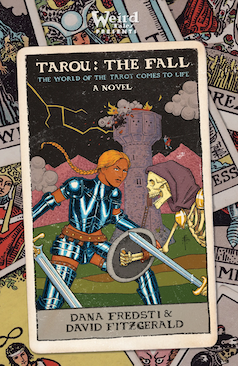
Tarou: The Fall by Dana Fredsti and David Fitzgerald
When a forbidden magical experiment goes wrong, a warrior and a con artist must face a cataclysm unlike any the world has ever seen…
5
Q&A with author KEITH R. A. DECANDIDO
Keith R.A. DeCandido is the bestselling author of more than 60 novels, more than 100 works of short fiction, more than 70 comic books, plus lots of nonfiction. His media tie-ins include fiction in the worlds of Star Trek, Supernatural, Alien, Resident Evil, and more. His Weird Tales Presents book is Supernatural Crimes Unit: NYPD.
How does the “Weird Tales Presents” brand affect your fiction? (Did being part of “Weird Tales” impact how you wrote your fiction for them?)
Keith R.A. DeCandido: “It doesn’t affect it all that much, given that I came up with the notion for Supernatural Crimes Unit: NYPD in 2011 or so. But generally for my original fiction I write books I want to write and then find a publisher who wants it. I was fortunate in that WTP was the one who wanted this one…”
What do you consider the best thing about being part of “Weird Tales” now? (Do you feel the “Weird Tales” legacy with your book for them?)
Keith R.A. DeCandido: “The legacy of 102 years of publishing magnificent fiction that Weird Tales embodies. This is the magazine that gave us H.P. Lovecraft’s Cthulhu mythos, Robert E. Howard’s Conan the Barbarian and Bran Mak Morn, Seabury Quinn’s Jules de Grandin, C.L. Moore’s Jirel of Joiry and Northwest Smith, and so many other iconic characters and great works of fiction. Being part of that is a huge honor.”
How much is your own fiction similar or different?
Keith R.A. DeCandido: “I try in my work to provide relatable characters, ones that people recognize from their own lives. One of the ways I try to do that is have people that do work that is mundane on the face of it—like, for example, being a police detective—but with fantastical elements thrown in.”
What are your favorite ways for readers to find you online and keep track of your own fiction?
Keith R.A. DeCandido: “Best way to find me online is to follow me on my blog or my social media. I’m pretty easy to locate—nobody else in the world has the name “Keith R.A. DeCandido”—and I endeavor to have an entertaining online presence.”
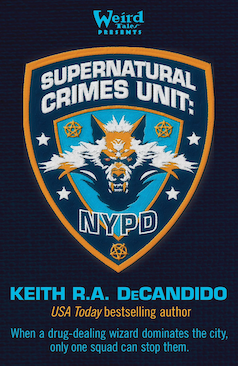
Supernatural Crimes Unit: NYPD by Keith R.A. DeCandido (Book 1)
A paranormal mystery of epic proportions: The SCU must go rogue to stop a wizard before he unleashes hell on Earth!
6
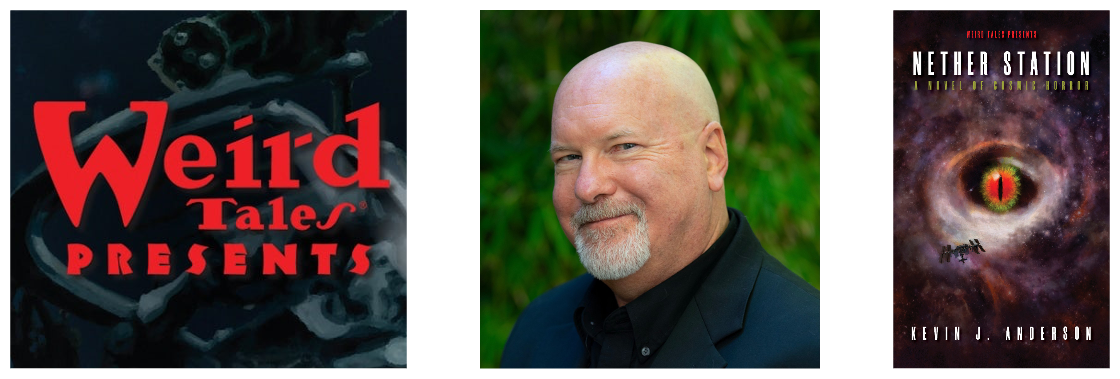
Q&A with author KEVIN J. ANDERSON
Busy author Kevin J. Anderson has published like 200 books (including the hilarious Dan Shamble, Zombie P.I. series). He’s also written tie-in novels for Dune, X-Files, and Star Trek, edited numerous anthologies, written comics and games, co-wrote the Clockwork Angels steampunk trilogy with Rush drummer Neil Peart, and wrote the lyrics for at least three rock albums. His Weird Tales Presents book is Nether Station.
How does the “Weird Tales Presents” brand affect your fiction? (Did being part of "Weird Tales" impact how you wrote your fiction for them?)
Kevin J. Anderson: “I’ve written a lot of science fiction and fantasy, but Weird Tales is a special flavor. When I was first invited to be part of the new line, I was excited because it suddenly allowed me to write a new and distinctive type of novel. Cosmic horror. I have always loved the genre, and I’ve been enamored with the Lovecraftian mythos…and I was able to bring my best skills of epic science fiction and suspense/horror into what I think is a perfect blend. Nether Station/Nether Vortex is one of my biggest, scariest stories ever.”
What do you consider the best thing about being part of “Weird Tales” now? (Do you feel the “Weird Tales” legacy with your book for them?)
Kevin J. Anderson: “Man, Weird Tales is a name to conjure with! I grew up influenced by the fiction and the authors that originally appeared in the magazine. Such an incredible influence in my own reading but in the genre as a whole.
“I still feel thrilled and honored to be a part of such an incredible legacy, in the footsteps of HP Lovecraft and Robert E. Howard.”
How much is your own fiction similar or different?
Kevin J. Anderson: “I am a voracious fan of the entire spectrum from science fiction to fantasy to horror, and the Weird Tales line is a distinctive brand. Exciting, imaginative, classic—and enduring. I think my own fiction is a perfect fit, and I have loved the positive response to Nether Station.”
What are your favorite ways for readers to find you online and keep track of your own fiction?
Kevin J. Anderson: “You can see a lot of my different types of books at wordfireshop.com, and follow all my projects with my newsletter at wordfire.com, where you’ll get free books and audios as samples to try.”
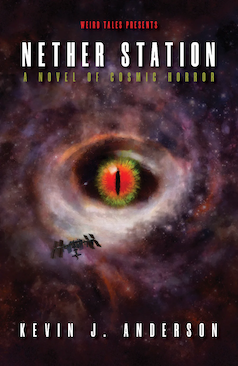
Nether Station by Kevin J. Anderson
What dangers did those elder races find in the hidden corners of spacetime? The crew of Nether Station must find the answers-before the darkest part of the cosmos swallows them up…
7
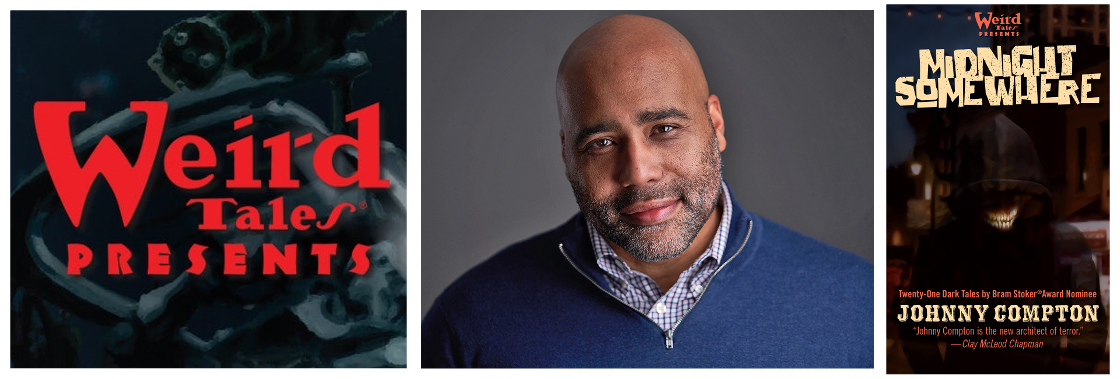
Q&A with author JOHNNY COMPTON
A Stoker Award-nominated author, Johnny Compton’s short stories have appeared in Pseudopod, Strange Horizons, The No Sleep Podcast, and several other publications. His fiction includes the novels The Spite House, Devils Kill Devils, and Dead First. His Weird Tales Presents book is the short story collection Midnight Somewhere.
How does the “Weird Tales Presents” brand affect your fiction? (Did being part of “Weird Tales” impact how you wrote your fiction for them?)
Johnny Compton: “It definitely influenced which of my I thought would work best for this collection. I felt confident that I could bring some of my stranger stories to the editors and they would understand and appreciate something that was a little odd, or something trapped a little bit between genres.
“There are a few stories here that are a little difficult to pin down in terms of whether they're more mystery, or more noir, or more horror, but they are definitely weird, and I was thrilled that Weird Tales was enthusiastic about publishing them.”
What do you consider the best thing about being part of “Weird Tales” now? (Do you feel the “Weird Tales” legacy with your book for them?)
Johnny Compton: “It feels great to be a contributor to the ongoing Weird Tales legacy, which has survived multiple dips in genre popularity, changes in the way people read and engage with literature, and more. The best thing about this is feeling like I’m providing something to an institution that’s been a critical part of the history of my beloved horror genre.”
How much is your own fiction similar or different?
Johnny Compton: “I think my fiction differs in terms of tone and subject matter pretty significantly from one story to the next, although I probably revisit ghosts more often than any other subject, because I love a ghost story. Otherwise, while I hope my voice is evident in everything I write, I also want to provide readers a range of topics and feelings to explore.”
What are your favorite ways for readers to find you online and keep track of your own fiction?
Johnny Compton: “Readers can keep up with me at JohnnyCompton.com, on Instagram and TikTok at @comptonwrites, and through my YouTube channel, JohnnyComptonAuthor.”
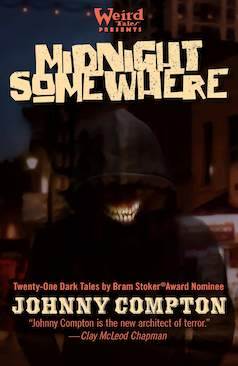
Midnight Somewhere by Johnny Compton
A frightening collection of thought-provoking stories perfect for fans of fiction from Stephen King, Tananarive Due, and Junji Ito.
8
More from Weird Tales
Celebrating the 100th anniversary of the first issues of Weird Tales Magazine, each part of this anthology features a different category—from cosmic horror to sword & sorcery to space opera to the “Truly Weird.”
Including Robert E. Howard, Laurell K. Hamilton, Victor LaValle, R. L. Stine, Ray Bradbury, C.L. Moore, Owl Goingback, Dana Fredsti, H. P. Lovecraft, Tennessee Williams, Isaac Asimov, Scott Sigler, Charles R. Rutledge, Frederick Pohl, James Aquilone, Richard Matheson, Keith R. A. DeCandido, Linda D. Addison, and more!
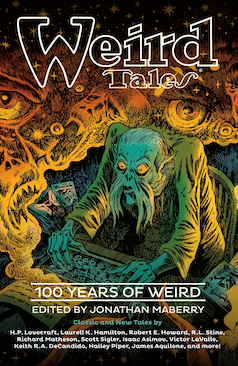
Weird Tales: 100 Years of Weird
New and classic stories, flash fiction, essays, and poems from the giants of speculative fiction including R.L. Stine, Laurell K. Hamilton, Ray Bradbury, H. P. Lovecraft, Tennessee Williams, and Isaac Asimov…
More about Weird Tales online
How Weird Tales is embracing modern readers (Monster Complex®)
Weird Tales Partners with Blackstone Publishing (Publishers Weekly)
Weird Tales and Blackstone Publishing announce partnership (Monster Complex®)
Classic Horror Magazine ‘Weird Tales’ First-Ever Graphic Novel (Bloody Disgusting)
More from Monster Complex®

Complete Dan Shamble, Zombie P.I. Book Series by Kevin J. Anderson In Order
Weird Tales Presents: Johnny Compton’s short story collection ‘Midnight Somewhere’
Zombie detective Dead Jack: Interview with horror author James Aquilone
‘Classic Monsters Unleashed’ by Jonathan Maberry, Seanan McGuire, Owl Goingback, more
Horror Fiction: Discover 75+ Chilling Horror Authors and Their Best Works
Discover Urban Fantasy: 101 Must-Know Authors and Their Best Works
Bookshop.org: How buying books AND eBooks can support your local bookstore
Libro.fm: Love Audiobooks? How to Support Your Local Bookstore Online
Here’s a big list of classic monster movies. Watch for examples from all the Universal Monster series—including some Frankenstein movies, as well as those with the Wolf Man, Dracula, and more!