Molly Tanzer: Reviving the first heroine of Sword & Sorcery
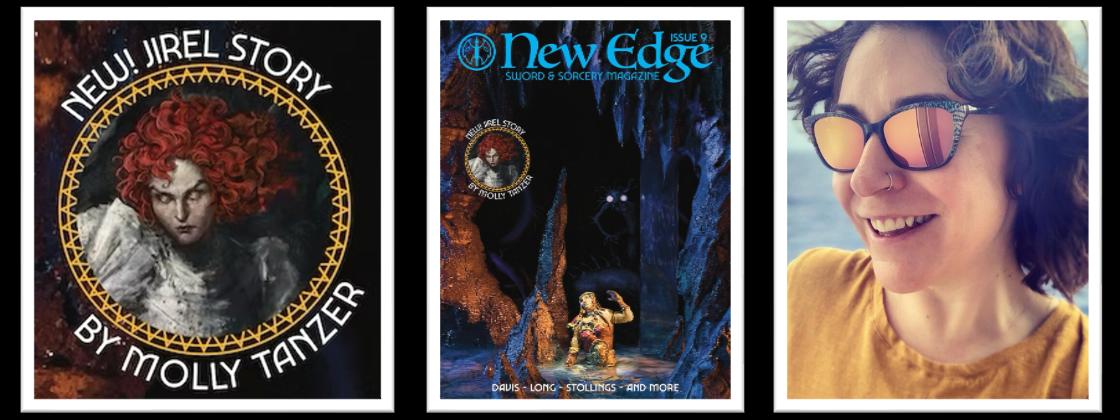
The challenges of bringing back sword & sorcery legend Jirel of Joiry, what elements are still the same (and which are different), and how MTV got the author started. (Wait—what?)
“I’ve felt very comfortable giving Jirel—for example—an LGBTQ+ sidekick, and playing with her legacy of being an unhinged, dangerous swordswoman, hater of wizards, and determined explorer of the unknown...while also being a libido-fueled disaster.”
Back in the 1930s, one of the most striking characters in the history of sword & sorcery fiction—strong and defiant redhead Jirel of Joiry—was a swords-woman who debuted in the pages of pulp magazine Weird Tales. Created by author C.L. Moore, her character only appeared in a few stories (including an interesting sci-fi crossover story)—but even those few stories were enough to make an impression. With fiery red hair, lion-yellow eyes, and a mighty two-handed sword, Jirel’s quick wit and defiant demeanor has made her one of the most iconic characters in the sword & sorcery history.
And now Jirel has returned for a new set of stories in a new magazine: SF&F and horror author Molly Tanzer has been writing brand-new Jirel stories for New Edge Sword & Sorcery Magazine.
Since launching In 2023, New Edge has been on a mission to showcase fiction with brand-new characters—while also revisiting classic characters. One of those classics has been Jirel of Joiry—who New Edge announced as being “like Alice in Wonderland with a big f***ing sword.”
Tanzer—whose credentials included the very-on-target anthology Swords v. Cthulhu—has been nominated for the Locus Award, the British Fantasy Award, and the Wonderland Book Award. Her novel Creatures of Charm and Hunger won the Colorado Book Award in 2021, and her work adapting manga for English-speaking audiences has been nominated for the American Manga Awards. Her critically acclaimed short fiction can be found in The Big Book of Cyberpunk, The Magazine of Fantasy & Science Fiction, and The Year’s Best Dark Fantasy and Horror.
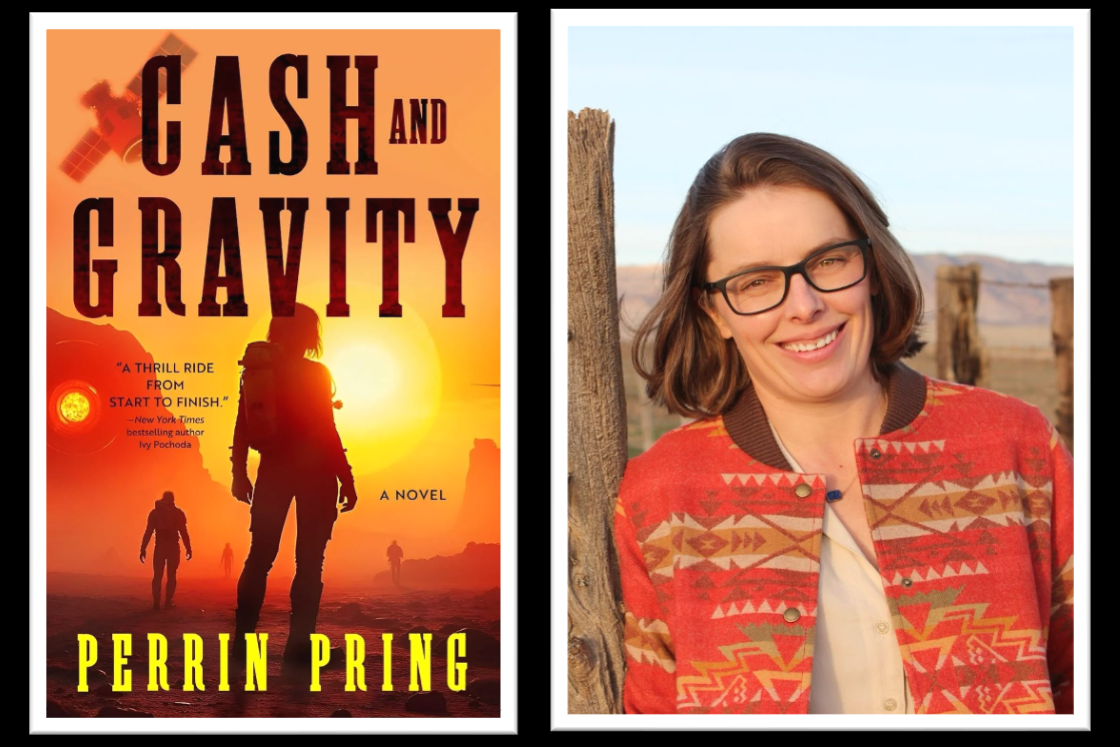
(Side note: Tanzer has a new sci-fi art heist novel on the way—and Monster Complex® will totally be talking with her about it soon.)
In today’s interview, Molly Tanzer will talk with Monster Complex® about the challenges of writing brand-new Jirel of Joiry for New Edge—including who really started this whole revival, what about the stories she changed (and what stayed the same), and the sword & sorcery stories she recommends as a fan…
How to get these new stories
As we’ll be discussing with the author, these brand-new stories starring the classic S&S character Jirel are appearing in issues of New Edge Sword & Sorcery Magazine…
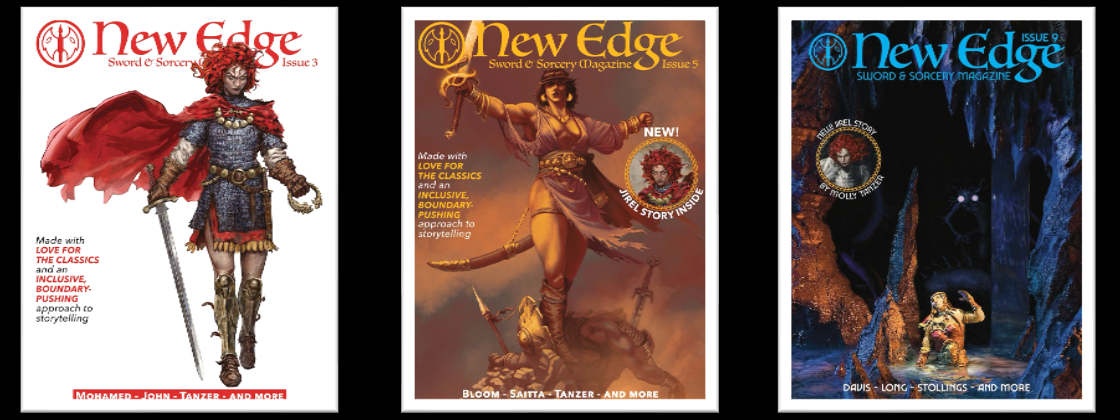
“Jirel and the Mirror of Truth”—New Edge Sword & Sorcery Issue #3 (Digital)
“Jirel Meets Death”—New Edge Sword & Sorcery Issue #5 (Digital)
“Jirel in the Forest of Night”—New Edge Sword & Sorcery issue in 2026 (BackerKit)
BackerKit account for New Edge publisher Brackenbury Books
Q&A Molly Tanzer: Reviving Jirel of Joiry—the first heroine of Sword & Sorcery
#1) You’ve already been writing your own fiction. What started you writing brand-new stories with Jirel of Joiry?
My journey with writing the new Jirel stories began when Oliver Brackenbury of Brackenbury Books and New Edge Sword & Sorcery magazine asked if I’d be interested in doing so! He had contacted the estate of C.L. Moore and asked if anyone had the rights to Jirel of Joiry—no one did, so they decided to work together to revive her.
Oliver got my name from a few people, as I’d co-edited an anthology called Swords v. Cthulhu many years ago, and am an outspoken fan of the genre.
I even have a Conan the Barbarian tattoo: the “wheel of pain” from the ’82 movie, on my left shoulder.
While I’d never really done any “IP” writing before, I was honored he asked me and jumped at the chance to be part of Jirel’s story!
New Edge S&S is all about their mission of having classic S&S vibes paired with an “inclusive, boundary-pushing approach” to the subject matter. From the get-go, I’ve felt very comfortable giving Jirel—for example—an LGBTQ+ sidekick, and playing with her legacy of being an unhinged, dangerous swordswoman, hater of wizards, and determined explorer of the unknown... while also being a libido-fueled disaster.
#2) What’s the process writing these stories? Did you need any kind of research or re-reading or anything like that?
I definitely read all the Jirel stories before coming up with any ideas for a future adventure, which was really fun! While I knew the character, I hadn’t read all the stories—“Hellsgarde,” for example, was a new one for me, and became my favorite.
It had been a while since I looked at Moore’s work, and reading her stories with a close eye left me in awe of her ability to write so clearly and cleanly. She has such a way of making me “see” what’s happening, even though I’m one of those people without a visual imagination.
I mean, let’s just look at the opening paragraph of my favorite Jirel story, “Hellsgarde”:
Jirel of Joiry drew rein at the edge of the hill and sat awhile in silence, looking out and down. So this was Hellsgarde. She had seen it many times in her mind’s eye as she saw it now from the high hill in the yellow light of sunset that turned every pool of the marshes to shining glass. The long causeway to the castle stretched out narrowly between swamps and reeds up to the gate of that grim and eery fortress set alone among the quicksands. This same castle in the marshes, seen at evening from the high hilltop, had haunted her dreams for many nights now.
So simple and effective. What’s not to love?
As for research... as someone who has written a lot of historical fiction, I resisted my impulse to look at a lot of stuff about France, c. 1500. Jirel’s time in our world is usually so brief; Moore’s focus is always on Jirel’s adventures in magical lands, so I wanted to keep the same light historical touch.
#3) How do these stories compare/contrast with all your other fiction? What’s your favorite part about writing these new Jirel stories?
I write a little bit of everything! Fantasy, science fiction, horror, lit fic. I think Jirel fits in well with the rest of my work, thematically speaking—I often write about imperfect, independent women—but I don’t tend to write what another of our Weird Fiction matriarchs, Greye La Spina, would call “ripsnorters.” Getting into that pulp mindset has been really fun and freeing.
#4) As you write about Jirel in these new stories, are there elements that you’re adding or changing from the original series?
Sure! Like—without criticizing Moore here, one of the things that’s pretty clear in the original Jirel stories is that Jirel is an exceptional woman in a world of men.
There are other women in Moore’s stories—the campy sorceress in “Jirel Meets Magic” (Weird Tales, July 1935), the corpse-witch in “The Dark Land” (Weird Tales, January 1936), but there are no women who are Jirel’s equal.
And, apart from her priest, Father Gervais, Jirel doesn’t have any friends or confidants. So, one of the things that I wanted to bring to my Jirel stories was companionship, especially that of other women.
In my first Jirel story, “Jirel and the Mirror of Truth,” Jirel has a Queequeg-type companion, a creation of my own, the chevalier Thevin Galois, disgraced knight of the Court of Truth. I say I had all these feminist reasons for putting Thevin in there, but honestly... I also do better as a writer when I have characters to play off one another, and their dynamic was very enjoyable.
I’m also trying to give Jirel a little more of a setting. In my story “Jirel Meets Death,” we learn that Castle Joiry was built atop a Roman bath.
In the story coming out later this year, “Jirel in the Forest of Night,” she is annoyed by a proposal of marriage it would be impolitic to refuse.
That kind of stuff isn’t at the heart of the Jirel stories, but it’s fun to put a character who is known for visiting other worlds into situations here in the real world. It gives, I think, a sense of who Jirel is, her character, her strengths and weaknesses.
#5) What elements from the original stories are those you love—and maybe even grab onto and emphasize in your new stories?
Oh, lots of stuff—but most of all that Jirel is a compelling character! When we first meet her, in “Black God’s Kiss” [Weird Tales, October 1934], we are treated to the classic premise of a helmeted prisoner being restrained by multiple men, all struggling to keep a hold on them... only for the mask to come off and—gasp!—it’s a woman?! So good.
I also like that she’s not just strong, she’s a problem solver. I wouldn’t go so far as to suggest Jirel uses her brains a lot... she’s a delightfully straight-forward thinker, but she finds her way out of many dangerous scrapes with her situational awareness and cunning.
She’s also incredibly determined. She doesn’t give up, even when the odds are against her—and even when her own desires would have her submit, she doesn’t.
#6) How do you phrase or introduce this project to readers? What do you consider the main value or target for attracting their attention?
When all this began, back in 2023-2024, so many friends of mine—we’re talking genre-savvy people, all conversant in SFF—replied, “Jirel of Joiry? Yeah, sure... but I only really know her from the filk by Mercedes Lackey” (or similar).
And not only that, but Jirel has had a bit of a reputation given the oft-repeated soundbite that she “falls in love with her assailant” due to the events of “Black God’s Kiss.”
This saddens me, because first of all that’s more than a bit reductive, but mostly because... C.L. Moore was one of the women of the weird! She was an incredibly talented lady writer at a time when that was less common.
And, I mean, plenty of objectionable stuff happens in Robert E. Howard’s stories. H.P. Lovecraft, too, obviously. While there’s all kinds of discussions/discourse about the problematic stuff in their work, neither of those authors was just dismissed and shelved because of those elements.
Conan has been a pop cultural figure forever. Red Sonja was revived in a very different form than her original incarnation back in the 1970s. Lovecraft’s stories being arguably in the public domain means plenty of modern writers and artists have played in his sandbox, keeping him and his work alive.
Both writers have enjoyed fresh, exciting takes on their ideas that have kept their ideas and characters in the public imagination. C.L. Moore and Jirel never got that, for whatever reason... until now.
#7) What are the best ways for people to read these stories?
Right now, the crowdfund for New Edge Sword & Sorcery magazine’s 2026 issues is live, and doing great! The crowdfund ends on March 14...
Issues are always available on the website, NewEdgeSwordAndSorcery.com.
There’s a new Jirel story in one of the upcoming issues that I mentioned above, “Jirel in the Forest of Night.”
While there’s been some idle contemplation of putting together a collection, right now the best way to make sure there’s more Jirel is to support New Edge, buy back issues from their website, and let your friends on social media know about us, to boost our footprint.
#8) Are you a fan of sword & sorcery stories in general? Is there anything else you’d recommend?
I got into S&S in a weird way...watching The Maxx on MTV. (Yes, I am an Elder Millennial.) I especially loved when Julie is cast into the dream-world of the Outback. My high school boyfriend was a comics nerd and a visual artist, and pointed out the relationship between Sam Kieth’s artwork and the paintings of Frank Frazetta.
From there, I started reading the Conan stories by Robert E. Howard. I’d always been a fantasy reader—my father loved fantasy, and put books like Narnia and Pern and Prydain and Ursula K. Le Guin’s Earthsea in my hands. I was immediately hooked.
As for new readers, I’d say Robert E. Howard is obviously a must...my favorites of his Conan stories are “The Tower of the Elephant” and “The Frost-Giant’s Daughter.”
C.L. Moore’s Jirel stories...there’s only five, plus a crossover with her other character, Northwest Smith (who is a sort of proto-Han Solo). Reading those is time well spent.
I’d also say run, don’t walk, to pick up a copy of Charles Saunders’ Imaro tales, and Michael Moorcock’s early Elric books are fantastic. Jack Vance’s Dying Earth stories are also a must-read, as are Fritz Lieber’s Fafhrd and the Grey Mouser stories.
The Berserk manga by Kentaro Miura is great, as are the various anime adaptations.
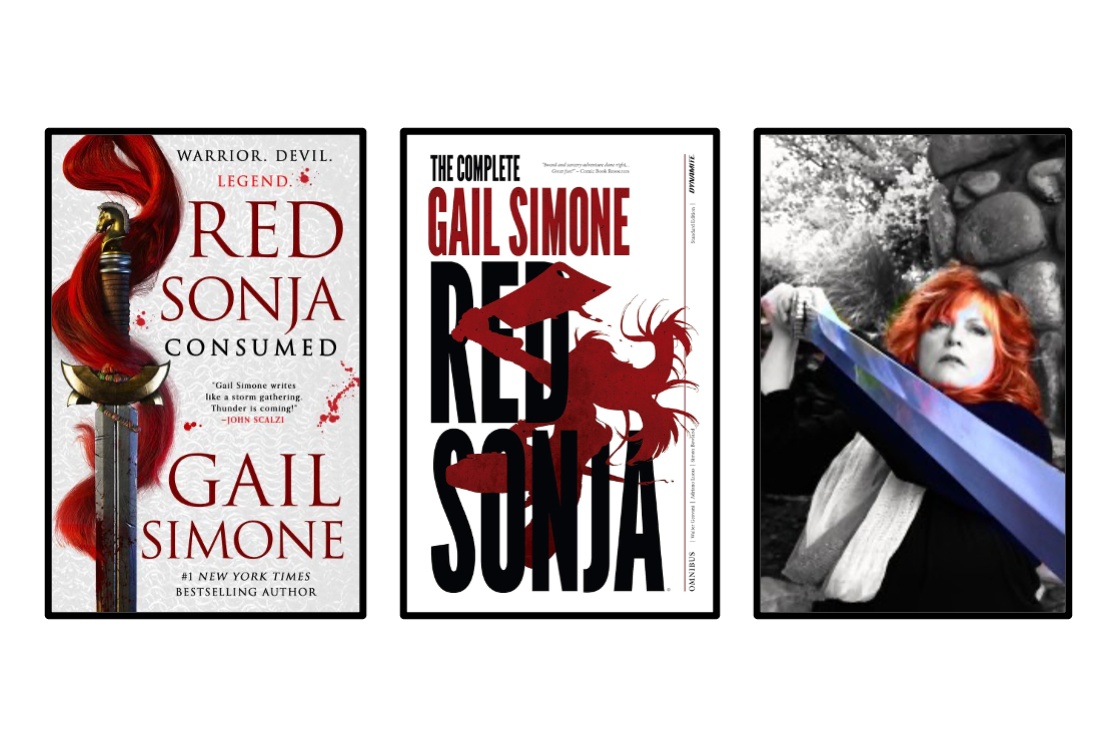
As for more modern offerings, Gail Simone’s Red Sonja comics are awesome.
And while I’m sure it’s more grimdark than S&S, I honestly can’t get enough of Joe Abercrombie. I love his First Law trilogy. Logen Nine-Fingers is probably my second favorite barbarian after Conan.
I’d be remiss if I didn’t note that S&S has long been criticized, fairly, for being male- and white-centric, and sadly for a long time has been one of the most conservative sub-genres of fantasy. Orientalism, racism/race science, romanticizing violence against women, the cult of the body... these are all present in early S& S. C.L. Moore is no exception!
And there are some who even today think an absence of those elements is disqualifying for inclusion in the sub-genre. Obviously, I disagree, and I’m not alone in that... the tons of great established and emerging voices in magazines like New Edge prove it!
#9) What does REH’s legacy mean to you as an author or fan of this genre? Do you have any comments about his fiction or his impact?
They say you never forget your first, right? I can’t imagine what S& S I would have read before “The Tower of the Elephant,” as I was young and still jamming on Xanth (yikes!) and McCaffery’s Pern and Steven Brust’s Jhereg series. I had no idea there was a grittier, sexier world of fantasy out there!
Even speaking as Jirel’s new chronicler, Howard is the first name that comes to mind when I think about S&S, and I think that’s fair. Last year, when the first Jirel story was nominated for the REH Foundation’s Costigan Award for Fiction, I was really thrilled.
One of my favorite things about writing science fiction and fantasy is it means I’m a link on a chain that stretches back to... really the dawn of the human impulse to tell stories. So many of the earliest writings archaeologists have found are tales of gods and monsters.
While I think I have more in common with C.L. Moore and Robert E. Howard than, say, Ovid, we’re all using our imaginations to tell stories about how human beings behave in and relate to the world around us by means of the speculative and supernatural.
Get Molly Tanzer’s new Jirel stories here:
“Jirel and the Mirror of Truth”—New Edge Sword & Sorcery Issue #3 (Digital)
“Jirel Meets Death”—New Edge Sword & Sorcery Issue #5 (Digital)
“Jirel in the Forest of Night”—New Edge Sword & Sorcery issue coming in 2026 (BackerKit)
Related links
“Jirel and the Mirror of Truth” (2024) by Molly Tanzer (Deep Cuts in a Lovecraftian Vein)
New Edge Sword & Sorcery Magazine: Short Fiction Reviews (Locus Mag)
Old Sorcery, New Edge: Q&A with Molly Tanzer (Agent of Weird)
Find Molly Tanzer Online
Find New Edge Sword & Sorcery Magazine online
BackerKit for New Edge publisher Brackenbury Books
More from Monster Complex






Remembering Robert E. Howard: Creator of Sword & Sorcery and Conan the Barbarian
So much more than Conan: How the Robert E. Howard Foundation celebrates his work
Expanding ‘Weird Tales’ with spin-off novels and collections
New from Michael Moorcock: 1930s mystery for fans of Sherlock Holmes and Doctor Who
30+ Indie Urban Fantasy Authors—including Ilona Andrews, Brandon Sanderson, more
Tanith Lee: Remembering the first woman to win British Fantasy Award for best novel
Good Omens: Why Terry Pratchett wrote about the (somewhat funny) end of the world
Hilarious Dan Shamble, Zombie P.I. series by Kevin J. Anderson

This new comic spotlights 1940s comedy duo Abbott & Costello dealing again with monsters—and meeting up with 1970s monster hunter Kolchak: The Night Stalker! (Totally a candy bar mashup!)